
Emergency Ice Dam Removal in Portland, Maine
Munjoy Hill · West End · Deering Center · East Deering · North Deering · Rosemont · Libbytown · Back Cove
Safe steam removal with Arctic Steamer® technology. 24/7 scheduling with same-day & next-day arrival anywhere in Portland. With an active leak, insurance often covers this. Free quote — no obligation.
Portland is taking a beating this winter. From heavy coastal storms burying the coast to brutal freeze-thaw cycles across Central and Western ME, ice dams are forming at record rates across Portland. Don't wait until water is pouring through your ceiling. Our crews are deployed across the entire state right now.
Our Professional Arctic Steamer® — The Only Machine Built Specifically to Remove Ice Dams Safely

- Safe Steam Technology — No Roof Damage
- 24/7 Scheduling — Same-Day & Next-Day
- Insurance Typically Covers This
- Arctic Steamer® Professional Equipment
- 400+ Five-Star Reviews
- Free Quote — No Obligation
Get Your Free Quote
Same-day & next-day arrival — Portland
Portland is taking a beating this winter. Heavy coastal storms, brutal freeze-thaw cycles, and record snowfall are creating severe ice dams across Portland. Don't wait until water is pouring through your ceiling. Our crews are deployed across the entire state right now.
- Safe Steam Technology — No Roof Damage
- 24/7 Scheduling — Same-Day & Next-Day
- Insurance Typically Covers This
- Arctic Steamer® Professional Equipment
- 400+ Five-Star Reviews
- Free Quote — No Obligation
How Our Steam Ice Dam Removal Works
The only method that removes ice dams without damaging your roof
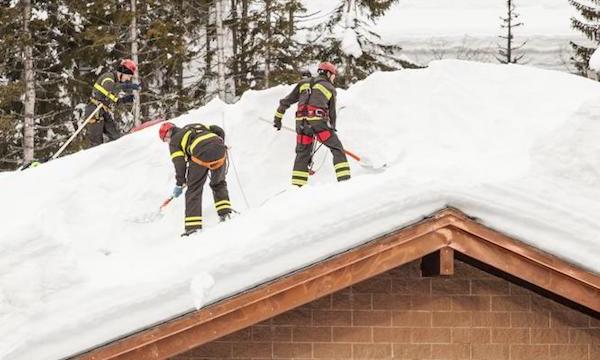
Arctic Steamer® Technology — Safe, Fast & Effective
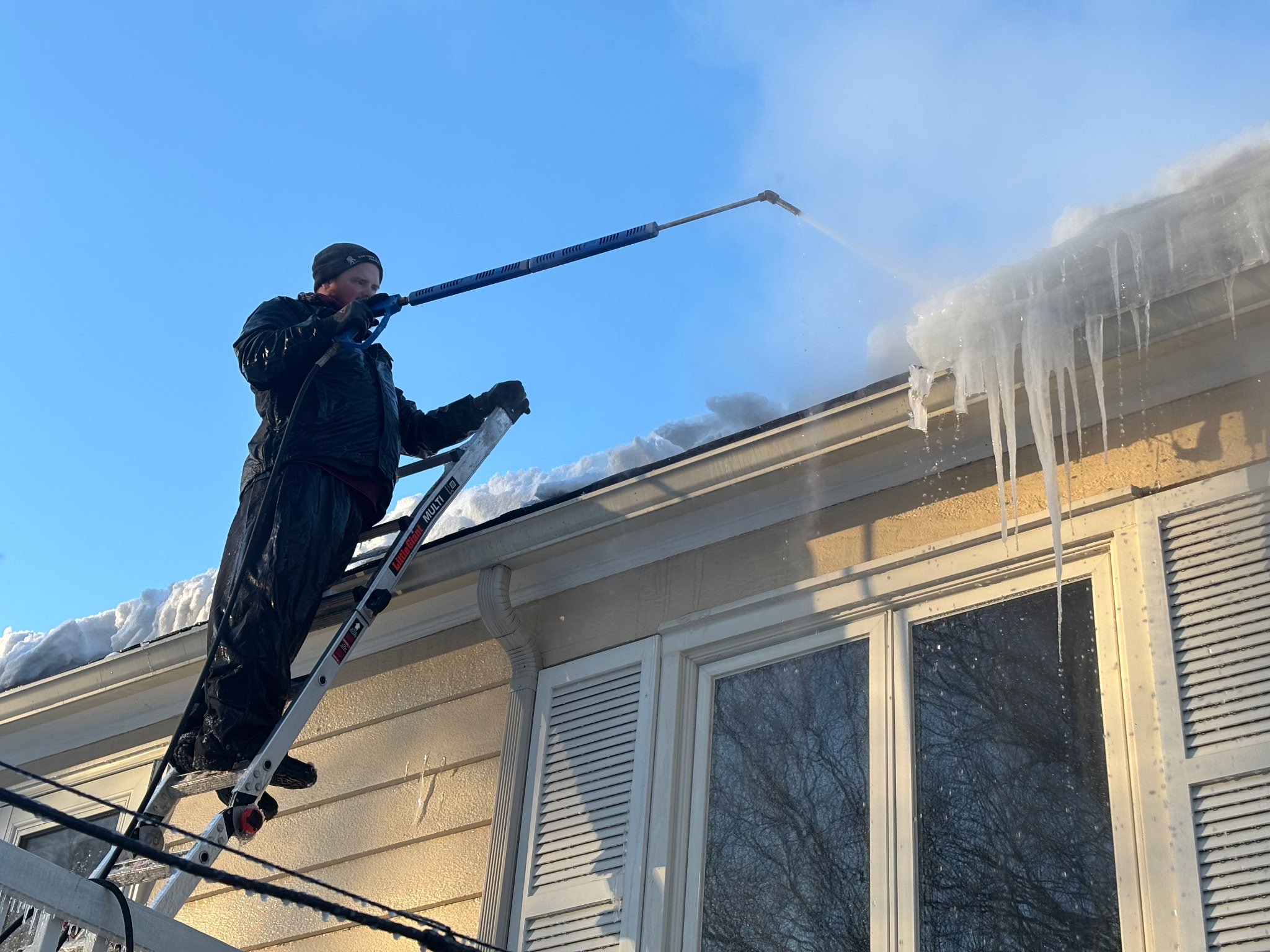
An ice dam removal call is a surgical job: the target is the bonded ridge of ice at the eave and the frozen drainage below it. The Arctic Steamer® cuts a relief channel over the leak point within minutes of setup, then works the dam off the shingle surface without contact — the difference between removal and roof damage on Portland's older stock.
Dam jobs on the Peninsula run two to four hours including gutters and downspouts. The roof drains when we leave, which is the entire point — a cleared eave with frozen downspouts just rebuilds.
✅ Why Steam Is the ONLY Safe Method:
- Zero roof damage — low-pressure steam, no physical impact
- Protects your shingles — no cracking, denting, or tearing
- Preserves your warranty — manufacturer-approved method
- Complete removal — melts ice all the way down to the surface
- Fast results — professional equipment works in hours, not days
- Chipping with picks or hammers (damages shingles and voids warranty)
- Pouring salt or calcium chloride (corrodes metal, kills landscaping)
- Pressure washing (forces water under shingles, causes more leaks)
- Heat guns or torches (serious fire hazard)
You Call Us 24/7
Call our emergency line anytime. We gather details about your ice dam and schedule arrival within 24 hours.
Roof Assessment
Our technician inspects the ice dam, identifies water entry points, and documents any existing damage.
Steam Removal
Using our Arctic Steamer®, we safely melt and remove all ice. No damage to your roof, shingles, or gutters.
Documentation
We provide photos and reports of the work done — helpful if you file an insurance claim for the damage.


What Happens If You Don't Remove Ice Dams?
Every hour you wait, the damage gets worse — and more expensive

Ceiling & Wall Water Damage
Water pooling behind ice dams seeps through your roof and saturates ceilings and walls. Brown stains appear first, followed by bubbling paint, crumbling drywall, and eventually structural damage to framing.

Gutters Ripped Off Your Home
Ice dams can weigh hundreds of pounds. That weight pulls gutters right off your fascia boards, tearing them away and causing expensive structural damage to the roofline of your home.

Interior Flooding & Mold
Unchecked leaks can flood entire rooms, destroying insulation, flooring, furniture, and electronics. Trapped moisture creates the perfect conditions for dangerous mold growth within 24-48 hours.
Maine Winters Make Ice Dams Especially Dangerous
Maine gets hit from every angle when it comes to ice dams. Heavy coastal storms dump heavy wet snow across Southern Maine, York County, and the Midcoast. Inland communities from Lewiston to Western Maine & the Lakes Region get hammered with lake-effect and elevation-driven snowfall. And the entire state endures brutal freeze-thaw cycles from November through March.
Every time temperatures swing above and below freezing, snow on your roof partially melts. That water runs downhill, hits the cold overhang, and refreezes — growing the ice dam bigger and bigger. Eventually, the water has nowhere to go but under your shingles and into your home. Maine's older housing stock — triple-deckers in Portland, Colonials across Southern Maine and York County, Capes in the Bangor region — are especially vulnerable because many lack modern insulation and ventilation.
- Day 1-3: Small drips, minor water stains on ceilings
- Day 4-7: Spreading water damage, saturated insulation
- Week 2+: Mold begins growing in walls and attic
- Week 3+: Structural damage to framing, potential ceiling collapse

💰 The Average Ice Dam Damage Repair Costs $5,000 – $15,000+
Ice dam removal costs a fraction of that — and your insurance likely covers both the removal and the repairs. Stop the damage now before it multiplies.
Call (207) 386-4644🚨 The Hidden Danger: Attic & Wall Mold
Ice dam leaks don't just cause water stains — they create the perfect breeding ground for dangerous mold

Severe Attic Mold on Roof Sheathing
When ice dam water seeps into your attic, it saturates the OSB or plywood sheathing. Within weeks, black mold covers the entire underside of your roof deck — requiring full sheathing replacement.

Mold Destroying Attic Insulation
Wet insulation is a mold magnet. Once your fiberglass or cellulose insulation gets saturated from ice dam leaks, it loses all R-value and becomes a breeding ground for mold spores that spread throughout your home.

Black Mold on Structural Beams
Mold doesn't just grow on surfaces — it eats into wood. Structural beams, joists, and rafters compromised by mold lose their structural integrity, creating a safety hazard for your entire home.

Mold Behind Your Walls
Water from ice dams travels down through your walls, soaking studs and drywall from the inside. You won't see it until the mold is severe enough to penetrate through to the visible surface — by then, the damage is extensive.

Attic Mold Inspection
Professional inspections often reveal mold growth that homeowners had no idea existed. By the time it's visible, the contamination has usually spread far beyond what you can see — affecting your indoor air quality.

Professional Mold Remediation
Once mold takes hold, professional remediation requires hazmat-level protective gear, containment barriers, HEPA filtration, and often complete removal of affected materials. It's a major, disruptive, and expensive process.
Why Maine Homes Are Especially Vulnerable
Maine has some of the oldest housing stock in the country. Triple-deckers in Portland, Westbrook, and Lewiston. Colonial homes across Southern Maine and York County and Lewiston–Auburn. Capes and farmhouses along the Midcoast. Victorian mansions in Western Maine & the Lakes Region and the Kennebec Valley. These homes were built long before modern insulation standards existed.
The result? Heat escapes into the attic, melting roof snow faster and creating massive ice dams. And when those ice dams cause leaks, the poor ventilation in older attics means moisture has nowhere to go — creating ideal conditions for rapid mold growth.
The health risks are serious. Mold spores become airborne and circulate through your HVAC system, affecting every room in your home. Exposure can trigger respiratory issues, allergic reactions, headaches, and worsen conditions like asthma — especially dangerous for children, elderly family members, and anyone with compromised immune systems.
The only guaranteed way to prevent ice dam mold is to remove the ice dam before the leak causes lasting damage.


Mold Spores Activate
Moisture from the ice dam leak triggers dormant mold spores on wood surfaces. Invisible growth begins.
Visible Colonies Form
Dark spots appear on sheathing, joists, and insulation. Musty odors may become noticeable.
Widespread Contamination
Mold spreads across large areas of your attic. Spores enter your HVAC system and circulate throughout your home.
Structural Damage
Wood begins to rot and lose structural integrity. Full remediation now requires gutting affected areas.
🚨 Mold Remediation Costs $5,000 – $30,000+ — Ice Dam Removal Costs a Fraction of That
Don't wait until a mold problem turns your ice dam into a health crisis and a financial nightmare. Remove the ice dam now, stop the moisture at the source, and protect your family and your home.
Active Leak? Insurance Often Pays for This
With water actively coming in, most policies treat removal as water mitigation — covered more often than not, though never guaranteed
We Help Make the Insurance Process Easy
Ice dam water damage is dwelling-coverage territory on standard Maine policies, and removal performed while damage is active is the strongest claim posture there is — the timestamps show sudden loss met with immediate mitigation.
Our dam-removal file is built for the adjuster's checklist: the dam before, the relief channel, the cleared eave, and every interior symptom we can see, all dated.
Portland multi-unit owners get the building/renters split documented from the start, so structure and contents claims move on their own tracks.
✅ What We Do to Help Your Claim:
- Photo documentation — Before, during, and after the ice dam removal
- Damage assessment report — Detailed notes on what we found
- Professional invoice — Clean documentation for your insurer
- Scope of work — Clear description of services performed
Call Us for Service
We come out, assess the damage, and remove the ice dam with our Arctic Steamer® equipment. We document everything thoroughly with photos and reports.
File Your Claim
Contact your insurance company and file a claim for ice dam damage. Use the documentation and photos we provided to support your claim.
Carrier Reviews & Decides
Your insurer reviews the documentation and makes the coverage call. With an active leak, more cases than not are covered — and our records make the review straightforward.
Local Crews in Portland — On Your Roof Within 24 Hours
Same-day & next-day arrival with a 24-hour arrival window — anywhere in Portland
24/7 Scheduling
Our phone lines are open around the clock — days, nights, weekends, holidays. When ice dams strike anywhere in Portland, we answer.
24-Hour Arrival Window
We schedule you into the next 24 hours, not the next week. We have teams positioned across Maine for the fastest possible response across Portland.
All of Maine
From Portland to Western Maine & the Lakes Region, the Midcoast to the Kennebec Valley, Lewiston to Bangor — every city and town in the state. No exceptions.
Licensed & Fully Insured
We hold liability insurance and workers' compensation for every crew that works your roof. Your home and our crew are fully protected during every job across Maine.
400+ Five-Star Reviews
Four hundred-plus homeowners have rated the work five stars. We hold 4.9 stars because the work is documented and the price does not move.
Free Quote — No Obligation
Completely free, no-obligation quote. We provide upfront pricing before any work begins — no surprises, no hidden fees.
We Service Every Corner of Maine
From Portland to Western Maine & the Lakes Region — every city, every town, across Portland
Greater Portland
- Portland
- South Portland
- Westbrook
- Falmouth
- Cape Elizabeth
- Scarborough
- Gorham
- Cumberland
- Yarmouth
- Freeport
- Windham
- Gray
Southern Maine & York County
- Biddeford
- Saco
- Sanford
- Old Orchard Beach
- Kennebunk
- Kennebunkport
- Wells
- York
- Kittery
- Berwick
- Buxton
- Waterboro
Lewiston–Auburn & Androscoggin
- Lewiston
- Auburn
- Lisbon
- Sabattus
- Poland
- Turner
- Greene
- Mechanic Falls
- Durham
- New Gloucester
- Minot
- Livermore Falls
Kennebec Valley & Central Maine
- Augusta
- Waterville
- Gardiner
- Hallowell
- Winthrop
- Oakland
- Skowhegan
- Farmingdale
- Winslow
- Fairfield
- Randolph
- Monmouth
Bangor Region & Penobscot
- Bangor
- Brewer
- Orono
- Old Town
- Hampden
- Hermon
- Bucksport
- Ellsworth
- Newport
- Pittsfield
- Dover-Foxcroft
- Lincoln
Midcoast & the Islands
- Brunswick
- Bath
- Topsham
- Wiscasset
- Damariscotta
- Rockland
- Camden
- Belfast
- Boothbay Harbor
- Waldoboro
- Rockport
- Harpswell
Ice Dam Removal in Portland, Cumberland County
Portland's peninsula is packed with 19th-century brick rowhouses and triple-deckers, and the West End and Munjoy Hill are full of Victorians with steep slate and complex dormered rooflines. Those roofs shed heat straight into the eaves, and the tight lot lines mean meltwater has nowhere to go but back under the shingles.
Portland averages roughly 60 inches a season, and coastal storms deliver it wet and heavy. Peninsula homes with flat-roofed porches and rear ells are where we do most of our steam work.
Portland holds the state's single-storm snowfall record — the February 2013 blizzard dropped 31.9 inches at the Portland Jetport over two days, and February 2017 stacked more than 36 inches on the city in a single month. Much of the peninsula's housing went up in the decades after the Great Fire of 1866, which means brick party walls, flat-roofed rear ells, and box gutters that were never designed to hold a modern February snowpack. If ice dam damage turns into a repair project, exterior work beyond emergency fixes typically runs through the City of Portland's Permitting & Inspections Department at 389 Congress Street — we handle steam removal the day you call, and the documentation carries through to any permitted repair that follows.
Munjoy Hill, West End, Deering Center, East Deering, North Deering, Rosemont, Libbytown, Back Cove
Crews staged for Cumberland County storm response all winter — on your roof within 24 hours, and same-day during active events.
Safe on asphalt, metal, slate and cedar. No chipping, no hatchets, no pressure washers, no voided warranties.
City of Portland Permitting & Inspections — roofing & repair permits
Cumberland County EMA — storm & outage updates
NWS Gray / Portland Forecast Office — winter storm warnings
Roof Snow Removal in Portland
Wet Atlantic snow weighs two to three times what powder does, and most roofs are engineered for just 30–50 lbs per square foot. We clear dangerous snow loads from homes, camps, porches and low-slope roofs across Portland — which is also the single best way to stop an ice dam before it forms. Full Portland roof snow removal service → Sagging ceilings, cracking sounds or doors that suddenly stick mean call now.
Roof-safe tools only — never steel shovels that gouge shingles or metal.
Unoccupied lake and coastal properties carry Maine's deepest untouched snowpack.
Self-regulating cable at the eaves so next winter's melt drains instead of damming.
Commercial Ice Dam & Roof Snow Removal in Portland
Commercial ice dam removal takes specialized low-pressure steam equipment, not the gear a residential crew carries. Flat and low-slope roofs on businesses, warehouses, apartment complexes and schools hold enormous ice loads, and a blocked internal drain turns one storm into a shutdown. We work with property managers, HOAs, retail centers, churches and municipal buildings across Cumberland County — insured crews, documented before-and-after photos, and off-hours scheduling so you never close.
How We Remove Commercial Ice Dams Safely
Technicians clear the snowpack alongside the roof slope before touching the ice, so the steam reaches the actual dam instead of melting a foot of snow above it.
Under 300 PSI at roughly 290°F. The heat does the work, not the force — it slices melt channels through the ice without contacting the membrane or shingle surface.
Heavy ice blocks are segmented and lowered deliberately, never dropped, so nothing lands on lower overhangs, gutters, utility lines or pedestrians below.
Internal drains and scuppers cleared, then before-and-after photos of every roof section for your records, your board, or your insurance claim.
What the Wrong Crew Costs You
Pressure washers running 1,000+ PSI strip shingle granules and can fracture EPDM, TPO and modified-bitumen membranes — turning an ice problem into a roof replacement.
Manual chipping tears roofing materials, punctures membranes and voids manufacturer warranties. There is no careful way to swing a hatchet on a commercial roof.
Salt compounds corrode metal flashing and coping, degrade roofing components, and kill the landscaping and hardscape they run off onto.
Dislodging tons of frozen weight without rigging tears away commercial gutters, damages utility lines, and creates a serious liability event over walkways and entrances.
Who We Work With in Portland
Apartment complexes, condo associations and student housing — one point of contact for every building in the portfolio.
Storefronts, plazas, warehouses and office parks. Off-hours and overnight work so business hours are never interrupted.
Large spans, older roof systems and public foot traffic — where egress and liability come first.
Pre-season agreements that put your buildings first on the list when the storm hits, instead of calling around after.
Commercial work is quoted per building after we see the roof, the ice load and the access. Sloped shingle or flat membrane, active leak or preventive — tell us on the call and we'll scope it properly.
We Also Serve Around Portland
Same steam crews, same 24-hour response, across Cumberland County and the rest of Maine.
How to Choose an Ice Dam Removal Company in Portland
Every big storm brings a wave of new phone numbers offering ice dam removal — some excellent, some that will cost you a roof. On a three-story Munjoy Hill triple-decker or a steep West End Victorian, the wrong crew doesn't just do a bad job — they do expensive damage. Here are the six questions to ask before anyone puts a ladder up — including us.
Ask what machine they run. True ice dam steaming means low-pressure steam — under roughly 300 PSI at around 290°F — where the heat does the work. Pressure washers running 1,000+ PSI strip shingle granules and cut membrane. If they can't tell you their PSI, that's your answer.
Not “insured” in general — insured for working on roofs, in winter. Ask to see the certificate of insurance before anyone climbs a ladder. A legitimate company sends it without hesitation.
A fixed quote and a written scope, before the machine turns on. Storm-week pricing surprises are the most common complaint in this industry. Our quotes are free and locked before we start.
If water is actively leaking in, the claim may hinge on dated before/during/after photos and a written damage report. Ask exactly what documentation you'll receive. Insurance-involved restoration is what we do year-round, so ours is built for the adjuster's desk — though coverage is always your carrier's call, never a guarantee.
“As soon as we can” isn't an answer during a storm week. Ask for a real arrival window, in writing. Ours is 24 hours, with same-day response during active storms — and homes with water coming in go first.
Steaming a dam without clearing the snowpack above it is a half-finished job — the pack feeds the next dam within days. One crew that does both roof snow removal and ice dam steaming finishes the problem in one visit.
Ask us all six — (207) 386-4644. We'll answer every one before you commit to anything.
Steaming Portland’s Peninsula: Job Notes From the Field
Ice dam calls on the Portland Peninsula have a rhythm. The first freeze-thaw cycle after a storm lights up Munjoy Hill and the West End — triple-deckers and rowhouses whose stacked heat melts snow from below faster than anywhere else in the city — and the calls come in as ceiling stains on top floors and icicle walls over sidewalks. Off-Peninsula, Deering and North Deering follow a few days later as their bigger attics catch up.
The removal itself adapts to the building. Rowhouse work stages from the street with sidewalk protection below; Deering colonials are conventional ladder jobs; and the occasional Old Port commercial call is a drain-thaw first, perimeter second. In every case the sequence is the same — relief channel over the wet interior point, then the full dam to bare shingle, then gutters and downspouts so the roof drains through the next thaw instead of rebuilding.
What Portland homeowners should watch between storms: icicles thickening at one section of eave (that's the dam's drainage failing), a ceiling stain that grows after sunny cold days (melt cycling), and any dripping inside a top-floor closet or around a chimney chase. Any of those means the dam is already routing water inside, and the call is urgent rather than preventive.
Read more on Portland winter services, or call (330) 918-1018 for a same-day assessment.
Ice Dam Removal FAQs
Common questions from Maine homeowners
Our Arctic Steamer® equipment produces low-pressure, high-temperature steam that melts ice dams safely from your roof. The steam penetrates the ice and melts it from the inside out — no chipping, no hammering, no pressure washing. Your shingles, gutters, and roof deck are completely untouched. The process typically takes 2-4 hours depending on severity.
With an active leak — more often than not, yes, though it's never a guarantee. When water is actively coming in, most homeowner's policies treat emergency ice dam removal as water mitigation: stopping the intrusion before it turns into mold, which carriers would rather pay to prevent than remediate. We've had great success with active-leak claims. On the peninsula, where three-story triple-deckers and 1800s brick rowhouses put plaster and party walls in the water's path, that coverage matters — and we photograph the dam, the removal, and the damage, and hand you a claim-ready report. We're not adjusters or legal experts, and the coverage decision is always your carrier's; we just make sure a Cumberland County claim goes in with everything it needs.
Fast. Our Southern Maine crews stage along the I-295 corridor all winter, so Munjoy Hill, the West End, Deering, Rosemont, and Back Cove are all inside our 24-hour arrival window — usually much sooner, and same-day during active storms. Tight peninsula parking and three-story rooflines don't slow us down; we run compact steam rigs sized for Portland's lot lines. Homes with active interior leaks jump the queue.
All of Portland — the peninsula neighborhoods (Munjoy Hill, West End, Bayside, Parkside), off-peninsula Deering Center, East and North Deering, Rosemont, Libbytown, Stroudwater, and Back Cove — plus the surrounding towns: South Portland, Westbrook, Falmouth, Cape Elizabeth, Scarborough, and Gorham. And because our crews cover the whole state, we can take calls from any Maine city or town, no exceptions.
Every freeze-thaw swing pushes pooled meltwater further under your shingles. In Portland's older housing stock that means stained horsehair plaster, soaked knee walls, and water tracking down inside brick party walls where you can't see it until the damage is severe. Flat-roofed porches and rear ells — everywhere on the peninsula — are the first to leak. What starts as a ceiling stain can become thousands of dollars of repair within days, so the sooner the dam comes off, the less you pay.
Absolutely — and Portland's pre-1900 homes are especially vulnerable. Mold can start on wet sheathing and insulation within 24-48 hours, and the tight, unvented attics and knee-wall spaces typical of peninsula triple-deckers and Victorians hold moisture far longer than a modern attic would. Remediation runs $5,000-$30,000+. Removing the dam before moisture soaks in is the cheapest mold prevention there is.
It depends on the size of the dam, the height and pitch of the roof, and access — a three-story Munjoy Hill triple-decker with a rear ell is a different job than a Deering ranch. We quote free before any work begins, no surprises, and with an active leak, insurance often covers it. Call (207) 386-4644 or use the form for your free quote.
Yes. Heat cable at the eaves, proper attic insulation, ventilation upgrades, and proactive roof snow removal all work — and in Portland the biggest wins are usually insulation and air-sealing, because so much of the peninsula's housing predates any insulation standard at all. After we steam off the current dam, we'll show you exactly where your roof is losing heat and what to fix first.
Have more questions? We're here 24/7.
🚨 Don't Wait — Ice Dams Get Worse Every Day
24/7 scheduling. Same-day & next-day arrival. Free quote. Active-leak claims are often covered. Serving Portland, Cumberland County, and communities across Maine.