
Mold Testing
Data Over Drama
Mold testing has a jargon problem — spore counts, species names, chain of custody. Here’s what each test actually measures, which question it answers, and how to read the report.
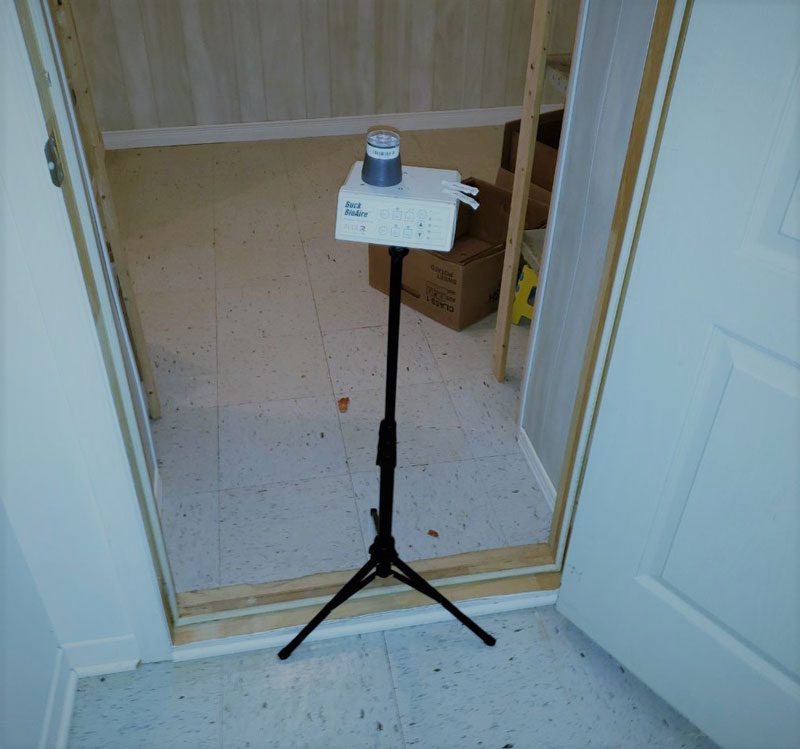
Three Tests, Three Questions
Air sampling draws measured volumes through spore traps — indoor counts compared against an outdoor baseline answer “is the air carrying elevated spores, and of what?” Surface sampling (tape lifts, swabs) answers “is this visible material actually mold, and which?” Post-remediation verification re-tests after cleanup answers “did the remediation actually work?” — the test people skip and shouldn’t, since it’s the only receipt that means anything. All analysis runs through independent accredited labs; the EPA’s guidance frames when sampling genuinely helps.
What The Report Means — And Doesn’t
Lab reports list species and counts, not verdicts — interpretation lives in the comparison: indoor loads against outdoor, water-indicator species (the ones that only thrive where materials stayed wet) flagged, and results read against what the inspection found physically. We translate every report into plain decisions and next steps. One honest limit: sampling describes conditions; it never replaces finding the moisture source — data and diagnosis together or neither is worth much.

Mold Questions, Answered With Data
Do I need testing if I can see the mold?
Sometimes surface confirmation and pre-remediation documentation still earn their keep — and sometimes the honest answer is skip testing, fix moisture, clean it up. We say which, per the EPA’s own logic.
What is a normal indoor spore count?
There is no universal number — indoor results are judged against your outdoor baseline that day, which is why we always sample both.
Why does post-remediation verification matter so much?
Because “it looks clean” is not data — PRV is the independent confirmation the job succeeded, and the document that protects a sale or claim afterward.
Are home mold test kits accurate?
Settle-plate kits grow something almost anywhere and answer nothing about your air versus outdoors — measured-volume sampling against an outdoor baseline is what labs can actually interpret.
What is a normal mold spore count?
There isn’t a universal number — indoor results are judged against your outdoor baseline that day, which is why both always get sampled together.
How long do mold test results take?
Standard lab turnaround runs a few business days; expedited options exist when a closing or remediation schedule is waiting on the answer.
What is chain of custody in mold testing?
Documented sample handling from collection to lab — the procedural backbone that makes results defensible in sales and claims.
Do you test air quality in the living space too?
Whenever attic or wall findings raise the pathway question — indoor air against the outdoor baseline answers whether the problem is reaching the rooms you breathe in.
Testing In Context
The service around the samples.
Want Data, Not Drama?
Sampling with independent lab analysis — translated into plain next steps.