
Roof Snow Removal in Twinsburg, Ohio
Snow cleared before the load turns structural, by crews working on the roof rather than guessing from the driveway.
- Free inspection & written estimate
- Licensed in Ohio & fully insured
- Every finding photographed
- Insurance restoration handled

Get a free Twinsburg quote
Tell us what you need. We call you back.
Roof snow removal in Twinsburg, OH. Crews clear the snowpack before the load becomes structural, working the roof by hand rather than from the ground. Serving Twinsburg and nearby. Call (330) 918-1018.
Key Takeaways
- Local conditions: Multi-gable fronts give Twinsburg roofs more valleys per square foot than the surrounding towns, and valleys are where debris and ice collect.
- Service area: Twinsburg and Summit County. Direct line (330) 918-1018.
- Documentation: written scope up front and photographs throughout, which is what an adjuster needs.
- Licensing: licensed Ohio contractor — permits pulled and inspections scheduled as part of the job.
How much does the snow on a Twinsburg roof actually weigh?
Weight follows water content, not depth. One inch of liquid water spread across a square foot weighs 5.2 lbs, so what matters is how much water is locked in the pack rather than how deep it looks from the driveway.
| Snow type | Weight per foot of depth | What it means |
|---|---|---|
| Fresh dry powder | 3–5 lbs per sq ft | Light, but it compresses under the next storm |
| Settled snow | 12–20 lbs per sq ft | The usual state of a pack a week after it fell |
| Wet or rain-soaked snow | 20+ lbs per sq ft | The condition that causes most structural calls |
| Ice layer | Roughly 5 lbs per inch | A thin crust can outweigh a foot of powder |
Each storm compresses the one beneath it, so after three or four events depth stops tracking weight entirely. The design ground snow load for your address is set by ASCE 7 and your local building department, and it varies county to county.
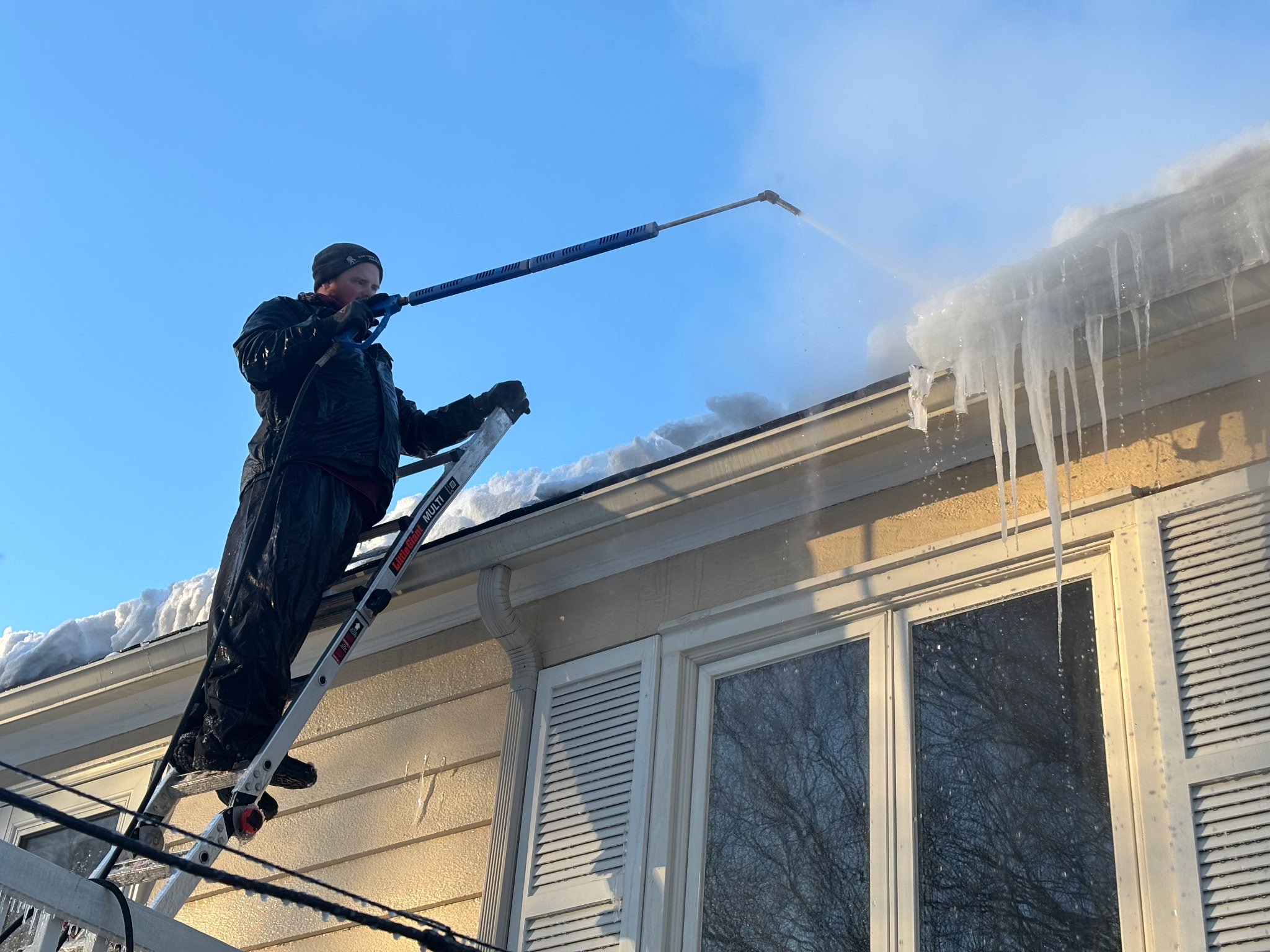
What are the warning signs a roof is overloaded?
Structures give warning before they fail. These are the signals that matter, and they are structural rather than cosmetic:
- Interior doors or windows that suddenly stick or will not latch
- New cracks in drywall, especially at door corners and where walls meet ceilings
- A ridge line that has begun to sag or dip when sighted from outside
- Creaking, popping or cracking noises from the roof structure
- Sprinkler heads or ceiling fixtures that have dropped below the ceiling line
- Doors at the top of a stairwell rubbing the frame
If you are seeing several of these at once, leave the building and call from outside. Flat and low-slope roofs, older barns and additions built over a porch carry the most risk, because snow does not shed from them at all.
Why does Twinsburg need snow taken off at all?
Multi-gable fronts give Twinsburg roofs more valleys per square foot than the surrounding towns, and valleys are where debris and ice collect.
Two things follow from that. The pack does not shed itself, so weight accumulates across the season rather than resetting between storms. And a deep pack is what feeds an ice dam — heat escaping the ceiling melts the underside of the snow, the meltwater runs to the cold eave, and it refreezes there. Clearing snow removes the fuel supply before the dam has anything to build from.

How is the snow actually removed?
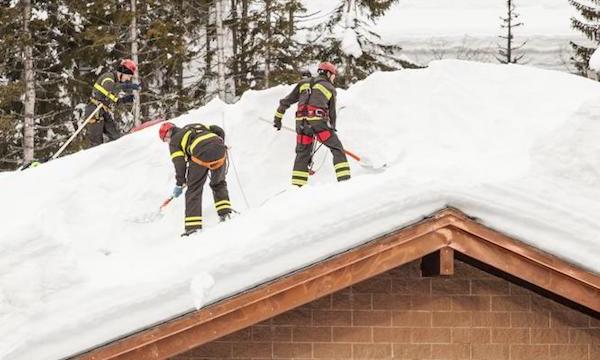
Crews work from the roof with plastic-bladed tools and leave a thin base layer in place, so the shingle surface is never scraped. Snow is dropped away from walkways, entries, meters and mechanical equipment, and the ground below is checked before anything comes down.
Roof rakes used from the ground can reach the first four to six feet of eave on a single-storey home, which is genuinely useful for preventing dams. They cannot address the load on the main field of the roof, and they cannot touch a second storey or a low-slope section at all.
Roof Snow Removal near Twinsburg — free estimate
Call (330) 918-1018 for a real arrival slot, or request a quote below. Written price before work starts, photographs of everything.
Free Twinsburg estimate
Tell us what you need and we call you back.
Other services in Twinsburg, OH
Back to Twinsburg services or all Ohio locations.
Roof Snow Removal in other Ohio cities
- Roof Snow Removal in Akron
- Roof Snow Removal in Ashtabula
- Roof Snow Removal in Aurora
- Roof Snow Removal in Barberton
- Roof Snow Removal in Brunswick
- Roof Snow Removal in Canton
- Roof Snow Removal in Chardon
- Roof Snow Removal in Cleveland
- Roof Snow Removal in Columbus
- Roof Snow Removal in Cuyahoga Falls
- Roof Snow Removal in Dublin
- Roof Snow Removal in Elyria
- Roof Snow Removal in Green
- Roof Snow Removal in Hudson
- Roof Snow Removal in Kent
- Roof Snow Removal in Lakewood
- Roof Snow Removal in Lorain
- Roof Snow Removal in Massillon
- Roof Snow Removal in Medina
- Roof Snow Removal in Mentor
- Roof Snow Removal in North Canton
- Roof Snow Removal in Parma
- Roof Snow Removal in Portage Lakes
- Roof Snow Removal in Sandusky
- Roof Snow Removal in Solon
- Roof Snow Removal in Stow
- Roof Snow Removal in Strongsville
- Roof Snow Removal in Toledo
- Roof Snow Removal in Wadsworth
- Roof Snow Removal in Warren
- Roof Snow Removal in Westerville
- Roof Snow Removal in Wooster
- Roof Snow Removal in Youngstown
Roof Snow Removal in Twinsburg — common questions
When should I have snow removed rather than waiting?
+
Once the pack is deep enough to hold water, or once several storms have layered on top of each other. If you are seeing any of the structural warning signs above, do not wait for the next storm.
Do you clear commercial and flat roofs in Twinsburg?
+
Yes. Flat and low-slope roofs carry the highest risk because they shed nothing on their own. Commercial work is scheduled with the property manager and documented for the file.
Will removing the snow damage my shingles?
+
No. Crews use plastic-bladed tools and leave a base layer in place rather than scraping to the surface. Metal shovels and chipping are what damage a roof in freezing weather.
Can I just use a roof rake myself?
+
From the ground, on a single-storey roof, a rake handles the first few feet of eave and genuinely helps with dam prevention. Getting on a snow-covered roof yourself is how people fall, and it is not worth it.
How quickly can a crew reach Twinsburg?
+
Inside a 24-hour window, and same day during active storms. Call (330) 918-1018 for a real arrival slot rather than a callback.
Do you cover the towns around Twinsburg?
+
Yes — the Twinsburg dispatch covers Summit County. Call if your address is nearby but not on that list.
Need help in Twinsburg?
Free inspection, written price before work starts, and photographs of everything.
Call (330) 918-1018 Online QuoteFree Twinsburg Estimate
Takes about 20 seconds.