
Ice Dam Removal in Hempstead, New York
Low-pressure steam, never chipping or salt. A crew reaches Hempstead inside 24 hours and photographs every finding for your claim.
- Crew on site within 24 hours
- Low-pressure steam — no roof damage
- Fully insured
- Photographed for your insurance claim
Get a free Hempstead quote
Tell us what is happening. A dispatcher calls you back.
Emergency ice dam removal in Hempstead, NY. Low-pressure steam lifts the dam without touching the shingle, a crew is on site within 24 hours, and every finding is photographed. Serving Garden City border, West Hempstead. Call (718) 587-0125.
Key Takeaways
- Local conditions: Hempstead and the surrounding Nassau villages are post-war capes and ranches on tight lots, with shallow-pitch roofs and short eaves. Coastal storms here deliver wet, heavy snow that loads a shallow roof faster than a steeper one sheds it.
- Dispatch: a crew reaches Hempstead inside 24 hours, same day during active storms. Direct line (718) 587-0125.
- Covered from this dispatch: Garden City border, West Hempstead, Uniondale, Roosevelt, Franklin Square, Elmont.
- Documentation: before, during and after photographs plus a written scope.
What is the fastest way to remove an ice dam in Hempstead?
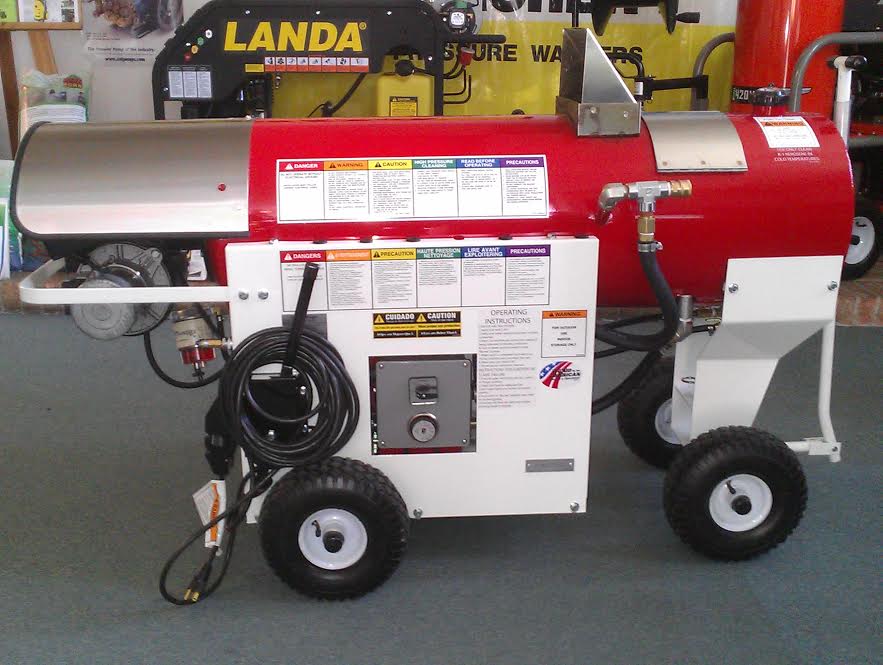
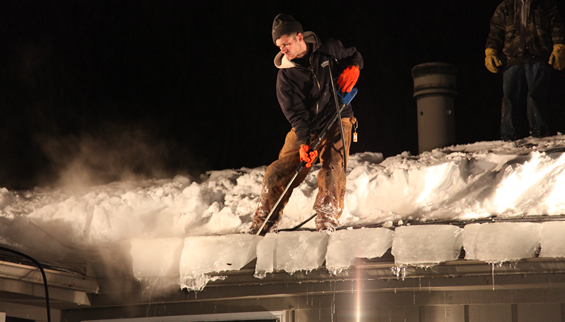
Low-pressure steam is the only method that removes a dam quickly without damaging the roof. Steam melts the ice free of the shingle surface at roughly 250°F and near-zero pressure, so the granule surface, the flashing and the gutter all survive the process. A typical Hempstead dam clears in two to five hours depending on its length and roof access.
When water is already entering the building, the crew opens relief channels through the dam first. That gives the trapped meltwater a path off the roof within the first half hour, which stops the interior damage from spreading while the rest of the ice comes off.
Why not chip the ice off, or throw salt on the roof?
Every alternative to steam trades roof damage for speed, and the damage usually costs more than the removal did. Here is what each one actually does:
| Method | What it does to the roof | Verdict |
|---|---|---|
| Low-pressure steam | Melts ice free of the shingle. No impact, no chemicals, no pressure against the courses. | Recommended |
| Hammer, chisel or ice pick | Cracks shingles in cold weather, when asphalt is brittle. Punctures are often not found until the spring thaw. | Causes leaks |
| Rock salt or ice melt | Corrodes aluminium gutters, fasteners and flashing, and kills the planting bed below the eave. | Corrosive |
| Pressure washer | Drives water up under the shingle courses and strips granules from the surface. | Voids warranties |
| Waiting for a thaw | Meltwater keeps entering the wall and ceiling for as long as the dam holds. | Damage compounds |
Most shingle manufacturers will not honour a warranty claim on a roof that was chipped or pressure-washed. Steam is the method that keeps the warranty intact.

How do I know the ice dam is leaking into the house?
Water from a dam rarely appears directly under the eave. It travels along the top of the ceiling drywall and shows up several feet inside the room. Watch for these signs:
- A brown ring or damp patch on the ceiling, usually near an exterior wall
- Peeling paint or bubbling at the top of a wall
- Damp or compressed insulation in the attic above the eave line
- Icicles hanging behind the gutter rather than off its front lip
- A visible ridge of ice sitting on the roof several feet above the gutter
Once water is inside, the clock matters. Wet insulation loses most of its R-value, and drywall that stays damp for more than a couple of days is a mould question rather than a drying question.

What does the crew do when it arrives in Hempstead?
The sequence is the same on every job, and it is documented as it happens:
- Assess and photograph. The crew locates the dam, the meltwater entry point and any pre-existing damage before anything is touched.
- Open relief channels. If water is entering the building, drainage paths come first.
- Steam the dam clear. The ice is removed from the eave, the valleys and behind the gutter line.
- Clear the drainage path. Gutters and downspouts are opened so the next melt has somewhere to go.
- Hand over documentation. Before, during and after photographs plus a written scope, which is what a carrier needs to process the claim.
Does homeowners insurance cover ice dam removal in Hempstead?
In most cases yes, when water is actively entering the building. Standard homeowner policies (HO-3 and HO-5 forms) treat an active ice dam leak as sudden and accidental water damage, and removal is classified as water mitigation — the emergency work done to stop loss from getting worse. Mitigation is usually paid separately from the repair itself, and often without a separate deductible. Your carrier makes the final call, not the contractor.
Your policy requires you to mitigate
Every standard policy contains a duty to protect property clause. It obligates you to take reasonable emergency steps to prevent further damage after a loss, and it says the carrier will pay the reasonable cost of doing so. That clause is the reason emergency ice dam removal is payable. It also cuts the other way: if you leave a known active leak alone and the ceiling comes down two weeks later, the carrier can deny the additional damage as a failure to mitigate.
What is usually covered, and what is not
| Item | Typical treatment |
|---|---|
| Emergency removal while water is entering | Generally covered as water mitigation under the duty-to-protect clause |
| Interior damage — ceilings, drywall, insulation, flooring, contents | Generally covered under dwelling and personal property coverage |
| Gutters, fascia or shingles physically torn by the ice | Generally covered as direct physical damage from the same event |
| Preventive removal with no active leak | Frequently denied — carriers treat it as maintenance |
| Heat cable installation and attic insulation work | Not covered — these are improvements, not loss repair |
| Long-term seepage or rot found later | Commonly excluded as repeated seepage rather than a sudden event |
What the carrier will want to see
The difference between a paid ice dam claim and a fought one is almost always documentation, gathered before the evidence melts. Every Hempstead job produces:
- Dated photographs of the dam in place, the entry point and the interior damage, taken before any work starts
- A written scope describing the mitigation performed and why it was necessary
- Moisture readings and progress photographs through the work
- An invoice that separates emergency mitigation from any repair work that follows
Call your carrier and open the claim the same day you notice water. Ask specifically whether emergency mitigation is payable before the adjuster inspects — most policies allow the work to proceed immediately, because waiting is what the mitigation clause exists to prevent. Roof Gutter Now handles ice dam insurance claims and can send documentation directly to your adjuster.
Coverage varies by policy form, endorsement and state. Nothing here is a coverage opinion — your carrier and your policy language decide the outcome.
Emergency ice dam removal near Hempstead — what it costs and how fast we get there
Same-day and next-day service. Call (718) 587-0125 and a dispatcher gives you a real arrival slot, not a callback. Crews reach Hempstead inside 24 hours, and same day during active storms.
What it costs. Pricing follows the linear footage of dam and the roof access required, not a flat call-out fee. A short single-storey eave is a different job from a two-storey valley, and the price reflects that. You get the number in writing before work starts, and there is no obligation to proceed.
What you get. Licensed and insured crews, steam-only removal that keeps your shingle warranty intact, and a photographed file suitable for your carrier. Request a free estimate or call (718) 587-0125.
Free Hempstead estimate
Tell us what is happening and a dispatcher calls you back.
Areas covered from Hempstead
Same dispatch, same 24-hour window. Call (718) 587-0125 if your address is nearby but not listed.
Other winter services in Hempstead, NY
Back to Hempstead winter services or all New York locations.
Ice Dam Removal in other New York City area locations
Ice Dam Removal in Hempstead — common questions
How much does ice dam removal cost in Hempstead?
+
Pricing follows the linear footage of dam and the roof access required, not a flat call-out fee. You get a written price before any work starts, and there is no obligation to proceed.
Will my insurance cover ice dam removal?
+
Where water is actively entering the building, most homeowner policies treat removal as water mitigation under dwelling coverage. The carrier decides, not the contractor, which is why every job is photographed and scoped in writing.
How fast can you get to Hempstead?
+
A crew is dispatched inside a 24-hour window, and same day during active storms. Call (718) 587-0125 and the dispatcher will give you a real arrival slot.
Does steam damage shingles or void my warranty?
+
No. Steam works at near-zero pressure and lifts ice free of the surface without impact. It is chipping and pressure washing that damage shingles and give a manufacturer grounds to deny a warranty claim.
Can I remove the ice dam myself?
+
Chipping at ice in freezing weather cracks shingles you cannot see under the snow, and roof edges in winter are the single most common source of serious ladder falls. If the dam is small and no water is entering, a roof rake used from the ground is the safer option.
Do you serve the towns around Hempstead?
+
Yes. The Hempstead dispatch covers Garden City border, West Hempstead, Uniondale, Roosevelt, Franklin Square, Elmont. If your address is nearby but not listed, call and ask.
Need a crew in Hempstead?
Call for a real arrival slot. Written price before work starts, photographs of everything.
Call (718) 587-0125 Online QuoteFree Hempstead Estimate
Takes about 20 seconds.