
Icicles on Your Gutters: Harmless or a Warning Sign?
Most people notice the icicles and miss what is happening behind them.
Icicles are the visible half of a story. What matters is whether they formed from ordinary runoff or from meltwater that is already backing up behind a ridge of ice at the eave. The second case is an ice dam, and it leaks from the inside out.
When Icicles Are Basically Harmless
A few short icicles after a sunny day above freezing, on a roof that is otherwise evenly snow-covered, are usually just runoff refreezing at the drip edge. They are cosmetic, they melt off in the next warm spell, and they tell you the roof drained the way it should.
When They Are Telling You Something
The warning version looks different. Long, thick icicles across a whole eave, ice filling the gutter rather than hanging from it, icicles forming behind the gutter or at a soffit, and bare or patchy roof above while the eave stays frozen — that combination means heat is escaping through the deck, snow is melting on the upper roof, and the water is refreezing where it hits the cold overhang. The ridge you cannot see from the ground is the actual problem.
The Signs to Check Indoors
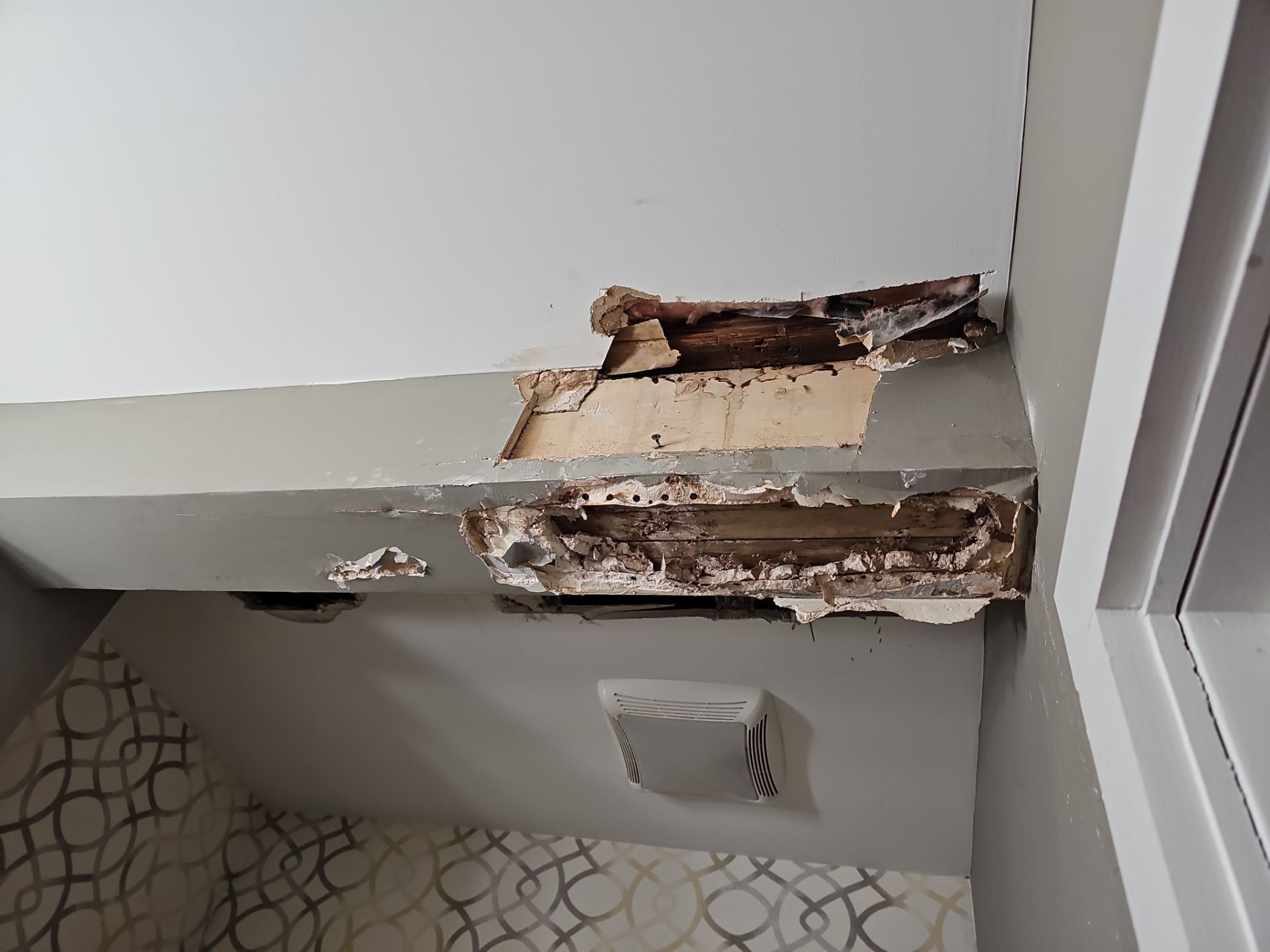
By the time water shows inside, the dam has been working for a while. Look for staining at the top of exterior walls, damp or discoloured drywall where the ceiling meets the wall, peeling paint near windows on the top floor, a musty smell in an upstairs room, and damp insulation in the attic near the eaves. Any of those means water is already past the roof surface.
| What You See | What It Usually Means |
|---|---|
| Short icicles, even snow cover | Normal runoff |
| Thick ice filling the gutter | Dam forming — drainage blocked |
| Bare patches on upper roof | Attic heat loss |
| Icicles behind the gutter or at soffit | Water already behind the fascia |
| Ceiling stain at exterior wall | Active interior leak |
Why Knocking Them Down Makes It Worse
Hitting icicles with a shovel or hammer is the instinct and it is the wrong move. The falling ice takes gutter, drip edge and sometimes fascia with it, it does nothing about the ridge of ice further up the roof, and standing under falling ice is how people get seriously hurt. The dam behind the icicles is what needs removing, and it needs steam rather than impact.
What Actually Resolves It
Low-pressure steam melts the dam without touching the shingle, gutter or downspout beneath it. Once the ice is off and the drainage path is open, the underlying cause gets addressed — usually attic air sealing and ventilation, or heat cable where the geometry cannot be fixed. If water reached the interior, the resulting damage is frequently a covered claim; see ice dam insurance claims.
Free, photographed inspection — no obligation. We document what we find and put the scope in writing before any work begins.
Frequently Asked Questions
Are icicles always a sign of an ice dam?
No. Short icicles after a sunny thaw on an evenly covered roof are usually harmless runoff. Thick ice filling the gutter, or icicles paired with bare patches on the upper roof, indicate a dam forming.
Is it safe to knock icicles down?
No. Falling ice injures people and commonly tears off gutter, drip edge and fascia, and it does nothing about the ice ridge higher up the roof that is causing the backup.
Why does my roof have bare patches in winter?
Heat escaping from the living space into the attic is melting the snow from underneath. That is the same heat loss that produces ice dams, so bare patches are an early warning.
How quickly can an ice dam cause interior damage?
Sometimes within a day or two of a freeze-thaw cycle once water is backing up behind the ridge. Staining at the top of an exterior wall usually means it has already been happening for a while.
Will my gutters be damaged by the ice?
They can be. Ice filling a gutter adds significant weight and can pull hangers, separate seams or bend the run. That damage is often documentable for an insurance claim.
Should I wait for it to melt on its own?
If water is showing inside, no. In our climate the pack usually refreezes before it fully drains, so waiting typically means more cycles and more interior damage rather than resolution.
Not sure whether you need this yet? A free inspection settles it in writing.
Call (330) 918-1018Get My Online Quote