Quick answer
Commercial roof snow and ice dam removal in Lafayette, IN. Flat and low-slope roofs cleared on schedule, drains kept open, and every visit documented for the building file. Call (765) 256-5026.
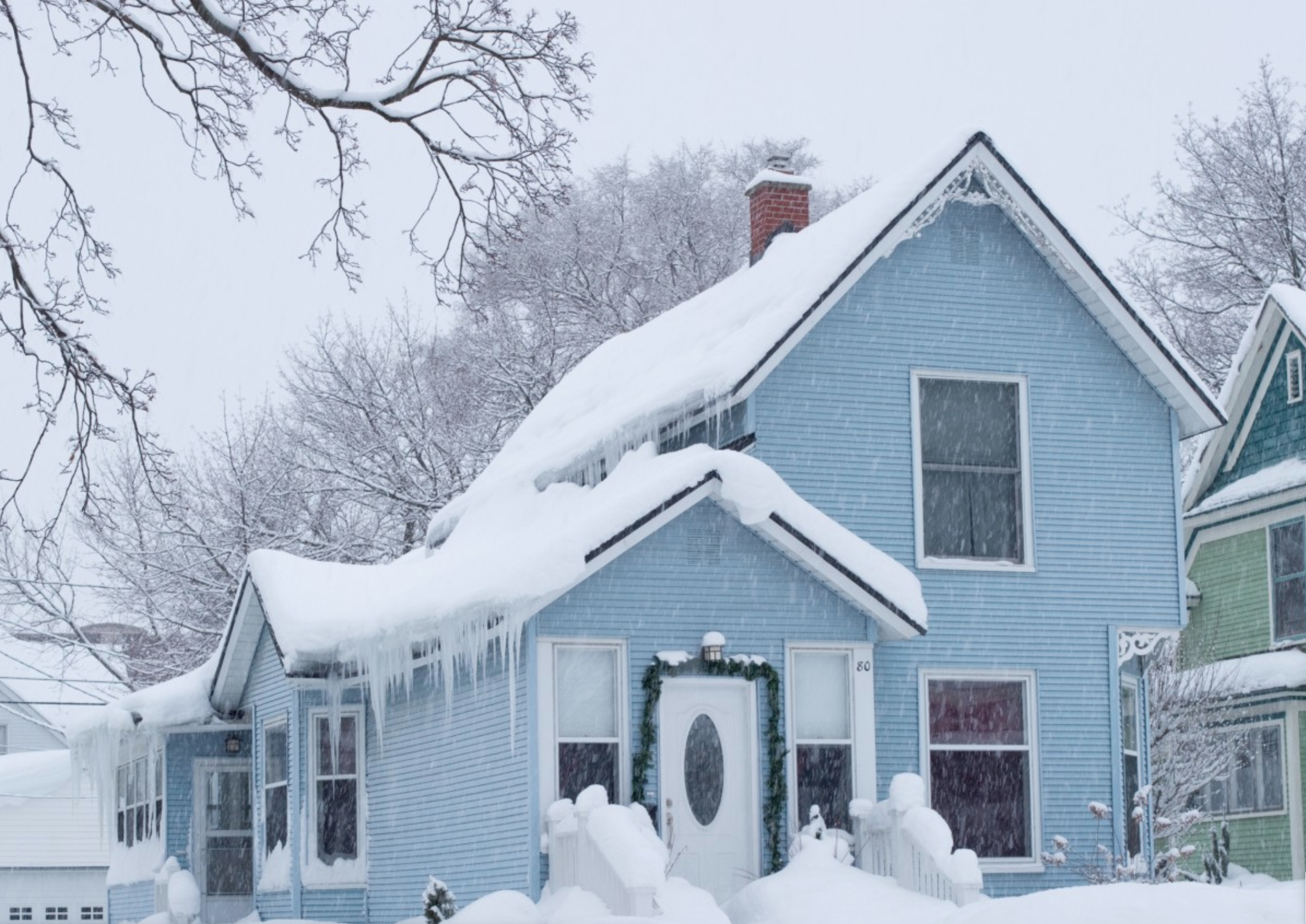
- Local conditions: Lafayette’s Wabash Valley winters mix prairie wind with the freeze-thaw cycle — drifting stacks snow against Purdue-area rooflines and courthouse-district Victorians in patterns the forecast never mentions.
- Dispatch: a crew reaches Lafayette inside 24 hours, same day during active storms. Direct line (765) 256-5026.
- Covered from this dispatch: West Lafayette, Battle Ground, Dayton IN, Rossville IN, Delphi, Monticello IN.
- Documentation: before, during and after photographs plus a written scope, which is what an insurer needs.
Why do commercial roofs carry more risk than houses?
A pitched residential roof sheds some of what lands on it. A flat or low-slope commercial roof sheds nothing, so every storm adds to what is already there and the load only goes one direction until someone removes it.
- Drains and scuppers freeze first. Once they are blocked, meltwater ponds instead of leaving, and ponded water is far heavier than the snow it came from.
- Parapet walls trap drifts. Wind loads snow against the parapet, concentrating weight along the edges rather than spreading it evenly.
- Rooftop equipment creates drift shadows. Units, curbs and screens all collect deep drifts on their lee side.
- Long clear spans have less reserve. Warehouses and retail boxes are engineered close to their design load.
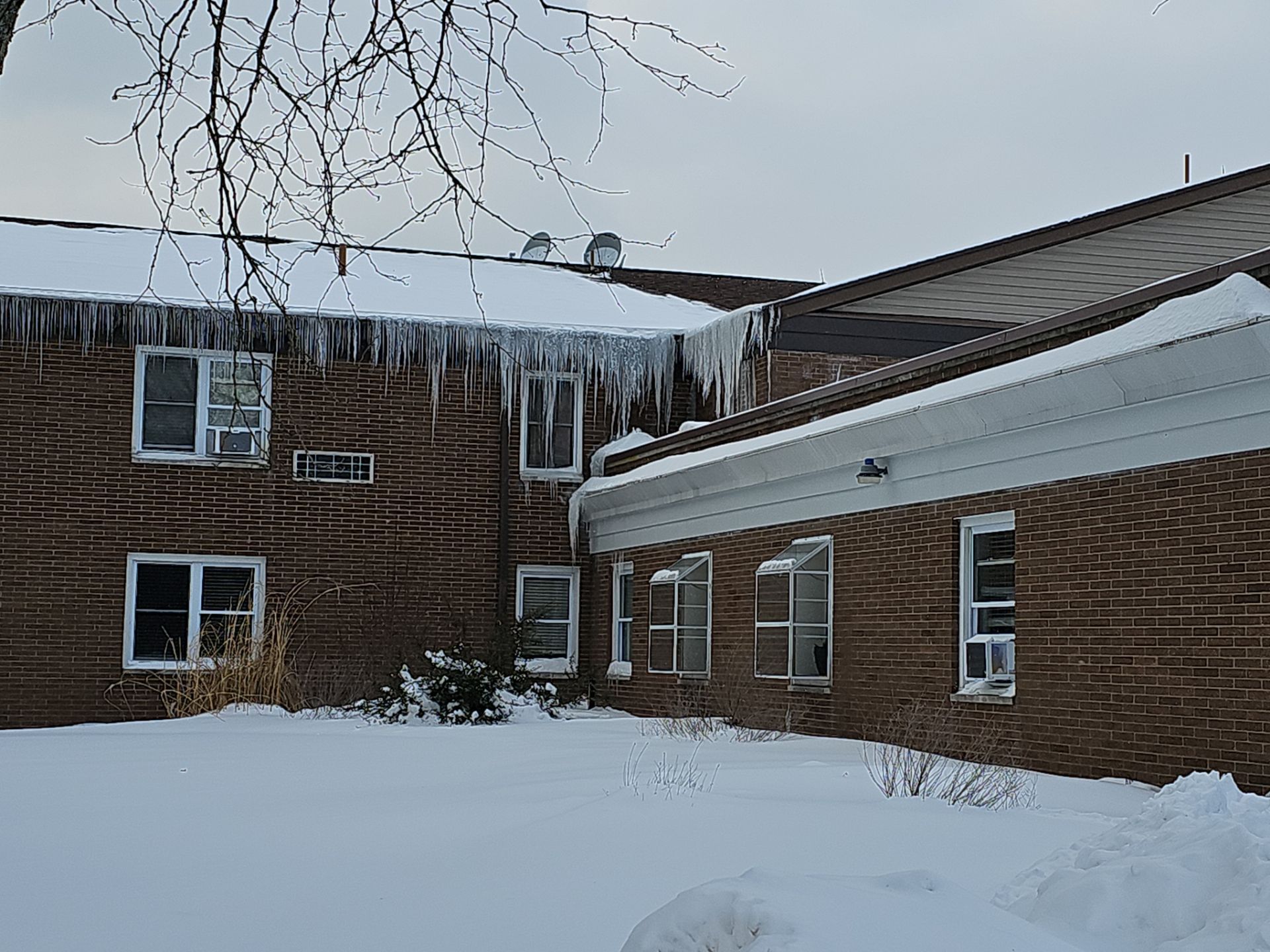
What does a commercial clearing visit include?
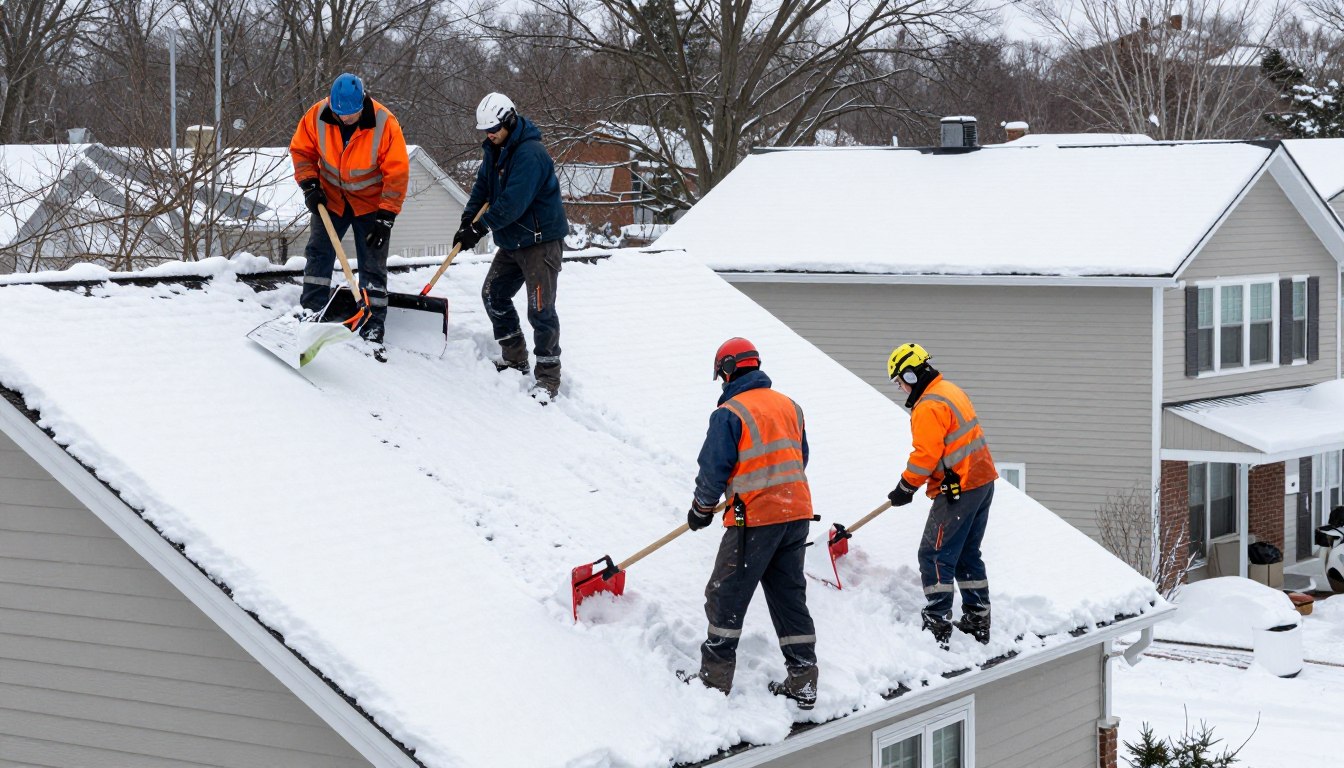
Work is scheduled with the property manager and sequenced so the building keeps operating:
- Drains, scuppers and internal roof drains opened first, so meltwater can leave
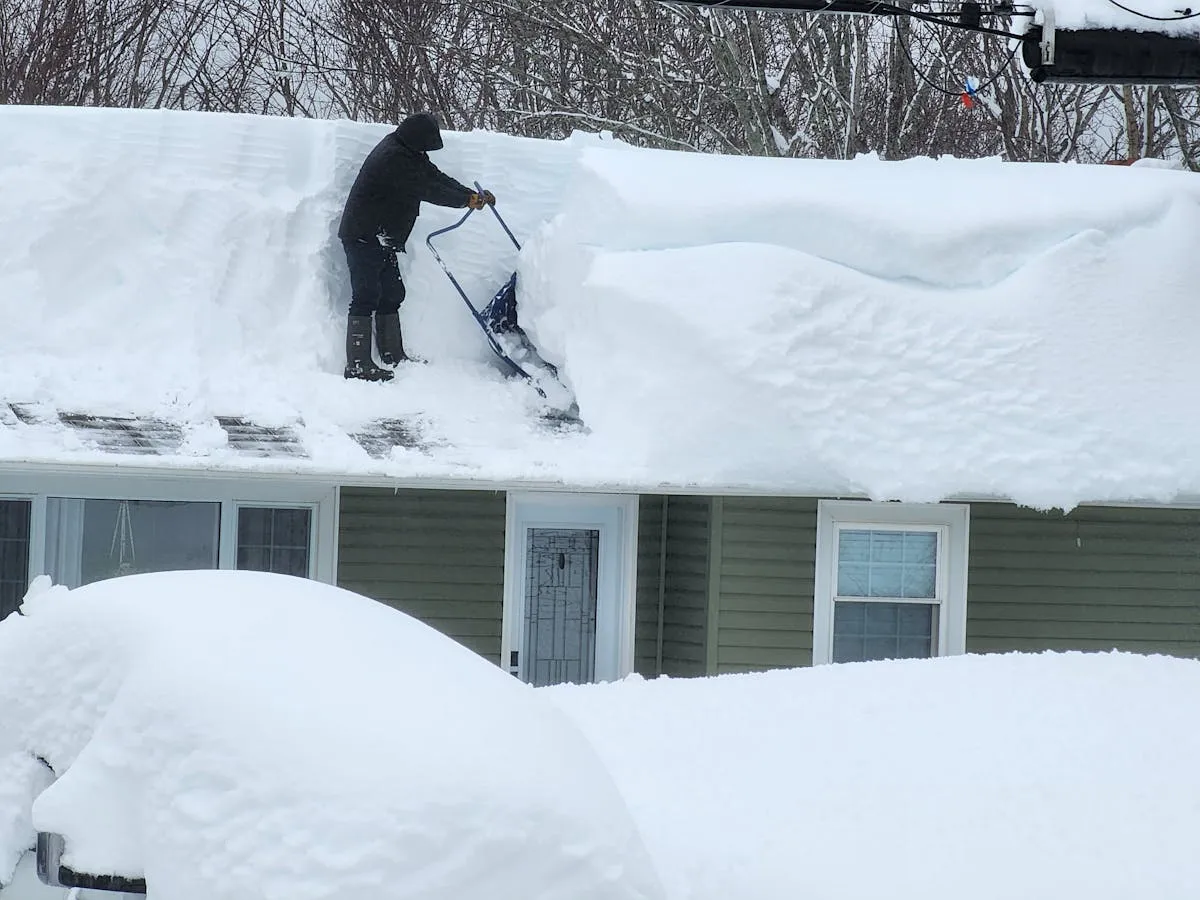
- Snow removed to a leave-behind depth agreed in advance, never scraped to the membrane
- Drift zones at parapets and equipment reduced to match the rest of the field
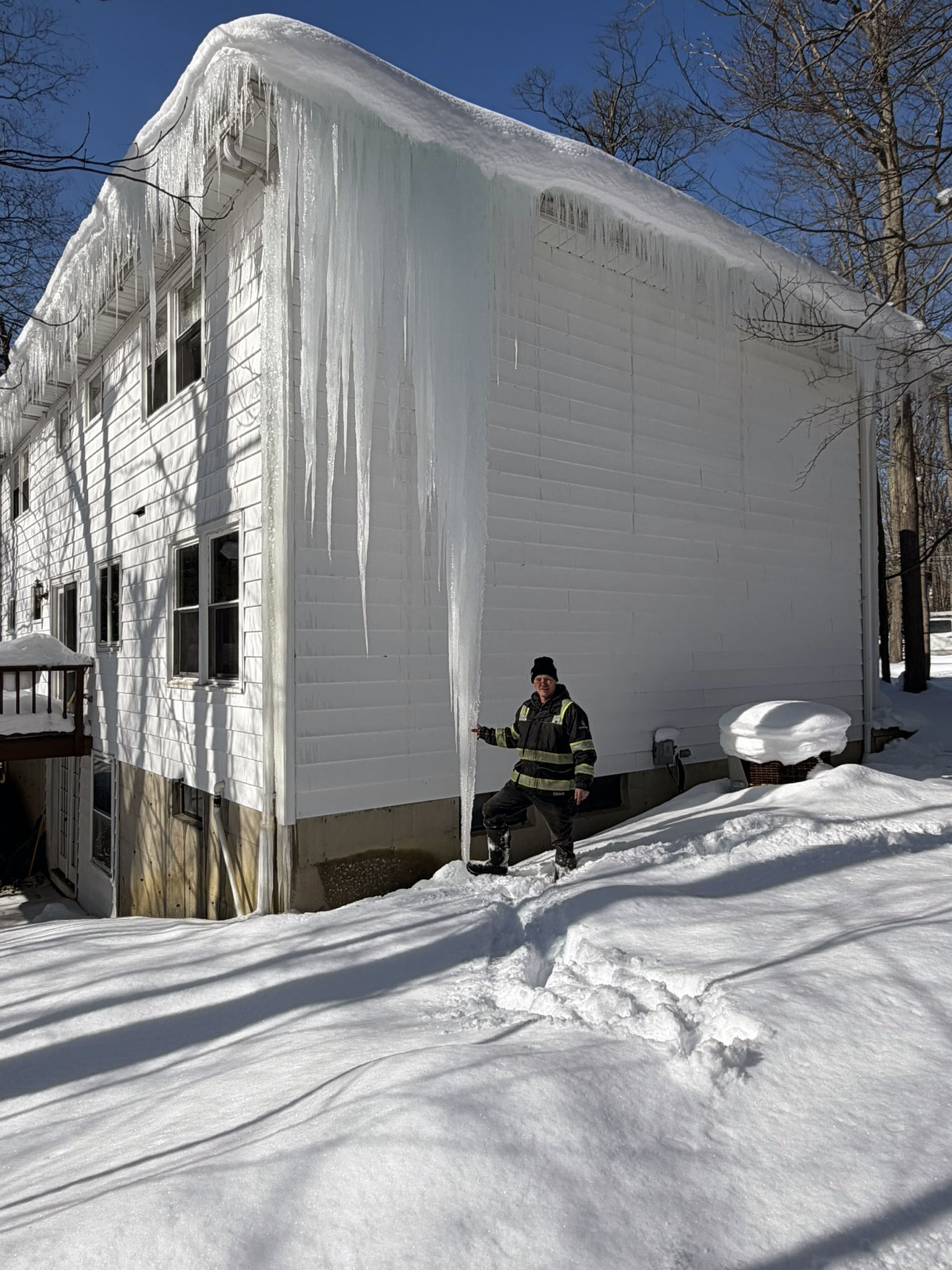
- Ice removed from eaves, overhangs and canopy edges with steam
- Discharge areas managed so entries, walkways and parking stay usable
- Photographs of the roof before and after, with the scope in writing for the building file
Membrane roofs need particular care. Plastic tools and a leave-behind layer are what keep a TPO, EPDM or modified-bitumen surface intact.

What does Lafayette weather do to a commercial roof here?
Lafayette’s Wabash Valley winters mix prairie wind with the freeze-thaw cycle — drifting stacks snow against Purdue-area rooflines and courthouse-district Victorians in patterns the forecast never mentions.
For a flat roof that means a pack that stays put and keeps building, and drainage that is frozen exactly when the melt arrives. The result is ponding on top of an already loaded deck — which is the condition behind most winter structural calls.
Who is this for?
Property managers, facility managers, building owners and tenants responsible for their own roof under a lease. Retail, warehouse and light industrial, offices and medical buildings, churches and schools, restaurants and apartment buildings.
Seasonal arrangements are available where clearing is triggered by an agreed snow depth, so the decision is not being made during the storm. That also produces a documented maintenance record, which matters if a claim is ever filed.
Areas covered from Lafayette
Lafayette crews reach these communities on the same dispatch. If your address is nearby but not listed, call (765) 256-5026 and ask.
- West Lafayette
- Battle Ground
- Dayton IN
- Rossville IN
- Delphi
- Monticello IN
Is commercial roof snow removal covered by insurance?
Commercial property policies follow the same logic as homeowner forms, with more money at stake. Routine clearing is an operating expense. Emergency clearing to prevent imminent collapse is usually payable as protective safeguard or mitigation expense, and collapse from snow load is generally a covered peril under most commercial property forms.
- Business interruption may respond if a covered roof loss stops operations — which is why documented dates and scope matter on a commercial file.
- Ponding from frozen drains is the most common commercial winter loss, and the one most often disputed. Photographs of blocked drains before the melt are what settle it.
- A documented maintenance record — scheduled clearing, dated and photographed — is the strongest defence against a neglect argument if a claim is ever filed.
Every Lafayette commercial visit is photographed and scoped in writing for the building file. See commercial storm and roof claims.
Commercial forms vary widely. Your broker and policy language govern.
Commercial roof snow removal near Lafayette — contracts and emergency response
Emergency response. Inside 24 hours, same day during active storms, with buildings on a seasonal agreement prioritised. Overnight and pre-opening work is normal on retail and medical sites. Call (765) 256-5026.
Seasonal agreements. Clearing triggered at an agreed snow depth, so the decision is not being made mid-storm. That also builds the documented maintenance record that protects you if a claim is ever filed.
What you get. Certificates of insurance naming the owner or manager, membrane-safe methods, drains opened first, and every visit photographed for the building file. Request a commercial quote.
Back to Lafayette winter services or all Indiana locations. For the method itself, see how steam ice dam removal works, ice dam prevention, or ice dam insurance claims.