
Roof Snow Removal in Norfolk, Nebraska
Snow cleared before the load turns structural, by crews working on the roof rather than guessing from the driveway.
- Crew on site within 24 hours
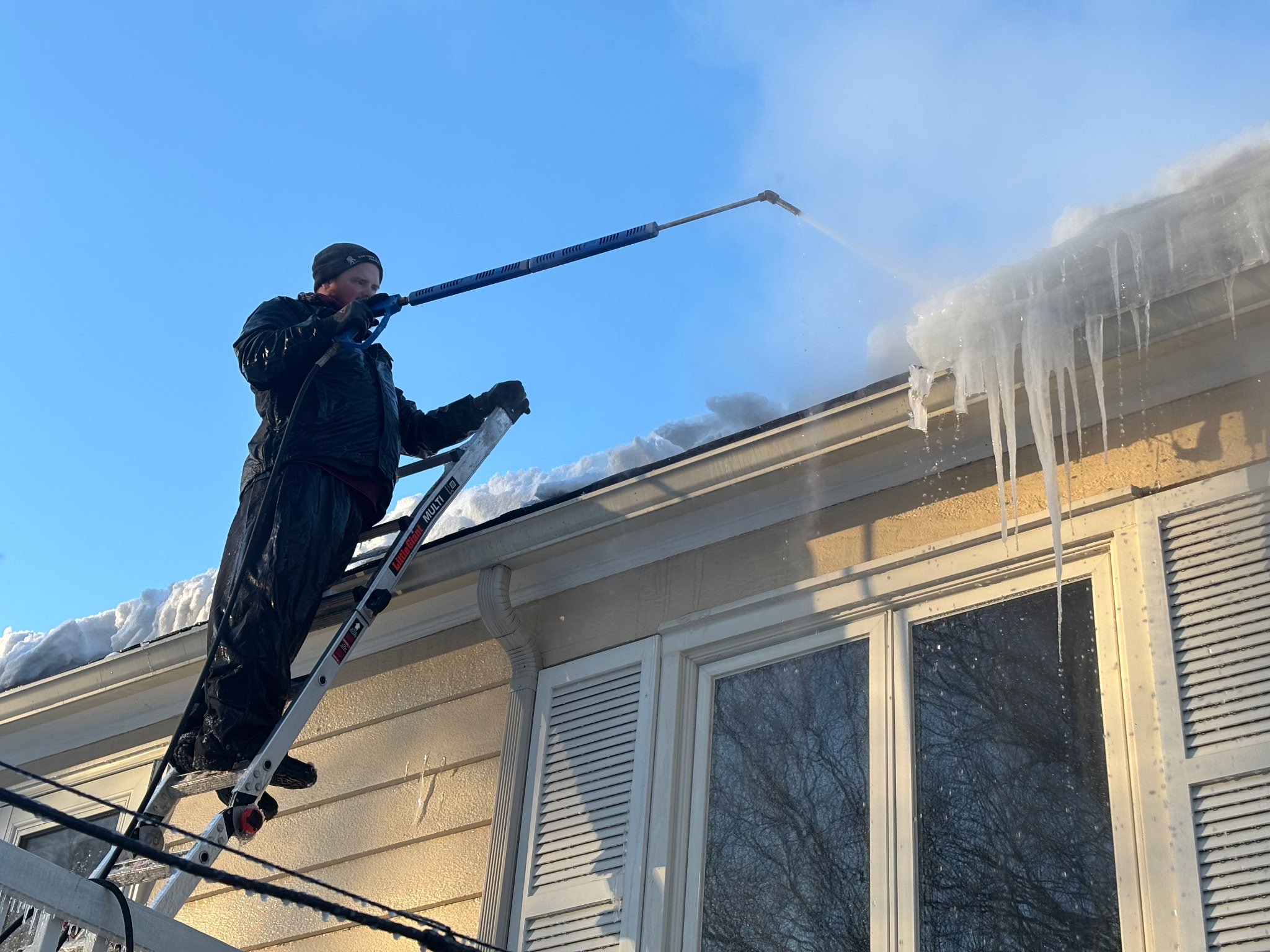
- Low-pressure steam — no roof damage
- Licensed & fully insured
- Photographed for your insurance claim
Get a free Norfolk quote
Tell us what is happening. A dispatcher calls you back.
Roof snow removal in Norfolk, NE. Crews clear the snowpack before the load becomes structural, working the roof by hand rather than from the ground. Serving Wayne NE, Madison NE. Call (402) 433-6455.
Key Takeaways
- Local conditions: Norfolk sits in northeast Nebraska where the coldest sustained stretches in the state settle in, and where Elkhorn valley wind drifts each storm against roofs that hold it for months.
- Dispatch: a crew reaches Norfolk inside 24 hours, same day during active storms. Direct line (402) 433-6455.
- Covered from this dispatch: Wayne NE, Madison NE, Battle Creek NE, Pierce NE, Stanton NE, Columbus NE.
- Documentation: before, during and after photographs plus a written scope, which is what an insurer needs.
How much does the snow on a Norfolk roof actually weigh?
Weight follows water content, not depth. One inch of liquid water spread across a square foot weighs 5.2 lbs, so what matters is how much water is locked in the pack rather than how deep it looks from the driveway.
| Snow type | Weight per foot of depth | What it means |
|---|---|---|
| Fresh dry powder | 3–5 lbs per sq ft | Light, but it compresses under the next storm |
| Settled snow | 12–20 lbs per sq ft | The usual state of a pack a week after it fell |
| Wet or rain-soaked snow | 20+ lbs per sq ft | The condition that causes most structural calls |
| Ice layer | Roughly 5 lbs per inch | A thin crust can outweigh a foot of powder |
Each storm compresses the one beneath it, so after three or four events depth stops tracking weight entirely. The design ground snow load for your address is set by ASCE 7 and your local building department, and it varies county to county.
What are the warning signs a roof is overloaded?
Structures give warning before they fail. These are the signals that matter, and they are structural rather than cosmetic:
- Interior doors or windows that suddenly stick or will not latch
- New cracks in drywall, especially at door corners and where walls meet ceilings
- A ridge line that has begun to sag or dip when sighted from outside
- Creaking, popping or cracking noises from the roof structure
- Sprinkler heads or ceiling fixtures that have dropped below the ceiling line
- Doors at the top of a stairwell rubbing the frame
If you are seeing several of these at once, leave the building and call from outside. Flat and low-slope roofs, older barns and additions built over a porch carry the most risk, because snow does not shed from them at all.
Why does Norfolk need snow taken off at all?
Norfolk sits in northeast Nebraska where the coldest sustained stretches in the state settle in, and where Elkhorn valley wind drifts each storm against roofs that hold it for months.
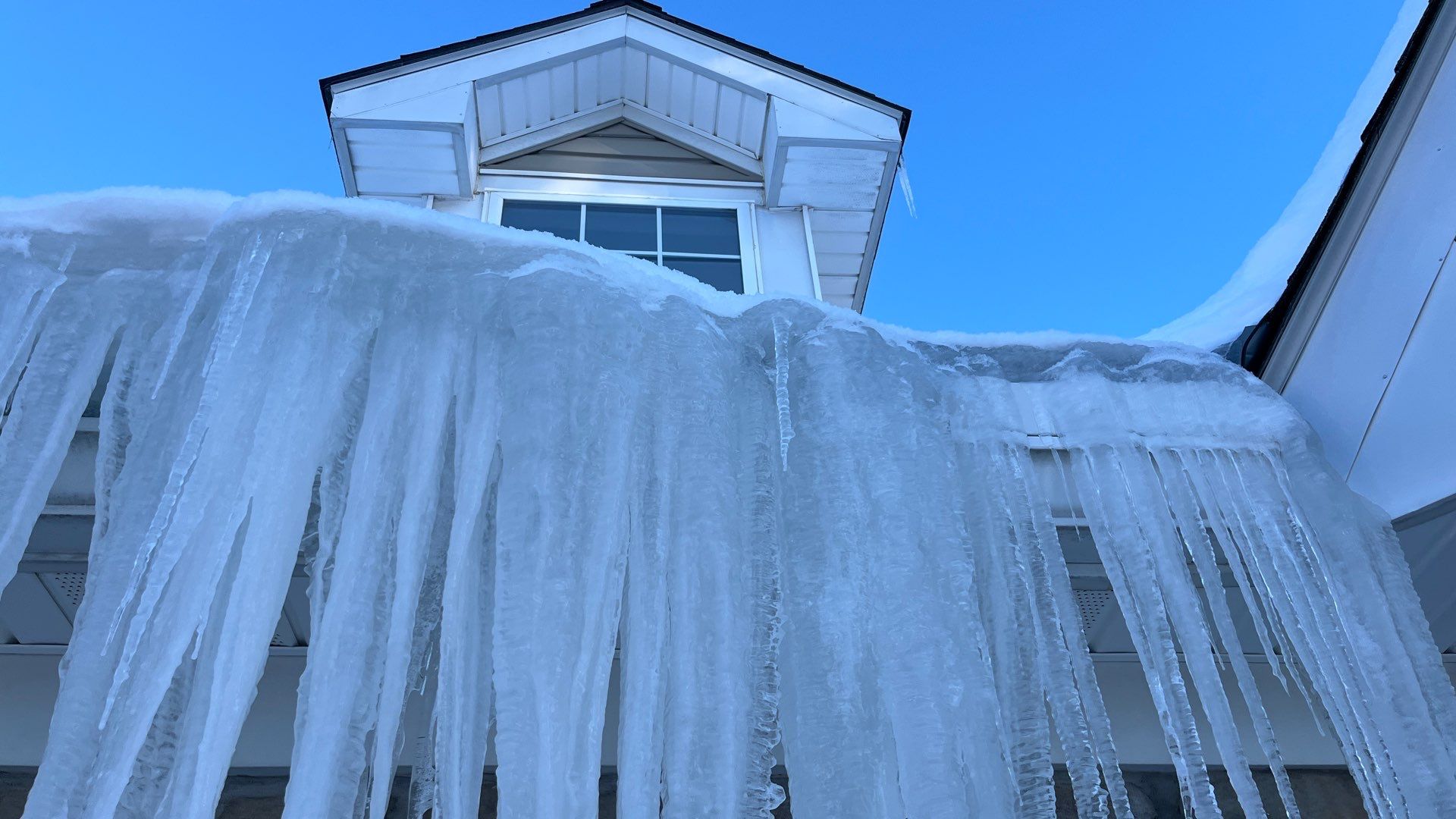
Two things follow from that. The pack does not shed itself, so weight accumulates across the season rather than resetting between storms. And a deep pack is what feeds an ice dam — heat escaping the ceiling melts the underside of the snow, the meltwater runs to the cold eave, and it refreezes there. Clearing snow removes the fuel supply before the dam has anything to build from.
How is the snow actually removed?
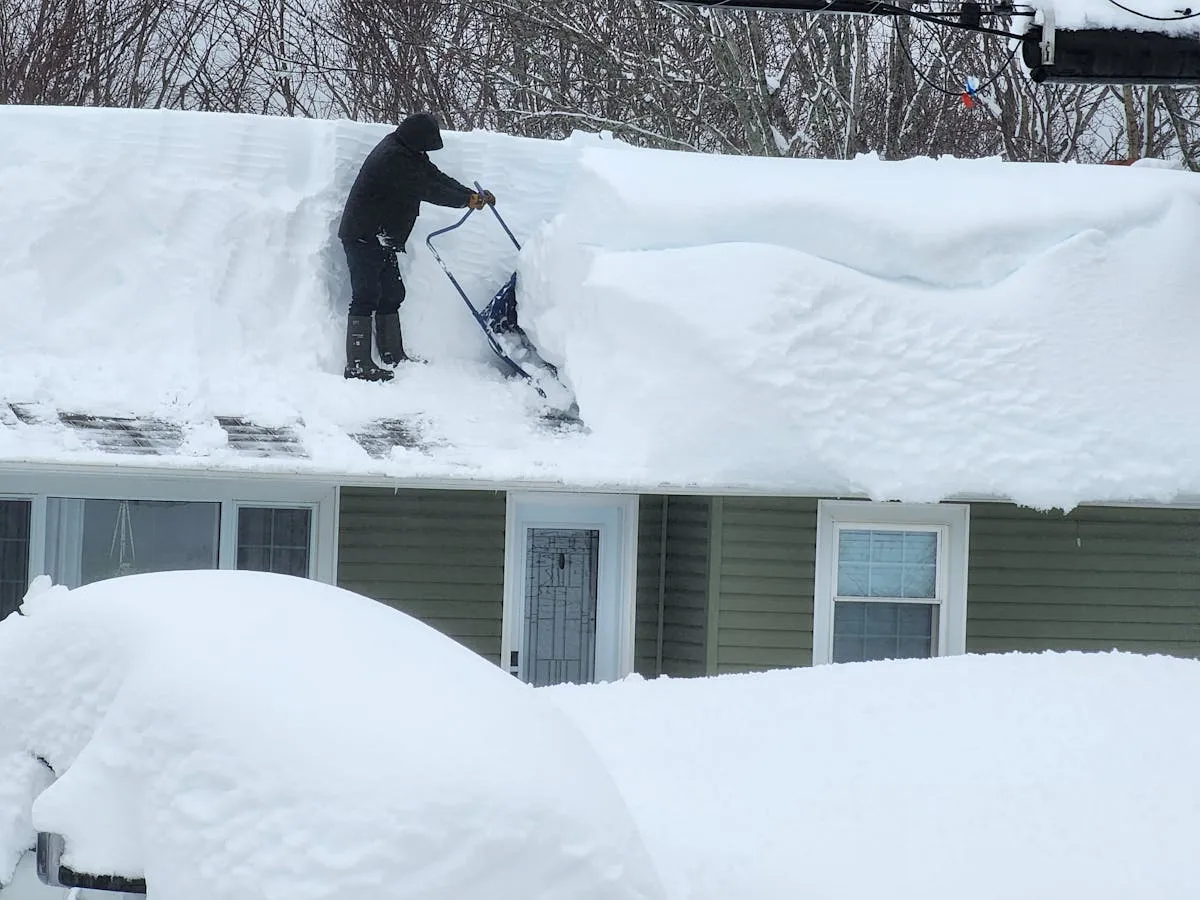
Crews work from the roof with plastic-bladed tools and leave a thin base layer in place, so the shingle surface is never scraped. Snow is dropped away from walkways, entries, meters and mechanical equipment, and the ground below is checked before anything comes down.
Roof rakes used from the ground can reach the first four to six feet of eave on a single-storey home, which is genuinely useful for preventing dams. They cannot address the load on the main field of the roof, and they cannot touch a second storey or a low-slope section at all.
Areas covered from Norfolk
Norfolk crews reach these communities on the same dispatch. If your address is nearby but not listed, call (402) 433-6455 and ask.
Will insurance pay for roof snow removal in Norfolk?
Usually not on its own. Carriers treat routine snow clearing as maintenance, the same way they treat gutter cleaning. Coverage generally begins once there is damage or an imminent threat of it — and then it is the duty to protect property clause that applies, the same clause that funds emergency ice dam mitigation.
- Collapse or structural damage from snow load — generally covered under the dwelling section, including debris removal and, on many policies, snow removal performed to prevent imminent collapse.
- Emergency clearing once the structure is distressed — often payable as mitigation when there are documented warning signs such as a sagging ridge or new drywall cracking.
- Routine seasonal clearing — a maintenance expense, not a claim.
- Water entering behind a dam the snow fed — handled as an ice dam water loss.
If you are seeing structural warning signs, photograph them, call your carrier and get the load off. See ice dam and winter storm claims for how that documentation is built.
Coverage varies by policy form and state. Your carrier decides, not the contractor.
Roof snow removal near Norfolk — cost, timing and free estimates
How fast. Inside 24 hours, same day during active storms. If you are seeing doors sticking or new drywall cracks, say so when you call (402) 433-6455 and the job is prioritised.
What it costs. Priced by roof area, pitch, access and how much pack is up there, quoted in writing before the crew starts. Commercial and multi-visit seasonal work is quoted separately.
What you get. Insured crews, plastic-bladed tools and a protective base layer left in place, plus photographs of the roof before and after. Get a free estimate or call (402) 433-6455.
Free Norfolk estimate
Tell us what is happening and a dispatcher calls you back. Takes about 20 seconds.
Other winter services in Norfolk, NE
Back to Norfolk winter services or all Nebraska locations. For the method itself, see how steam ice dam removal works, ice dam prevention, or ice dam insurance claims.
Roof Snow Removal in other Nebraska cities
Roof Snow Removal in Norfolk — common questions
When should I have snow removed rather than waiting?
+
Once the pack is deep enough to hold water, or once several storms have layered on top of each other. If you are seeing any of the structural warning signs above, do not wait for the next storm.
Do you clear commercial and flat roofs in Norfolk?
+
Yes. Flat and low-slope roofs carry the highest risk because they shed nothing on their own. Commercial work is scheduled with the property manager and documented for the file.
Will removing the snow damage my shingles?
+
No. Crews use plastic-bladed tools and leave a base layer in place rather than scraping to the surface. Metal shovels and chipping are what damage a roof in freezing weather.
Can I just use a roof rake myself?
+
From the ground, on a single-storey roof, a rake handles the first few feet of eave and genuinely helps with dam prevention. Getting on a snow-covered roof yourself is how people fall, and it is not worth it.
How quickly can a crew reach Norfolk?
+
Inside a 24-hour window, and same day during active storms. Call (402) 433-6455 for a real arrival slot rather than a callback.
Do you cover the towns around Norfolk?
+
Yes — the Norfolk dispatch covers Wayne NE, Madison NE, Battle Creek NE, Pierce NE, Stanton NE, Columbus NE. Call if your address is nearby but not on that list.
Need a crew in Norfolk?
Call for a real arrival slot, not a callback. Written price before work starts, photographs of everything, no obligation.
Call (402) 433-6455Free Norfolk Estimate
Takes about 20 seconds.