
Ice Dam & Roof Snow Removal in South Portland, Maine
- Covering South Portland, Portland & Brunswick this season
- Steam-only removal — no chipping, no roof damage
- We document everything your Maine adjuster needs
- Local (207) line answered 24/7
Online Quote
No obligation — fast response for South Portland

Most Ice Dam & Roof Snow Removal problems in South Portland trace back to a handful of components: the soffit vents, the gutter apron and the roof deck. We check each one, document what we find with dated photographs, and put the scope in writing before work begins. That record is also what makes a storm claim defensible. Licensed, insured, 400+ five-star reviews.
Thornton Heights · Portland · Willard Beach · Knightville · Ferry Village · Meetinghouse Hill
South Portland’s Maine winters run cold and steady — coastal Casco Bay pack persists on Willard Beach and the surrounding neighborhoods without the melt windows southern cities get.
Water damage gets worse every hour — call nowSouth Portland Ice Dam & Winter Roof Services
Emergency ice dam removal, roof snow removal & heated cable installation in South Portland, ME. Steam rather than impact, arrival within a day, and a documented record. Serving Thornton Heights, Portland & nearby.
South Portland Ice Dam Conditions, Explained
South Portland’s Maine winters run cold and steady — coastal Casco Bay pack persists on Willard Beach and the surrounding neighborhoods without the melt windows southern cities get.
Willard Beach and Knightville vintage stock, university-adjacent rentals, valley neighborhoods through Cape Elizabeth and Portland — the west’s persistent-winter housing.
When a South Portland roof starts icing at the eave, the fix is heated gutter cables — and once the ice is off, winter roof services is how you keep next winter from repeating it. Full statewide detail lives on our Maine winter services page.

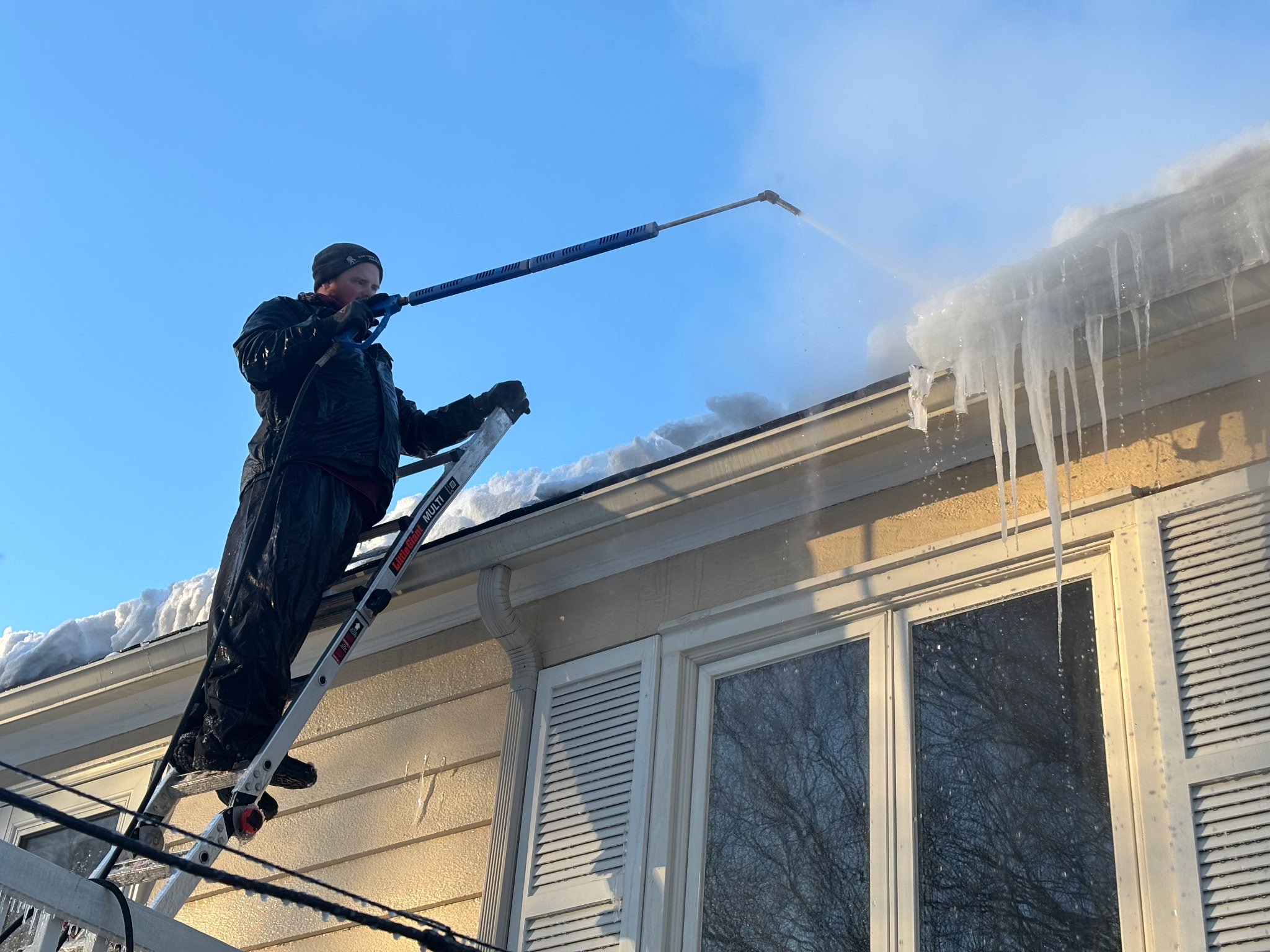
Arctic Steamer® at work — truck below, crew steaming the dam clear above.
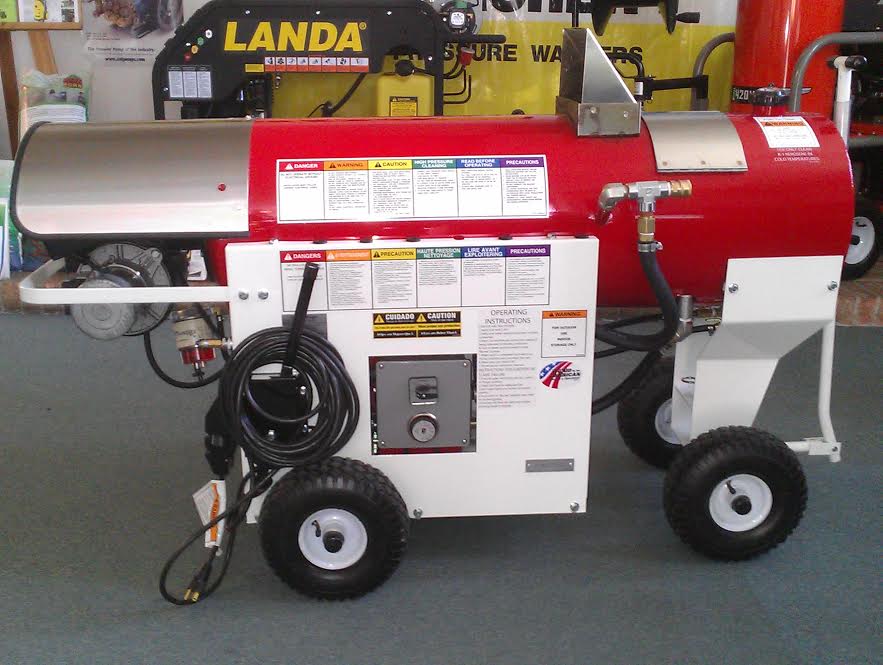
This is the unit that does it: high heat, low pressure, no impact on the roof.
Steam Ice Dam Removal In South Portland
Every South Portland job runs on the Arctic Steamer® — low-pressure, high-heat steam that releases ice from the roof surface without any mechanical force. On capes where the shingle courses sit close to living space, gentle is the only responsible setting.
Chipping tools crack shingles and tear drip edge; pressure washers drive water into exactly the cavity you're trying to protect. Steam does neither — the ice leaves, the roof stays.
- No physical contact — heat does the work, not force
- Shingle and warranty safe — nothing cracks, dents or tears
- Complete removal — down to the roof surface, gutters and downspouts included
- Relief channels first — if water is entering the house, we open drainage immediately
- Documented throughout — before, during and after photos for your records and any claim
Read the full method breakdown on our steam ice dam removal page.
Ice Dam Damage In South Portland Homes
Every day the dam stays, the water behind it looks for another way in
Cape damage concentrates where the roof meets the upstairs walls — ceiling corners and closet edges stain first, often weeks after the water actually arrived.

Active Dripping Indoors
A dripping cape ceiling means the kneewall cavity above it is already saturated. What you can see is the overflow, not the leak.

Ceiling Water Staining
Staining along the slope of an upstairs ceiling follows the rafter bays — each brown line is a bay channeling dam water down toward the wall plate.

Ice Working Into the Ceiling
When ice works into the eave trim of a story-and-a-half, the water is one framing bay from the bedroom. These houses give it a very short trip.
Seen On South Portland Rooflines
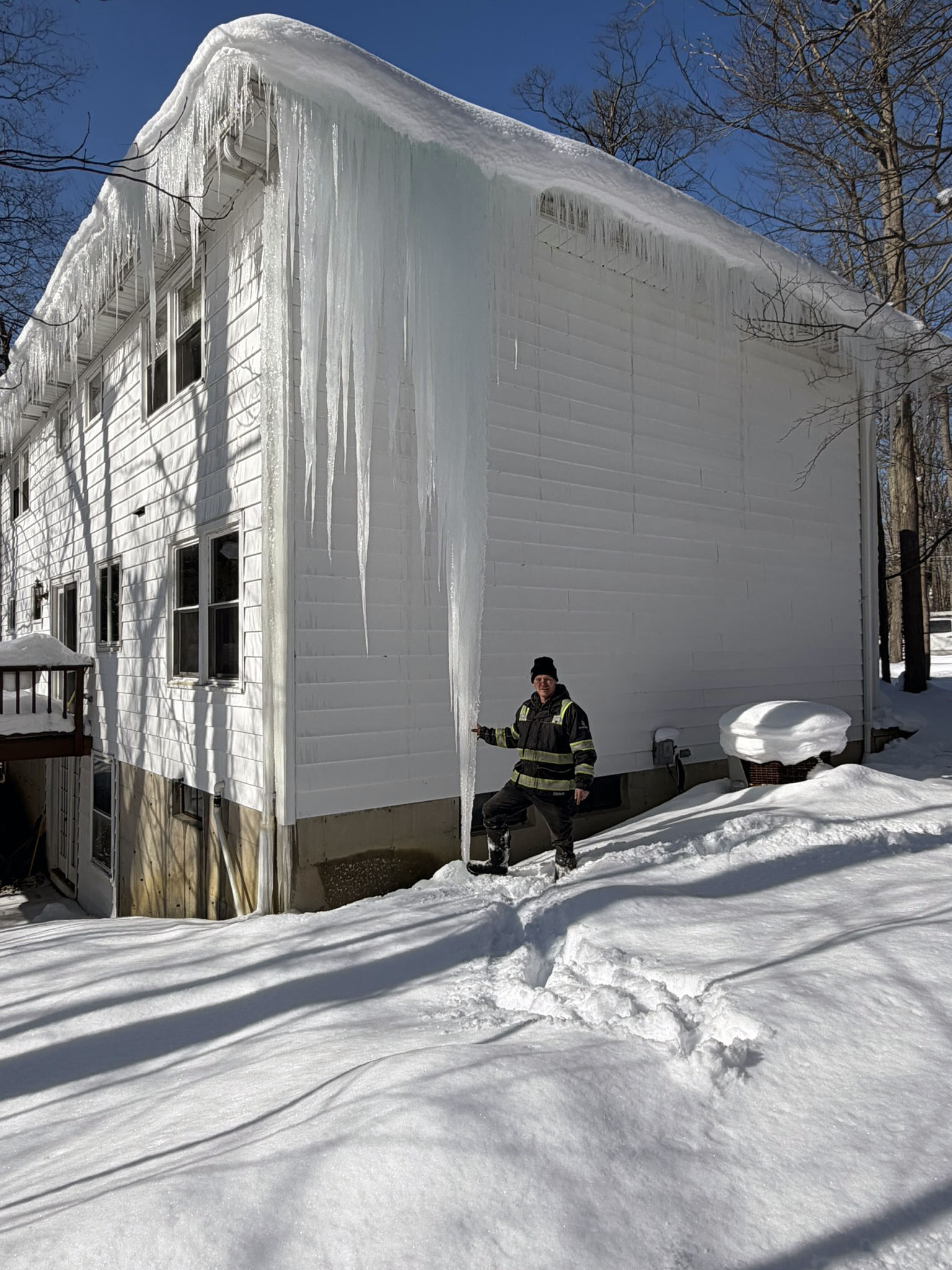
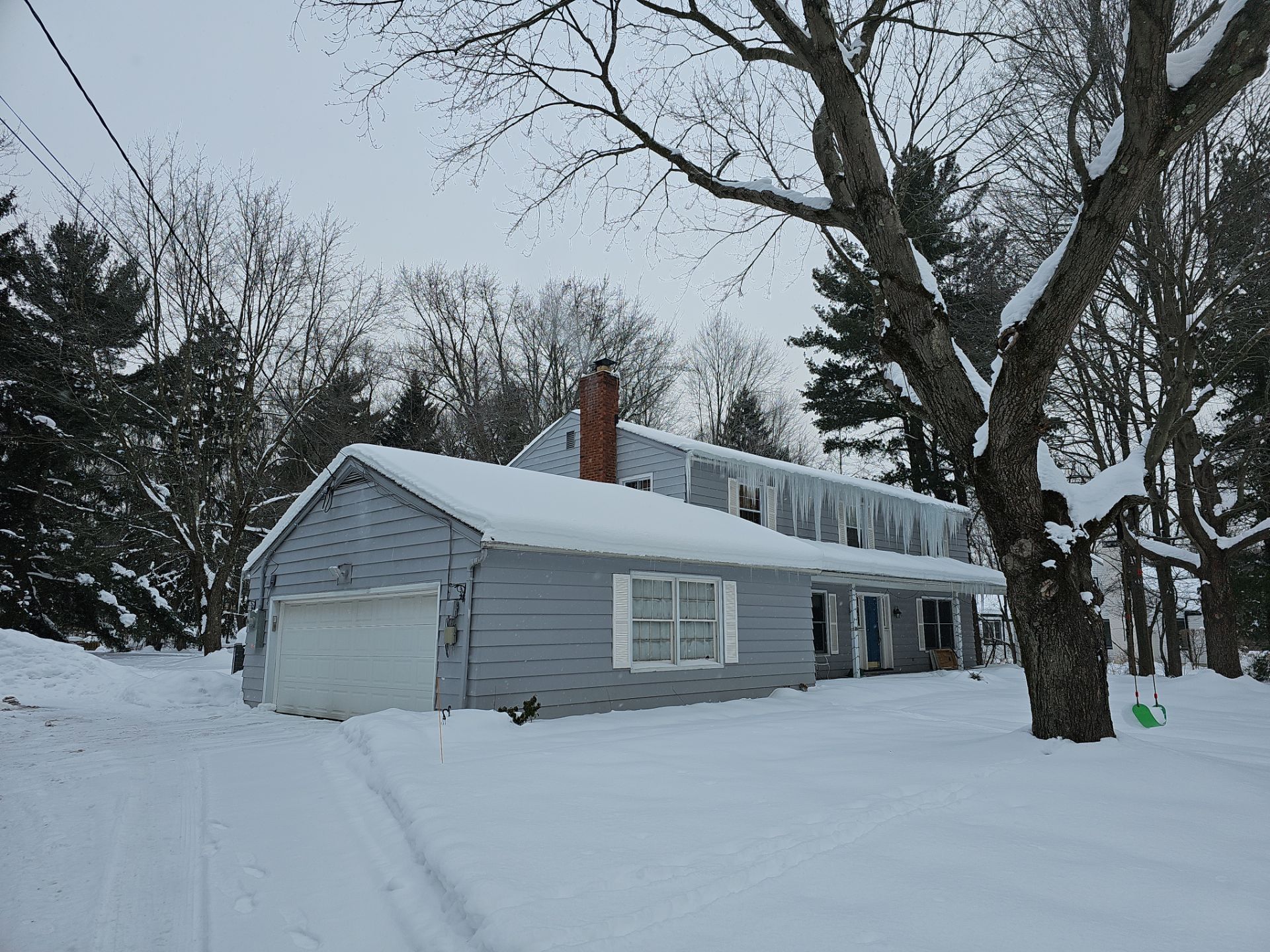
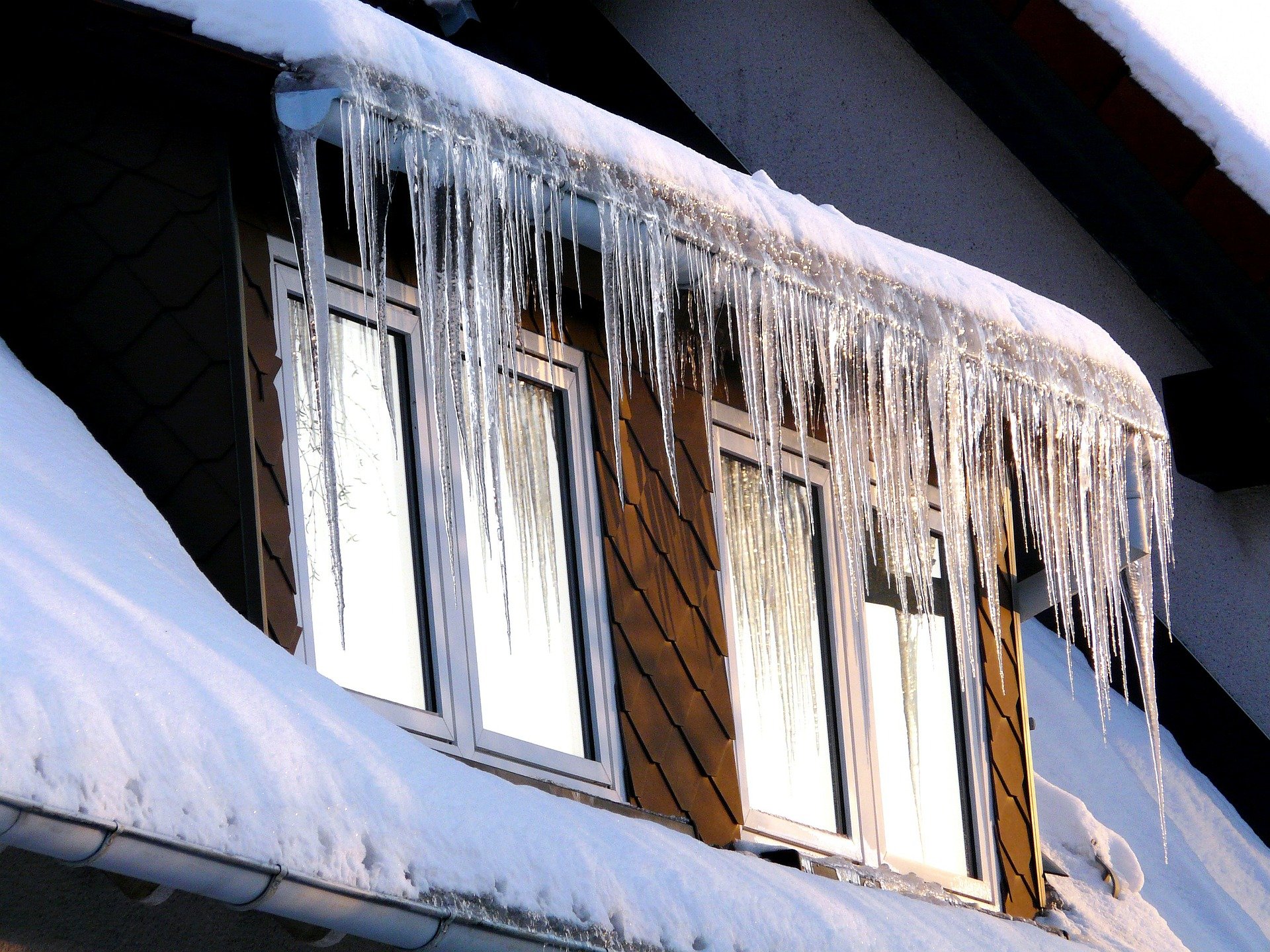
These are the conditions our crews work on across South Portland and the surrounding communities every winter. If this looks familiar, water is pooling behind the ridge right now. The last panel shows why it happens.


Ice Dam Prevention In South Portland
This winter's dam is handled. These stop next winter's — and on South Portland capes the cause is almost always fixable attic air leakage.

Prevention Before The Season
Kneewall air-sealing and insulation top-ups are quick fall projects here. Done before Thanksgiving, they change what January looks like.
Ice dam prevention ›
Roof Melt Cable Systems
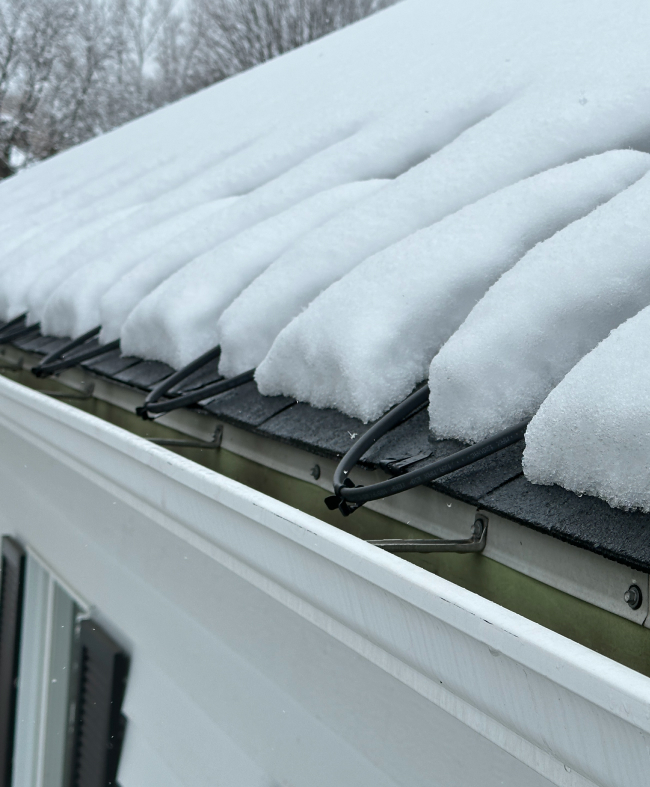
Cable in the melt path suits capes well: short eave runs mean modest cable jobs that keep the critical two feet of roof draining.
Heated roof cables ›
Roof Snow Removal
Snow gone, fuel gone. On low-pitch cape roofs a post-storm clearing resets the whole melt-refreeze cycle.
Roof snow removal ›
Heated Roof & Gutter Cables in South Portland
Some South Portland rooflines build the same dam in the same spot every year. For those, self-regulating heat cables in the eaves, valleys and gutter runs are cheaper than a second emergency call — they keep the meltwater moving instead of freezing at the edge.
Installation, seasonal checks and repairs are all handled locally across South Portland, Portland & Brunswick. Chronic-eave homes get a plan, not a sales pitch.
Learn About Heat Cable InstallationOn the Ground in Maine — On Your Roof Within 24 Hours
Same-day & next-day arrival with a 24-hour arrival window — anywhere in Maine
24/7 Scheduling
Our phone lines are open around the clock — days, nights, weekends, holidays. When ice dams strike anywhere in Maine, we answer.
24-Hour Arrival Window
Scheduling puts a crew at your address within a day. We have teams positioned across Maine for the fastest possible response statewide.
All of Maine
Ferry Village, Knightville, Willard, Meetinghouse Hill and the Cape Elizabeth line are all minutes from our Greater Portland staging — the rest of Cumberland County rides the same 24-hour window.
Licensed & Fully Insured
Liability and workers' comp are in place before anyone sets a ladder. Your home and our crew are fully protected during every job across Maine.
400+ Five-Star Reviews
More than 400 five-star reviews from people whose roofs we actually worked on. A 4.9 average across 400+ reviews is the short version of how we work.
Free Quote — No Obligation
Free to get, free to decline. Send the form and we’ll confirm your South Portland details, your roof situation and when a crew can be there.
South Portland Area Coverage & Nearby Towns
South Portland dispatch also covers: Thornton Heights · Portland · Willard Beach · Knightville · Ferry Village · Meetinghouse Hill — one call, one response window, the whole area.
Arctic Steamer® crews cover South Portland and the communities around it on one dispatch. Live leaks go to the front of the queue, then structural load, and every finding is photographed.
What South Portland, ME Customers Say
How the Steam Process Runs
The only method that removes ice dams without damaging your roof
Arctic Steamer® Technology — Safe, Fast & Effective
Cape roofs punish shortcuts. The shingle courses are close to the living space, the pitch is walkable enough to tempt amateurs with hammers, and the damage from chipping shows up as leaks in April. Steam removes the same ice with zero contact — the dam melts free from underneath and slides off in sections.
A typical Ferry Village cape clears in about two hours; add the garage eave and a porch roof and it's three. The equipment stages from the driveway, and the roof, gutters and warranty are exactly as we found them.
Why Steam Is the ONLY Safe Method:
- Zero roof damage — low-pressure steam, no physical impact
- Protects your shingles — no cracking, denting, or tearing
- Preserves your warranty — manufacturer-approved method
- Complete removal — melts ice all the way down to the surface
- Fast results — professional equipment works in hours, not days
- Chipping with picks or hammers (damages shingles and voids warranty)
- Pouring salt or calcium chloride (corrodes metal, kills landscaping)
- Pressure washing (forces water under shingles, causes more leaks)
- Heat guns or torches (serious fire hazard)
You Call Us 24/7
Call our emergency line anytime. We gather details about your ice dam and schedule arrival within 24 hours.
Roof Assessment
Our technician inspects the ice dam, identifies water entry points, and documents any existing damage.
Steam Removal
Using our Arctic Steamer®, we safely melt and remove all ice. No damage to your roof, shingles, or gutters.
Documentation
We provide photos and reports of the work done — helpful if you file an insurance claim for the damage.


Where It Goes If Nothing Is Done
Every hour you wait, the damage gets worse — and more expensive

Ceiling & Wall Water Damage
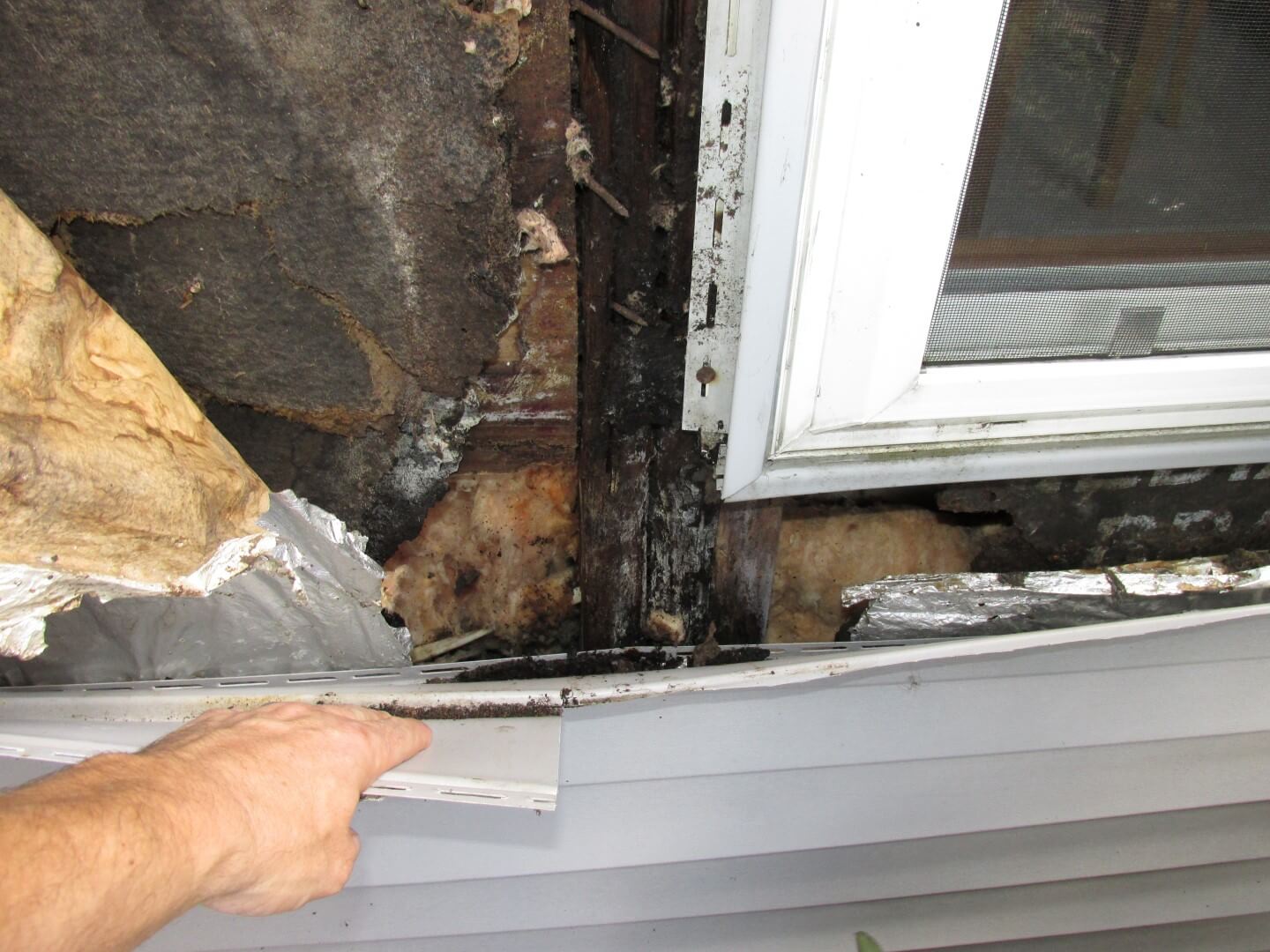
Water pooling behind ice dams seeps through your roof and saturates ceilings and walls. Brown stains appear first, followed by bubbling paint, crumbling drywall, and eventually structural damage to framing.
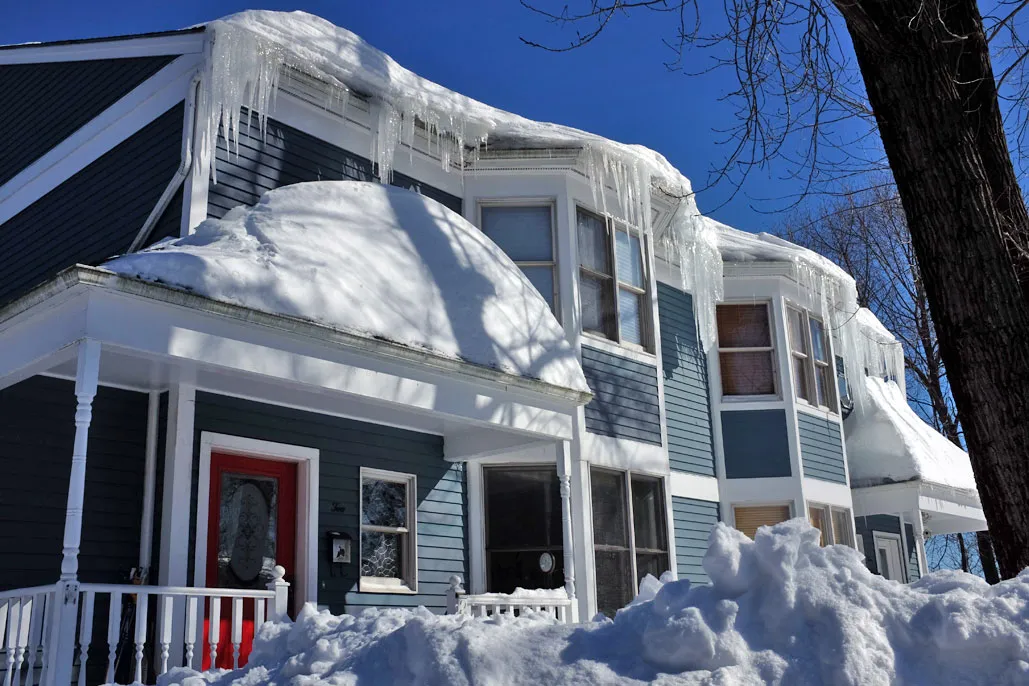
Gutters Ripped Off Your Home
Ice dams can weigh hundreds of pounds. That weight pulls gutters right off your fascia boards, tearing them away and causing expensive structural damage to the roofline of your home.

Interior Flooding & Mold
Unchecked leaks can flood entire rooms, destroying insulation, flooring, furniture, and electronics. Trapped moisture creates the perfect conditions for dangerous mold growth within 24-48 hours.
Maine Winters Make Ice Dams Especially Dangerous
Maine gets hit from every angle when it comes to ice dams. Heavy coastal storms dump heavy wet snow on the Southern Maine & York County, the Bangor region, and the Midcoast. Inland communities from Lewiston to Western Maine & the Lakes Region get hammered with lake-effect and elevation-driven snowfall. And the entire state endures brutal freeze-thaw cycles from November through March.
Every time temperatures swing above and below freezing, snow on your roof partially melts. That water runs downhill, hits the cold overhang, and refreezes — growing the ice dam bigger and bigger. Eventually, the water has nowhere to go but under your shingles and into your home. Maine' older housing stock — triple-deckers in Portland, Colonials on the Southern Maine & York County, Capes on the the Bangor region — are especially vulnerable because many lack modern insulation and ventilation.
- Day 1-3: Small drips, minor water stains on ceilings
- Day 4-7: Spreading water damage, saturated insulation
- Week 2+: Mold begins growing in walls and attic
- Week 3+: Structural damage to framing, potential ceiling collapse

The Average Ice Dam Damage Repair Costs $5,000 – $15,000+
Ice dam removal costs a fraction of that — and your insurance likely covers both the removal and the repairs. Stop the damage now before it multiplies.
Call (207) 386-4644The Mould Problem Nobody Photographs
Ice dam leaks don't just cause water stains — they create the perfect breeding ground for dangerous mold

Severe Attic Mold on Roof Sheathing
When ice dam water seeps into your attic, it saturates the OSB or plywood sheathing. Within weeks, black mold covers the entire underside of your roof deck — requiring full sheathing replacement.

Mold Destroying Attic Insulation
Wet insulation is a mold magnet. Once your fiberglass or cellulose insulation gets saturated from ice dam leaks, it loses all R-value and becomes a breeding ground for mold spores that spread throughout your home.

Black Mold on Structural Beams
Mold doesn't just grow on surfaces — it eats into wood. Structural beams, joists, and rafters compromised by mold lose their structural integrity, creating a safety hazard for your entire home.

Mold Behind Your Walls
Water from ice dams travels down through your walls, soaking studs and drywall from the inside. You won't see it until the mold is severe enough to penetrate through to the visible surface — by then, the damage is extensive.

Attic Mold Inspection
Professional inspections often reveal mold growth that homeowners had no idea existed. By the time it's visible, the contamination has usually spread far beyond what you can see — affecting your indoor air quality.

Professional Mold Remediation
Once mold takes hold, professional remediation requires hazmat-level protective gear, containment barriers, HEPA filtration, and often complete removal of affected materials. It's a major, disruptive, and expensive process.
Why Maine Homes Are Especially Vulnerable
Maine has some of the oldest housing stock in the country. Triple-deckers in Portland, Westbrook, and Lewiston. Colonial homes across the Southern Maine & York County and Lewiston–Auburn. the Midcoast-style houses on the the Bangor region and the actual Cape. Victorian mansions in Western Maine & the Lakes Region and the Kennebec Valley. These homes were built long before modern insulation standards existed.
The result? Heat escapes into the attic, melting roof snow faster and creating massive ice dams. And when those ice dams cause leaks, the poor ventilation in older attics means moisture has nowhere to go — creating ideal conditions for rapid mold growth.
The health risks are serious. Mold spores become airborne and circulate through your HVAC system, affecting every room in your home. Exposure can trigger respiratory issues, allergic reactions, headaches, and worsen conditions like asthma — especially dangerous for children, elderly family members, and anyone with compromised immune systems.
The only guaranteed way to prevent ice dam mold is to remove the ice dam before the leak causes lasting damage.


Mold Spores Activate
Moisture from the ice dam leak triggers dormant mold spores on wood surfaces. Invisible growth begins.
Visible Colonies Form
Dark spots appear on sheathing, joists, and insulation. Musty odors may become noticeable.
Widespread Contamination
Mold spreads across large areas of your attic. Spores enter your HVAC system and circulate throughout your home.
Structural Damage
Wood begins to rot and lose structural integrity. Full remediation now requires gutting affected areas.
Mold Remediation Costs $5,000 – $30,000+ — Ice Dam Removal Costs a Fraction of That
Don't wait until a mold problem turns your ice dam into a health crisis and a financial nightmare. Remove the ice dam now, stop the moisture at the source, and protect your family and your home.
What Insurance Typically Covers Here
Most homeowner policies in South Portland cover ice dam removal and the damage it causes
We Help Make the Insurance Process Easy
Dwelling coverage on a standard Maine homeowner policy responds to ice dam water damage — the sudden-loss kind, which is precisely what a documented same-week removal establishes. South Portland's capes tend to show damage at the upstairs ceiling corners and kneewall closets, and we photograph both even when they look dry.
The claim file we hand you covers before, during and after, plus written notes on entry points. Adjusters working York and Cumberland County winters see hundreds of these; a clean file moves yours to the easy pile.
From Willard Beach bungalows to Meetinghouse Hill capes, the South Portland claims that settle quickly share one trait: the homeowner called while the ice was still on the roof, not after the spring repaint.
What We Do to Help Your Claim:
- Photo documentation — Before, during, and after the ice dam removal
- Damage assessment report — Detailed notes on what we found
- Professional invoice — Clean documentation for your insurer
- Scope of work — Clear description of services performed
Call Us for Service
We come out, assess the damage, and remove the ice dam with our Arctic Steamer® equipment. We document everything thoroughly with photos and reports.
File Your Claim
Contact your insurance company and file a claim for ice dam damage. Use the documentation and photos we provided to support your claim.
Get Reimbursed
Your insurer reviews the documentation and processes your claim. Our thorough documentation helps ensure a smooth approval process.
Roof Snow Removal in South Portland
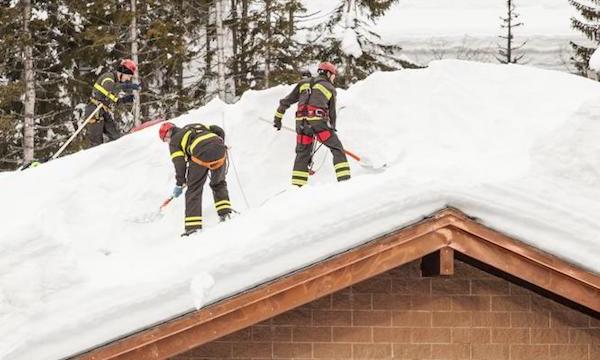
Wet Atlantic snow weighs two to three times what powder does, and most roofs are engineered for just 30–50 lbs per square foot. We clear dangerous snow loads from homes, camps, porches and low-slope roofs across South Portland — which is also the single best way to stop an ice dam before it forms. Sagging ceilings, cracking sounds or doors that suddenly stick mean call now.
Roof-safe tools only — never steel shovels that gouge shingles or metal.
Unoccupied lake and coastal properties carry Maine's deepest untouched snowpack.
Self-regulating cable at the eaves so next winter's melt drains instead of damming.
Commercial Ice Dam & Roof Snow Removal in South Portland
Commercial ice dam removal takes specialized low-pressure steam equipment, not the gear a residential crew carries. Flat and low-slope roofs on businesses, warehouses, apartment complexes and schools hold enormous ice loads, and a blocked internal drain turns one storm into a shutdown. We work with property managers, HOAs, retail centers, churches and municipal buildings across Cumberland County — insured crews, documented before-and-after photos, and off-hours scheduling so you never close.
How We Remove Commercial Ice Dams Safely
Technicians clear the snowpack alongside the roof slope before touching the ice, so the steam reaches the actual dam instead of melting a foot of snow above it.
Under 300 PSI at roughly 290°F. The heat does the work, not the force — it slices melt channels through the ice without contacting the membrane or shingle surface.
Heavy ice blocks are segmented and lowered deliberately, never dropped, so nothing lands on lower overhangs, gutters, utility lines or pedestrians below.
Internal drains and scuppers cleared, then before-and-after photos of every roof section for your records, your board, or your insurance claim.
What the Wrong Crew Costs You
Pressure washers running 1,000+ PSI strip shingle granules and can fracture EPDM, TPO and modified-bitumen membranes — turning an ice problem into a roof replacement.
Manual chipping tears roofing materials, punctures membranes and voids manufacturer warranties. There is no careful way to swing a hatchet on a commercial roof.
Salt compounds corrode metal flashing and coping, degrade roofing components, and kill the landscaping and hardscape they run off onto.
Dislodging tons of frozen weight without rigging tears away commercial gutters, damages utility lines, and creates a serious liability event over walkways and entrances.
Who We Work With in South Portland
Apartment complexes, condo associations and student housing — one point of contact for every building in the portfolio.
Storefronts, plazas, warehouses and office parks. Off-hours and overnight work so business hours are never interrupted.
Large spans, older roof systems and public foot traffic — where egress and liability come first.
Pre-season agreements that put your buildings first on the list when the storm hits, instead of calling around after.
Commercial work is quoted per building after we see the roof, the ice load and the access. Sloped shingle or flat membrane, active leak or preventive — tell us on the call and we'll scope it properly.
Why South Portland Capes Ice Up Faster Than They Should
South Portland is a city of story-and-a-half capes — Ferry Village, Willard Square, Meetinghouse Hill, block after block of them. The cape is the single worst ice-dam geometry in New England: the upstairs bedrooms sit inside the roof itself, kneewall closets leak warm air directly against the deck, and the short eave beyond the wall line is the only cold surface the melt has to cross before it refreezes. A cape can build a working dam off six inches of snow.
Knightville and Mill Creek add flat-roof commercial and mixed-use to the picture, and the Willard shore takes wind-driven snow straight off the water — the same storm loads the harbor side of a roof twice as heavily as the street side, so we always walk the full perimeter rather than trusting the view from the driveway.
The Casco Bay freeze-thaw rhythm hits South Portland exactly as it hits Portland across the harbor, but the housing responds worse: less attic volume means less buffer, so the melt cycle starts sooner after each storm. By the third cycle of a normal January the ice is into the gutter, and by the fourth it's climbing the roof.
Crews working South Portland start at the wet ceiling's eave line, open a drainage path, then clear to bare shingle — gutters and downspouts included, because a cape's small gutter freezes solid first. If the same dormer or kneewall section ices every winter, that's an insulation conversation, and it's a far cheaper one in September than in February.
Read more on ice dam prevention, or call (330) 918-1018 for a same-day assessment.
Asked Around South Portland
Local answers for South Portland and the surrounding communities.
How fast can you get to a South Portland cape with an active leak?+
Active interior water jumps our queue. South Portland sits minutes from our Greater Portland staging, so leak calls in Ferry Village or Willard typically see a crew same-day during storm cycles.
Why does my cape ice up when my neighbor's colonial doesn't?+
Cape geometry. Your upstairs rooms sit inside the roof, so the deck runs warm and the melt starts sooner. The colonial next door has a full cold attic buffering its roof — you don't.
Can you clear the ice without wrecking my small gutters?+
That's the point of steam. A cape's 4-inch gutters full of ice can't survive prying — steam melts the ice out of the trough without any force on the hangers.
Will insurance cover the kneewall closet damage?+
Ice dam water damage falls under dwelling coverage on standard Maine policies, kneewalls included. We photograph those cavities even when they look dry, because that's where cape damage hides.
Do you work the Willard and Loveitt's Field shore streets?+
All of them. Shore-side roofs load unevenly in wind — we walk the full perimeter on those calls because the driveway view misses half the picture.
Is one steam visit enough, or will the dam come back?+
The visit removes this dam completely. Whether one rebuilds depends on your attic — if the same eave ices every year, we'll tell you why in writing so you can fix the cause.
Ice Dam & Roof Snow Removal Near South Portland
South Portland Ice Won’t Wait — Neither Should You
24/7 scheduling. Same-day & next-day arrival. Free quote. Active-leak claims are often covered. Serving every city and town across all of Maine.
Permits & Inspections in South Portland
Permits and inspections are handled as part of the job. Whichever office holds jurisdiction at your address is where we file.
Free South Portland Estimate
Takes about 20 seconds.