
Chimney Flashing
Four Sides, Zero Shortcuts
Where brick meets shingles, four different flashing jobs meet too — apron, steps, back pan, counter-flashing. Done as metalwork it seals for decades; done as caulk it seals for seasons.
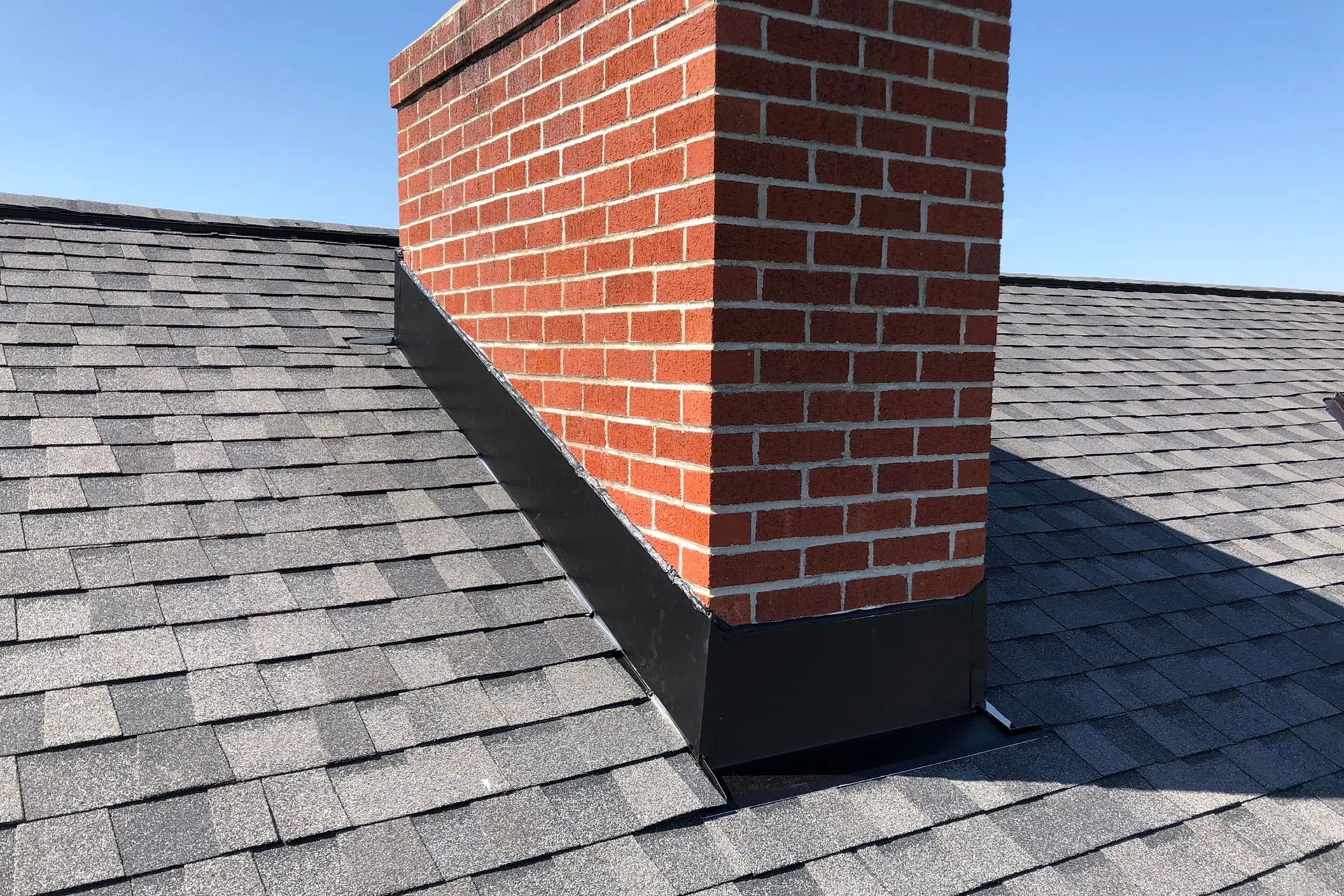
Four Jobs Around One Stack
Downslope face: an apron sheds water around the base. Sides: step flashing weaves piece-by-piece with the shingle courses. Upslope: a back pan — or better, a cricket that splits the current on stacks past two feet wide — keeps water from pooling against brick. Over all of it, counter-flashing cut into mortar joints caps the assembly so water can’t sneak behind. Four jobs, one sequence, and the same metalwork discipline as every wall on the roof.
Undoing The Black Goop Era
Most chimney flashing we rebuild arrives buried in generations of roof tar — each coat a season’s reprieve and a bigger excavation later, trapping water against brick the whole time. Real repair strips the archaeology, rebuilds the metal in sequence, and re-points the counter-flashing joints. If the “flashing leak” survives that, the water was never entering there — which is why leak diagnosis tests before anyone blames the metal.

What The Chimney Makes People Ask
How do I know it is the flashing leaking and not the chimney?
You often can’t from inside — flashing, crown and brick leaks all stain the same ceiling. The water test on our leak repair page separates them before money moves.
What does counter-flashing actually do?
It is the cap layer set into the mortar itself, lapping over the step flashing so water running down the brick face lands on metal, not behind it. Skipping it is the classic shortcut.
Does new flashing require roof work?
The surrounding shingle courses lift and re-lay as part of the job — another reason this is roofer metalwork, not a caulk-gun visit.
Why does chimney flashing fail?
Age, movement between roof and masonry, and generations of tar smeared over the original problem — the black goop era traps water against brick while hiding the failure.
What is a chimney cricket and do I need one?
A small peaked diverter behind the stack that splits water around it — generally recommended (and often required) for chimneys more than two feet wide.
Should chimney flashing be caulked?
Sealant has a small finishing role at counter-flashing edges — as the whole strategy, it’s the tar-cycle trap. The system is metal; caulk is a detail.
What metal is best for chimney flashing?
Aluminum and galvanized serve well; copper is the buy-once-cry-once option that outlasts everything around it. Compatibility with masonry and budget decide.
How can I tell if my chimney flashing was done right?
Counter-flashing cut into mortar joints (not surface-glued), woven steps at the sides, and a cricket behind wide stacks — three glances that grade most installs.
The Seal Team
Flashing’s neighbors in the leak wars.
Stains Near The Chimney?
Free inspection of all four sides — metalwork quoted, tar cycle ended.