
French Drains
Groundwater, Collected
Downspout drains move roof water; French drains collect water already in the soil — the high water table, the hillside seep, the yard that squishes in April. Different problem, different pipe.
A Gravel River Below Your Problem
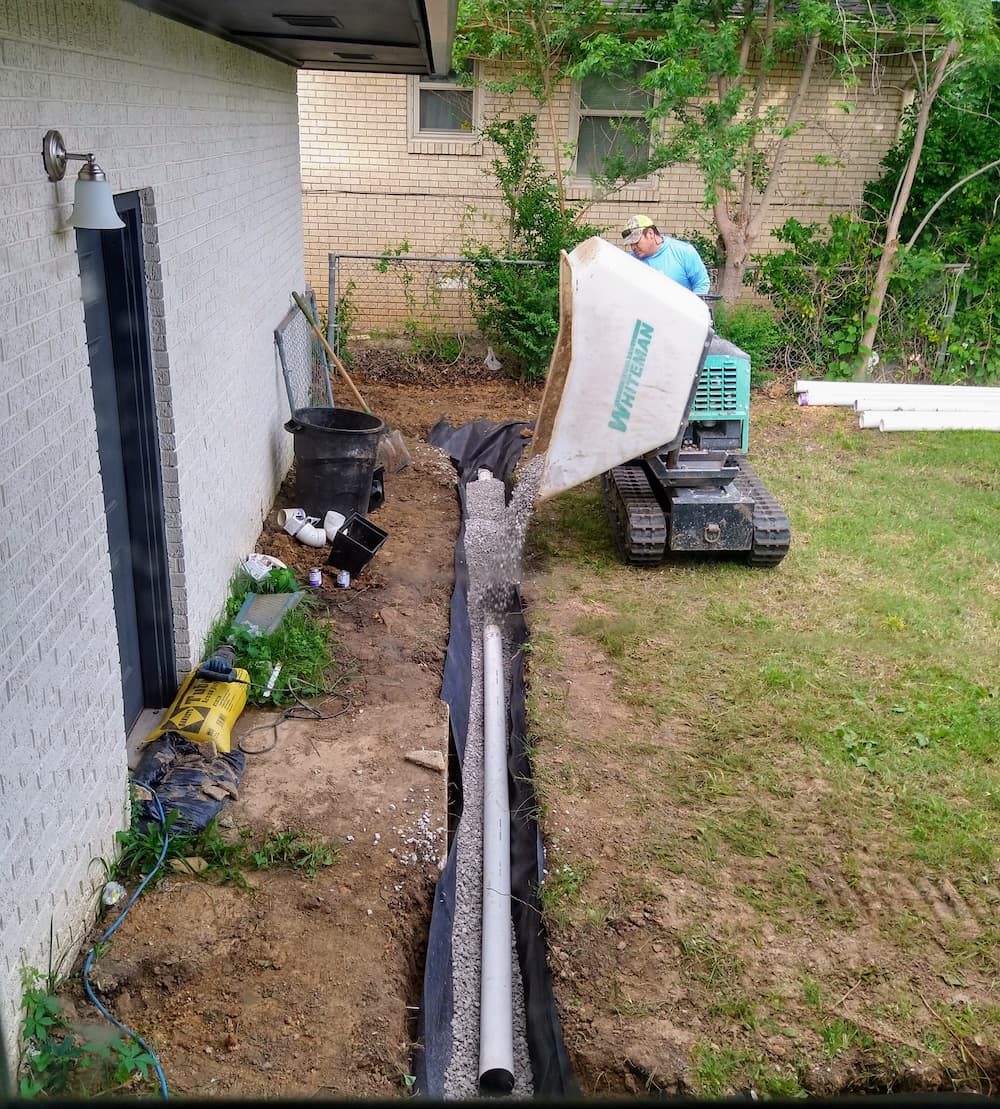
A French drain is a trench of washed gravel wrapped in filter fabric with perforated pipe at its base — groundwater migrates into the gravel, enters the perforations, and rides the pipe’s fall to discharge. Built right, it intercepts hillside flow before your foundation, drops the water table under a swampy yard, and relieves hydrostatic pressure that finds basement walls. Built wrong — no fabric, dirty gravel, corrugated pipe — it silts solid in a few seasons.
French Drains Fix Ground Problems — Not Roof Problems
Half the “failed French drains” we assess were built to solve roof runoff — a job solid downspout drains do better and cheaper. Real French drain territory: springtime seeps, sloped-lot interception, persistent soggy zones with no downspout in sight. Interior perimeter systems and sump work belong to basement waterproofing companies, and when that’s your actual problem we’ll say so and step aside.
Asked From The Bottom Of The Ladder
French drain or underground downspout drain — which do I need?
Where is the water from? Roof: solid downspout drains. Soil: French drain. Both problems on one lot is common, and the systems run separately by design.
Why does my existing French drain no longer work?
Usually silt — no filter fabric or fines-heavy gravel let soil pack the system. Rebuilt correctly, the same trench line works for decades.
Where does a French drain discharge?
Downhill to daylight, a dispersion bed, or a basin — designed to your grade. Collected water still needs a legal, downhill exit.
Do French drains actually work?
Built correctly — washed gravel, filter fabric, real fall — they manage groundwater for decades. Most ’failed’ ones were built without fabric or built for roof water they were never meant to carry.
How deep should a French drain be?
Deep enough to intercept the water you’re targeting — footing-level for foundation relief, shallower for surface soak — with continuous fall to a real outlet. Depth follows the job.
What is the difference between a French drain and a trench drain?
French drains collect groundwater through gravel below grade; trench (channel) drains catch surface water through a grate on top. Different water, different hardware.
Does a French drain need an outlet?
Absolutely — collected water must exit downhill to daylight, a basin or a dispersion bed. A French drain without an outlet is a buried bathtub.
How long do French drains last?
Built with fabric, washed stone and real fall — decades. The silt-packed failures were built without the fabric, and they fail on schedule.
The Water Table Team
Ground and roof water, each handled right.
Yard Squishing? Wall Weeping?
Free groundwater assessment — the right drain for the actual source.