
Insurance Claims & Adjuster Disputes
Ordinance & Law Coverage: Getting Drip Edge and Ice Barrier Paid
Ordinance and law coverage pays to bring a repaired structure up to current code. On a re-roof that usually means drip edge and ice barrier the original roof never had.
Written by Nathaniel Davis, owner of Roof Gutter Now — a licensed exterior restoration contractor in Ohio, Pennsylvania and New York. Updated August 2026
Insurance pays to restore what was there. Code requires more than what was there. Ordinance and law coverage is the endorsement that closes that gap, and it is the most commonly unclaimed coverage on a roof loss.
The two items it almost always covers
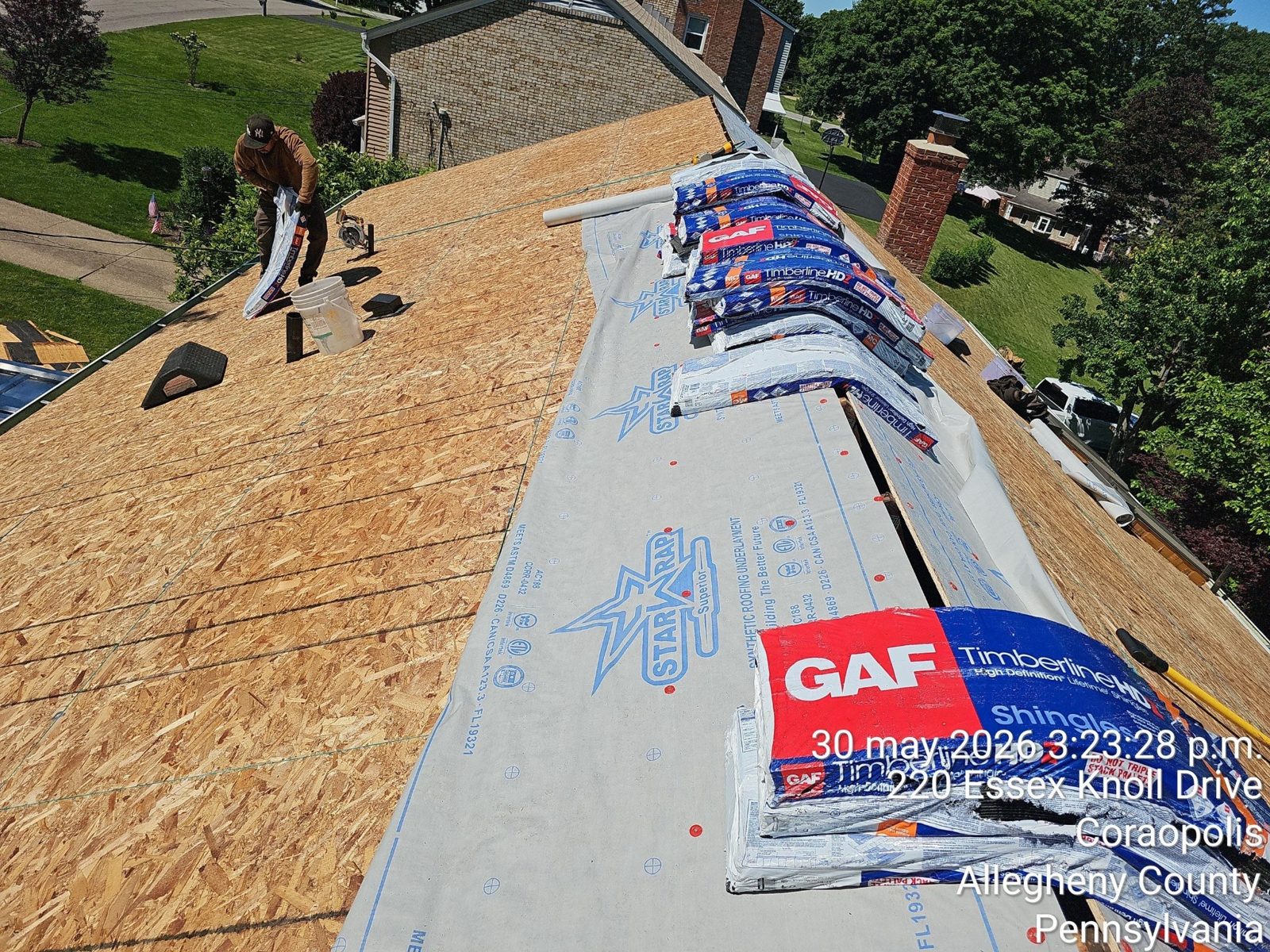
Ice barrier. The IRC requires a self-adhering membrane from the eave edge to at least 24 inches inside the exterior wall line wherever there is a history of ice forming at eaves. Roofs built before that provision, or built where it was not enforced, have felt and nothing else.
Drip edge. Required at eaves and rakes. Enormous numbers of older roofs simply do not have it, which is why the fascia behind the gutter is rotted.
How to claim it
Check the declarations page for ordinance or law coverage and the percentage limit. Then document that the existing roof lacks the item — a tear-off photograph showing felt running to the deck edge with no membrane, or an eave with shingle overhanging bare fascia.
Cite the adopted code section for the jurisdiction, not the model IRC generally. The permit office confirms which cycle is in force. Submit both together: the condition found, and the provision that now applies.
Common questions
Is ordinance and law automatic?
+
No. It is an endorsement, and the limit is usually a percentage of the dwelling coverage. Check the declarations before building the argument.
Does it cover the whole roof?
+
It covers the code-driven portion of the work, not the entire replacement. The rest falls under the standard dwelling coverage.
What if the jurisdiction has no inspection?
+
The code still applies. Adoption, not enforcement, is what creates the obligation.
More on Insurance Claims & Adjuster Disputes
- Why Adjusters Call Creased Shingles “Mechanical Damage”
- The Repairability Test: Proving a Patch Will Destroy the Roof
- Overhead & Profit: Triggering the Three-Trade Requirement
- Xactimate RFG DRIP vs RFG DRIP+: Why the Code Changes Your Payout
- Reading a Summary of Loss: RCV, ACV and the Net Claim Trap
- The Cosmetic Damage Exclusion: When Metal Roof Dents Get Denied
See Insurance Claims services or find your local crew.
Need this looked at?
Free inspection, photographs of every finding, and a written scope before any work starts.
Call (330) 918-1018