
Emergency Ice Dam Removal & Roof Snow Removal Across Iowa
- Crews working Iowa all winter
- No picks, no salt — just precision steam
- Photo file built for Iowa insurance claims
- (515) rings a human — 24/7, all season
Des Moines Metro · Cedar Rapids & the Corridor · The Quad Cities & Eastern Iowa · Northeast Iowa · Northwest Iowa · Southern Iowa · Every City Statewide
Safe steam removal with Arctic Steamer® technology. 24/7 scheduling with same-day & next-day arrival anywhere in Iowa. With an active leak, insurance often covers this. Free quote — no obligation.
Our Professional Arctic Steamer® — The Only Machine Built Specifically to Remove Ice Dams Safely

- Safe Steam Technology — No Roof Damage
- 24/7 Scheduling — Same-Day & Next-Day
- Insurance Typically Covers This
- Arctic Steamer® Professional Equipment
- 400+ Five-Star Reviews
- Free Quote — No Obligation
Get Your Iowa Quote Online
Same-day & next-day arrival — all of Iowa
- Safe Steam Technology — No Roof Damage
- 24/7 Scheduling — Same-Day & Next-Day
- Insurance Typically Covers This
- Arctic Steamer® Professional Equipment
- 400+ Five-Star Reviews
- Free Quote — No Obligation
Ice Dam & Roof Snow Removal in Iowa starts with diagnosis, not a price. We inspect the eave line, the soffit vents and the ice-and-water shield before quoting, because the visible symptom is rarely where the problem begins. Each finding is documented on the roof, not from the driveway. Three-state licensing with insurance to match.
Des Moines Metro · Cedar Rapids & the Corridor · The Quad Cities & Eastern Iowa · Northeast Iowa · Northwest Iowa
Iowa’s freeze-thaw metronome and prairie wind stack drifted snow against eaves from Des Moines to Dubuque. Steam crews arrive within a 24-hour window — statewide.
Water damage gets worse every hour — call now24/7 steam ice dam removal & roof snow removal across Iowa. Crews within a 24-hour arrival window statewide. Active-leak claims often covered. Call (515) 495-6253.
How Iowa Winters Attack Roofs
Iowa winters cycle hard. A thaw runs the roof, a hard refreeze locks the eave, and prairie wind relocates every storm into drifts that load one slope and strip the other. Eastern Iowa’s river bluffs hold snow longer, and the state’s stock of century farmhouses and post-war ranches gives that water plenty of ways in.
Iowa Ice Dams & The Damage They Cause
Every hour you wait, the damage gets worse — and more expensive
Freeze-thaw cycling means the Iowa dam you ignore in January is the ceiling stain you claim in February.
Across Iowa, one thaw-freeze cycle is all it takes to reload an eave — and each cycle pushes the water a little further under the shingles.

Attic Sheathing & Mold
Moisture in a shut winter attic lingers long enough for growth to establish.

Living Space Under Containment
When water reaches finished rooms, containment and restoration follow. Furniture, flooring and drywall all become part of the claim.

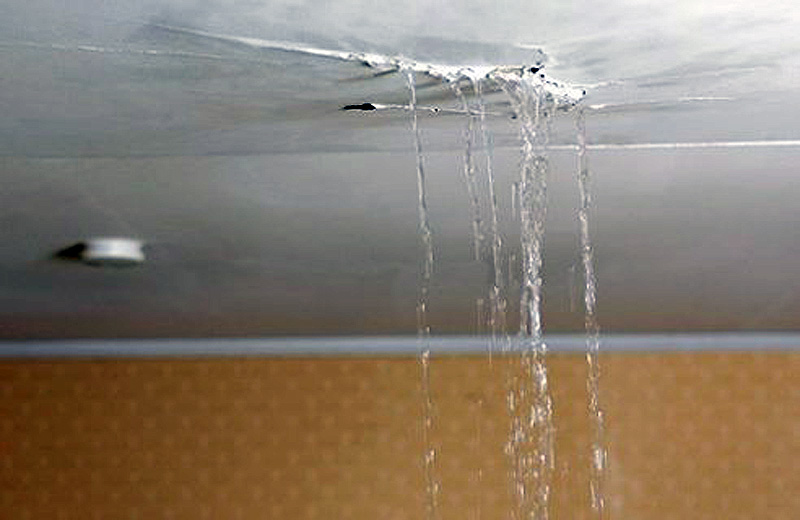
Ice Working Into the Ceiling
The damage reaching finish carpentry inside the house. Ice inside the wall means water has been getting past the roof for a while.
Iowa Winters Make Ice Dams Especially Dangerous
Iowa gets hit from every angle when it comes to ice dams. Storm systems load Des Moines Metro, Cedar Rapids & the Corridor and The Quad Cities & Eastern Iowa, while Northeast Iowa and Northwest Iowa take their own share of accumulation each winter. And the entire state runs the freeze-thaw cycling that rebuilds dams within days of a thaw — which is why removal, not waiting, is the only reliable reset.
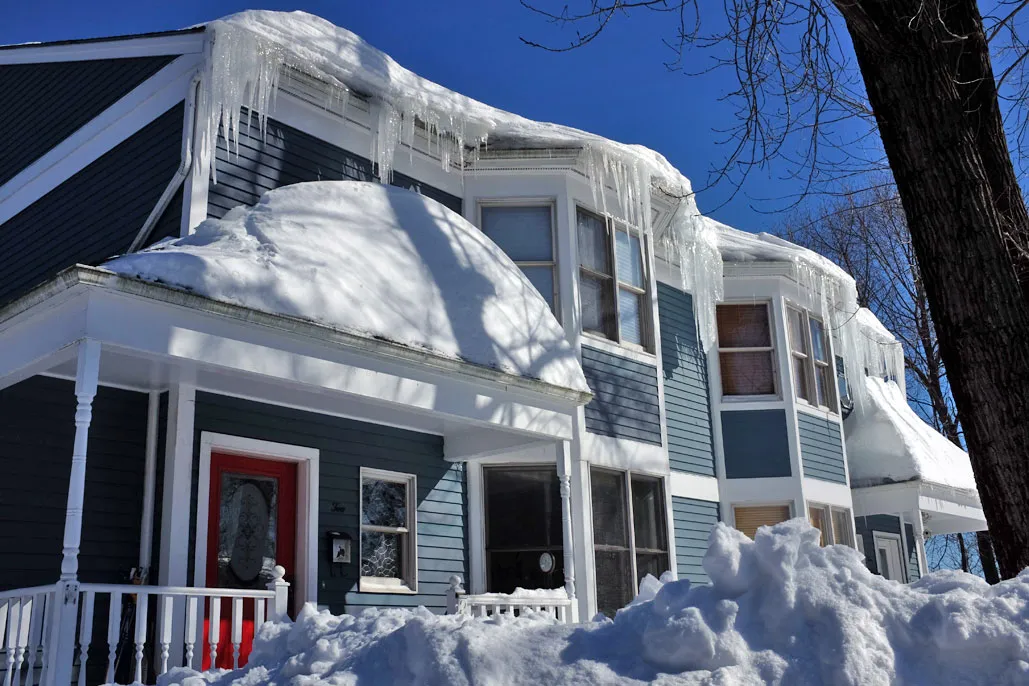
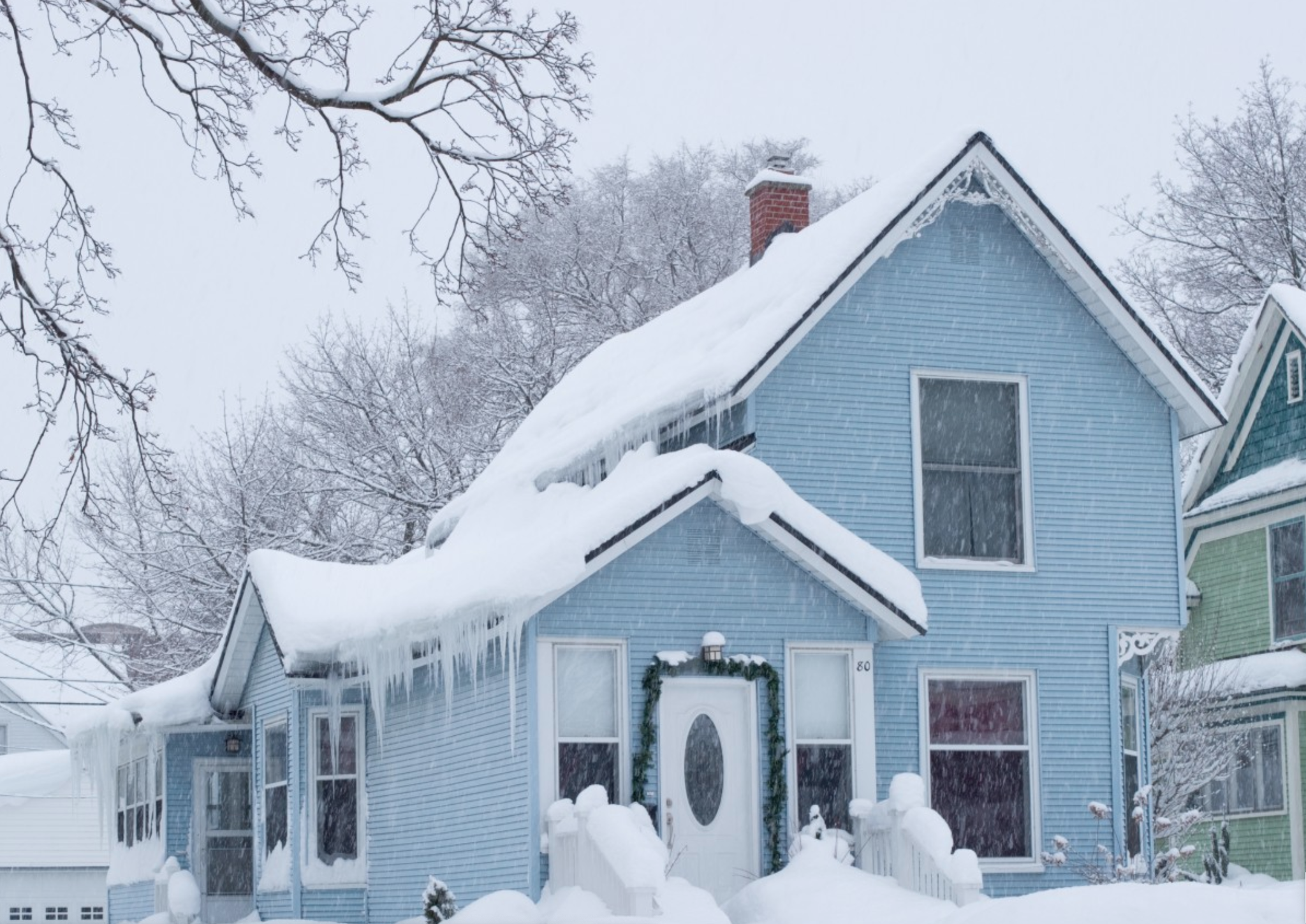
Every time temperatures swing above and below freezing, snow on your roof partially melts. That water runs downhill, hits the cold overhang, and refreezes — growing the ice dam bigger and bigger. Eventually, the water has nowhere to go but under your shingles and into your home. Iowa’s older housing stock — vintage homes through Des Moines Metro, mid-century neighborhoods across Northeast Iowa, and farmhouses out through Northwest Iowa — is especially vulnerable because so much of it lacks modern insulation and ventilation.
- Day 1-3: Small drips, minor water stains on ceilings
- Day 4-7: Spreading water damage, saturated insulation
- Week 2+: Mold begins growing in walls and attic
- Week 3+: Structural damage to framing, potential ceiling collapse

One Ice Dam Leak Can Reach Insulation, Drywall, Trim And Framing
Removal stops the water at the source — and with an active leak, insurance often covers both the removal and the interior repairs. Send the form and we’ll walk you through it.
Call (515) 495-6253Steam Ice Dam Removal In Iowa
The only method that removes ice dams without damaging your roof
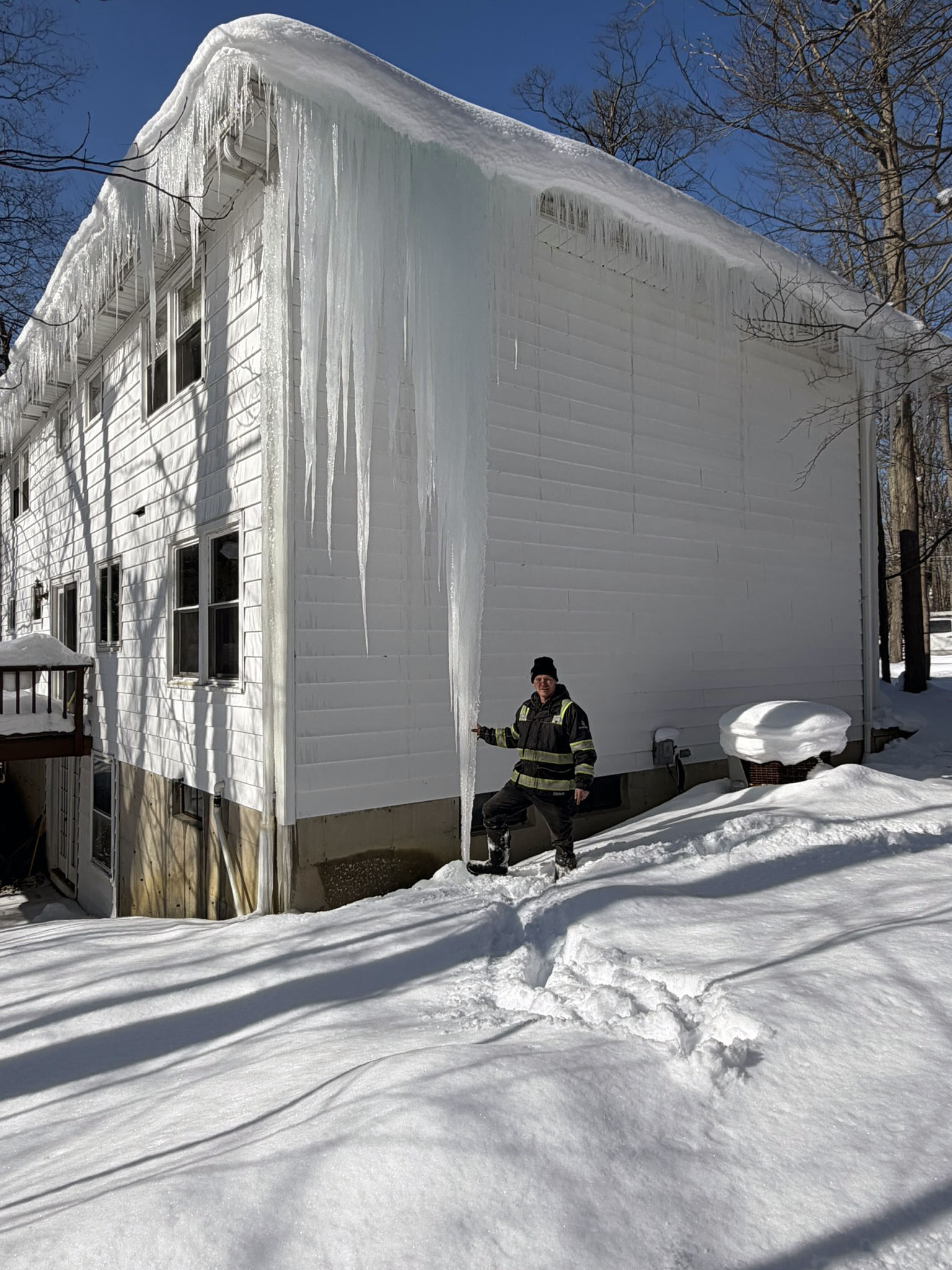
Des Moines ranch or Dubuque Victorian, heat removes the ice without touching a shingle.

On the job: steam supplied from the truck, dam coming off the roof behind it.
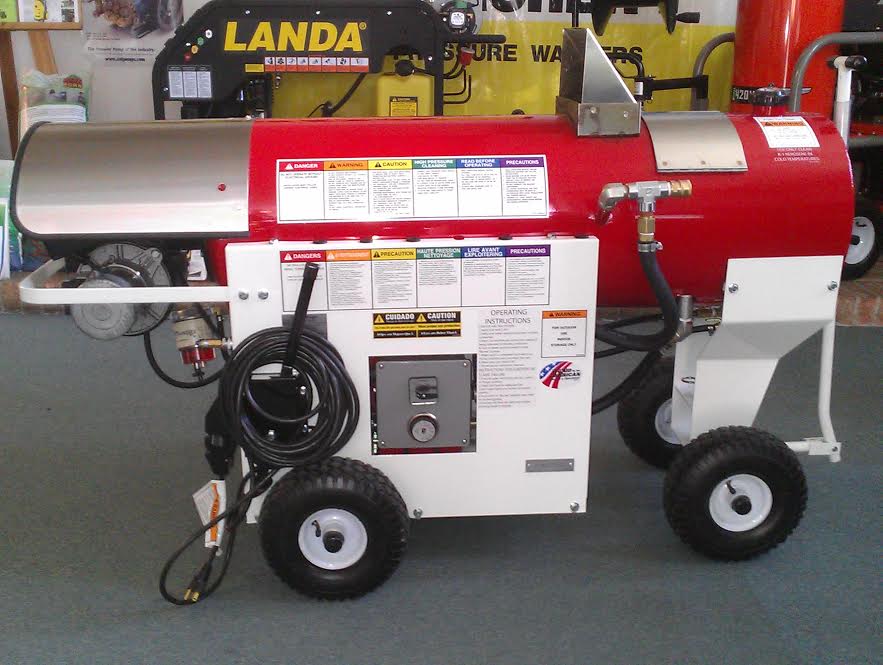
The machine at the centre of the job: high-temperature steam at low pressure.
Purpose-Built Equipment: The Arctic Steamer®
Iowa winter is wind first. Prairie storms drift snow unevenly across rooflines — a farmhouse or a Des Moines colonial can carry triple load on the leeward slope — and the deep cold that follows turns drifted pack into layered, bonded ice that only steam removes cleanly.
Crews cover the state's corners: Des Moines and the metro, Cedar Rapids and Iowa City, Dubuque's river bluffs and Sioux City's exposed west — same method, drift-aware assessment everywhere.
Why Steam Is the ONLY Safe Method:
- Zero roof damage — low-pressure steam, no physical impact
- Protects your shingles — no cracking, denting, or tearing
- Preserves your warranty — manufacturer-approved method
- Complete removal — melts ice all the way down to the surface
- Fast results — professional equipment works in hours, not days
- Chipping with picks or hammers (damages shingles and voids warranty)
- Pouring salt or calcium chloride (corrodes metal, kills landscaping)
- Pressure washing (forces water under shingles, causes more leaks)
- Heat guns or torches (serious fire hazard)
You Call Us 24/7
Call our emergency line anytime. We gather details about your ice dam and schedule arrival within 24 hours.
Roof Assessment
Our technician inspects the ice dam, identifies water entry points, and documents any existing damage.
Steam Removal
Using our Arctic Steamer®, we safely melt and remove all ice. No damage to your roof, shingles, or gutters.
Documentation
We provide photos and reports of the work done — helpful if you file an insurance claim for the damage.

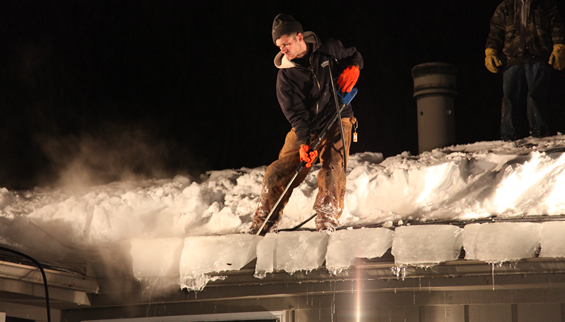


The Arctic Steamer® unit that powers every Iowa removal — heat only, never impact.
Mold After An Iowa Attic Leak
Ice dam leaks don't just cause water stains — they create the perfect breeding ground for dangerous mold
Shallow Iowa attics wet fast and dry slowly — and nobody checks until spring.
Severe Attic Mold on Roof Sheathing
When ice dam water seeps into your attic, it saturates the OSB or plywood sheathing. Within weeks, black mold covers the entire underside of your roof deck — requiring full sheathing replacement.

Mold Destroying Attic Insulation
Wet insulation is a mold magnet. Once your fiberglass or cellulose insulation gets saturated from ice dam leaks, it loses all R-value and becomes a breeding ground for mold spores that spread throughout your home.

Black Mold on Structural Beams
Mold doesn't just grow on surfaces — it eats into wood. Structural beams, joists, and rafters compromised by mold lose their structural integrity, creating a safety hazard for your entire home.

Mold Behind Your Walls
Water from ice dams travels down through your walls, soaking studs and drywall from the inside. You won't see it until the mold is severe enough to penetrate through to the visible surface — by then, the damage is extensive.

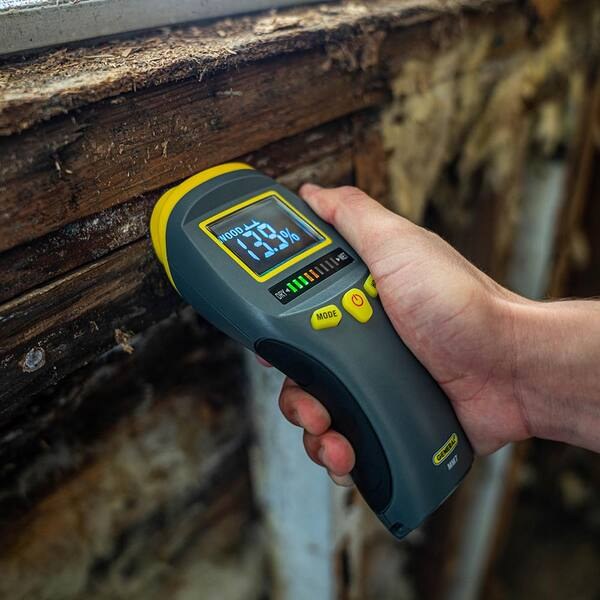
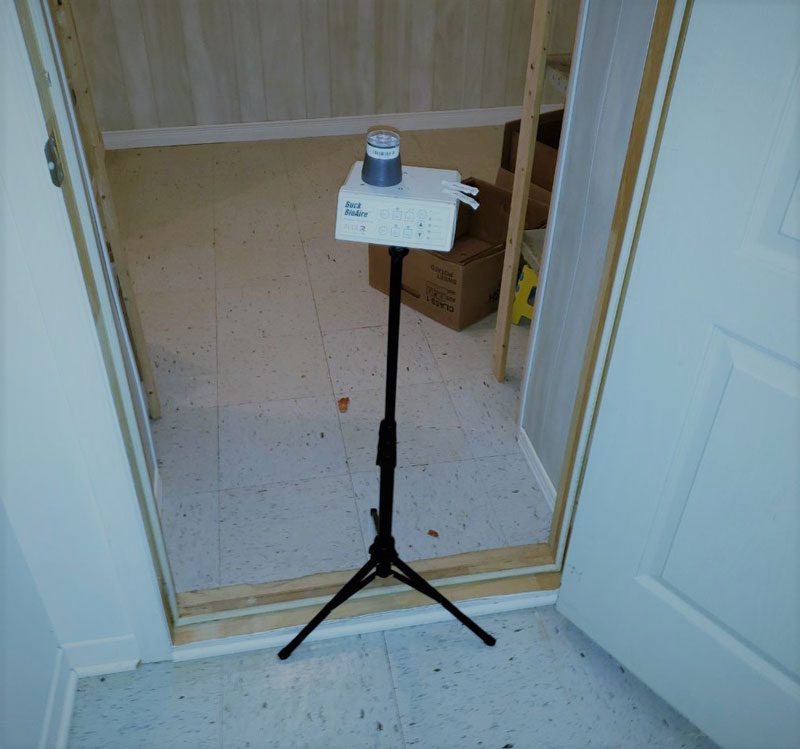
Attic Mold Inspection
Professional inspections often reveal mold growth that homeowners had no idea existed. By the time it's visible, the contamination has usually spread far beyond what you can see — affecting your indoor air quality.

Professional Mold Remediation
Once mold takes hold, professional remediation requires hazmat-level protective gear, containment barriers, HEPA filtration, and often complete removal of affected materials. It's a major, disruptive, and expensive process.
Why Iowa Homes Are Especially Vulnerable
Much of Iowa’s housing was built long before modern insulation and ventilation standards existed — historic neighborhoods through Des Moines Metro, established streets across Cedar Rapids & the Corridor and Northeast Iowa, and older rural properties out through Northwest Iowa and Southern Iowa. These homes leak heat into the attic by design.
The result? Heat escapes into the attic, melting roof snow faster and creating massive ice dams. And when those ice dams cause leaks, the poor ventilation in older attics means moisture has nowhere to go — creating ideal conditions for rapid mold growth.
The health risks are serious. Mold spores become airborne and circulate through your HVAC system, affecting every room in your home. Exposure can trigger respiratory issues, allergic reactions, headaches, and worsen conditions like asthma — especially dangerous for children, elderly family members, and anyone with compromised immune systems.
The only guaranteed way to prevent ice dam mold is to remove the ice dam before the leak causes lasting damage.

Mold Spores Activate
Moisture from the ice dam leak triggers dormant mold spores on wood surfaces. Invisible growth begins.
Visible Colonies Form
Dark spots appear on sheathing, joists, and insulation. Musty odors may become noticeable.
Widespread Contamination
Mold spreads across large areas of your attic. Spores enter your HVAC system and circulate throughout your home.
Structural Damage
Wood begins to rot and lose structural integrity. Full remediation now requires gutting affected areas.
Mold Turns A Roof Repair Into A Health Problem — Act Before It Spreads
Don't wait until a mold problem turns your ice dam into a health crisis and a financial nightmare. Remove the ice dam now, stop the moisture at the source, and protect your family and your home.
Iowa Claims & Documented Removal
With water actively coming in, most policies treat removal as water mitigation — covered more often than not, though never guaranteed
Iowa adjusters see sudden-intrusion files every winter; ours arrive complete.
We Help Make the Insurance Process Easy
Iowa homeowner policies respond to ice dam water damage under dwelling coverage, and wind is the complicating factor: drift-loaded dams pair with wind damage from the same storm, and the two claim items document separately.
We photograph both — the drift pattern that built the dam and any wind-lifted shingles beside it — because carriers price them differently and a merged claim shortchanges one of them.
Farm and acreage owners get outbuilding documentation on the same visit; machine sheds and barns carry the same drift loads with lighter framing.
What We Do to Help Your Claim:
- Photo documentation — Before, during, and after the ice dam removal
- Damage assessment report — Detailed notes on what we found
- Professional invoice — Clean documentation for your insurer
- Scope of work — Clear description of services performed

Call Us for Service
We come out, assess the damage, and remove the ice dam with our Arctic Steamer® equipment. We document everything thoroughly with photos and reports.
File Your Claim
Contact your insurance company and file a claim for ice dam damage. Use the documentation and photos we provided to support your claim.
Carrier Reviews & Decides
Your insurer reviews the documentation and makes the coverage call. With an active leak, more cases than not are covered — and our records make the review straightforward.

Heated Roof & Gutter Cables in Iowa
A dam that returns every winter is a geometry problem, and geometry doesn't fix itself. Heat cables laid through the eaves and gutter runs give Iowa homes a permanent melt path where the roofline traps water.
We install, service and repair cable systems across Iowa, and we'll tell you straight if your roof actually needs them or if attic air-sealing solves it cheaper.
Learn About Heat Cable InstallationOn the Ground in Iowa — On Your Roof Within 24 Hours
Same-day & next-day arrival with a 24-hour arrival window — anywhere in Iowa
24/7 Scheduling
Our phone lines are open around the clock — days, nights, weekends, holidays. When ice dams strike anywhere in Iowa, we answer.
24-Hour Arrival Window
From the moment you book, arrival is inside a 24-hour window. We have teams positioned across Iowa for the fastest possible response statewide.
All of Iowa
From Des Moines Metro to The Quad Cities & Eastern Iowa, Northeast Iowa to Northwest Iowa, and Cedar Rapids & the Corridor to Southern Iowa — every city and town in the state. No exceptions.
Licensed & Fully Insured
Full liability cover and workers' comp, on file and available on request. Your home and our crew are fully protected during every job across Iowa.
400+ Five-Star Reviews
Four hundred-plus homeowners have rated the work five stars. The 4.9 rating reflects turning up when we said we would and pricing what we quoted.
Free Quote — No Obligation
No cost, no commitment, no follow-up pressure. Send the form and we’ll confirm your details, your roof situation and when a crew can be there.
We Service Every Corner of Iowa
Every city, every county, statewide — steam crews on a 24-hour arrival window
Cedar Rapids & the Corridor
- Cedar Rapids
- Iowa City
- Marion
- Coralville
The corridor — dense housing, quick routes
The Quad Cities & Eastern Iowa
- Davenport
- Bettendorf
- Clinton
- Muscatine
Mississippi bluffs hold snow longer
Roof Snow Removal in Iowa
Cedar Rapids & the Corridor roofs can carry far more load than a forecast total suggests. Crews clear the load with roof-safe methods — never steel on shingles — prioritizing long spans, drifted zones and structures showing stress. Photos get you a free load read before anything is scheduled. Learn more about our roof snow removal service or snow removal in Iowa.
Commercial Ice Dam & Roof Snow Removal in Iowa
Flat-roof load clearing with drainage paths opened first, per-building documentation, and seasonal program scheduling — serving Des Moines Metro industrial and retail flats, plus portfolios statewide from our home base. See commercial winter services in Iowa.
What Iowa Customers Say
Hawkeye State Questions, Answered Straight
Straight answers for Iowa homeowners — from response times to insurance.
How fast can crews reach Iowa?+
Within a 24-hour arrival window statewide, with active interior leaks prioritized above scheduled work.
Why is one side of my roof bare and the other buried?+
Prairie wind loaded it that way — Iowa storms scour the windward slope and stack the leeward one with drift, sometimes triple the fallen depth. The buried side carries the load risk and builds the dam, which is why we walk your full perimeter instead of judging from the road.
Does Iowa’s freeze-thaw really build dams?+
It’s the classic dam climate. Cycling refills the pond behind the ice repeatedly, which is more productive for ice than one deep storm.
Do you clear farm buildings and machine sheds — the short version?+
Yes — same visit as the house whenever possible. Machine sheds and older barns carry the same Iowa drift loads on lighter framing than any home, so they're often the higher structural risk on the property. Load relief, ice clearing, and photos for the farm policy file.
Is steam safe on older farmhouse roofs?+
It’s the only method we’ll use on them. Heat releases the ice without touching a century of shingles.
Will insurance cover the ceiling damage?+
Active intrusion is commonly covered in Iowa, and our timestamped photo file is what carriers ask for.
Can you handle commercial flat roofs?+
Drainage paths first, membranes protected, documentation delivered per building.
What are the warning signs before a leak starts — what to expect — what to expect — the local answer?+
A solid ridge of ice at the eave, icicles feeding from behind the gutter, and damp attic insulation — usually in that order.
Do Iowa farmsteads get different treatment?+
Long-span barns and machine sheds get load-priority clearing — they carry the most weight and give the least warning.
Why do drifted roofs matter more than snowfall totals?+
Because wind decides where weight lands. The drifted plane can hold several times the official storm total.
Iowa Ice Won’t Wait For Spring
24/7 scheduling. Same-day & next-day arrival. Free quote. Active-leak claims are often covered. Serving every city and town across all of Iowa.
Permits & Inspections in Iowa
Permits and inspections are handled as part of the job. Your address determines the filing office, and we deal with it directly.
Free Iowa Estimate
Takes about 20 seconds.