Every joint in a gutter system is a future drip: end caps, corner miters, outlet drops, and sectional seams. Sealing them right means preparation and the correct sealant — not a caulk-gun drive-by.
The difference between Gutter Sealing that lasts and Gutter Sealing that fails early is usually the gutter pitch, the outlets or downspout placement. We check all of them on site rather than estimating blind, document findings with dated photographs, and price the work in writing first. Licensed contractor, fully insured, 400+ five-star reviews.
Water damage gets worse every hour — call nowGutter Sealing Services — priced in writing before we start, no obligation.
Gutter seams leak because aluminum expands and contracts with every temperature swing while the sealant holding the joint does not move at the same rate. Over several seasons that differential opens a path. Proper resealing means removing failed sealant completely and cleaning the substrate, not layering new caulk over old, which traps moisture and fails faster. Related: gutter repair and gutter brightening.

Factory and field seals age out — a decade of thermal cycling cracks them loose. The reseals fail faster, because they go over wet, dirty, or oxidized metal with hardware-store caulk that can’t flex with aluminum’s expansion. Proper sealing strips the failed material, cleans and dries the joint completely, and rebuilds it with gutter-grade sealant engineered for the movement — a seal measured in years, applied in minutes, dependent entirely on the prep.
On sectional gutters, every ten feet is a seam and every seam is on the clock — sealing is honest maintenance, not a cure. Seamless runs reduce the sealed joints to corners and end caps only, which is why our resealing quotes always tell you how much seam you’re maintaining and what the permanent answer costs. Buy time or end the question — both quotes, your call.

Corner miters move the most and drown in debris — sealant over contamination fails in months. Stripped, cleaned, dried and properly resealed, the same corner holds for years.
Below certain temperatures sealants will not cure right — we schedule sealing for workable conditions or apply temporary measures until they arrive.
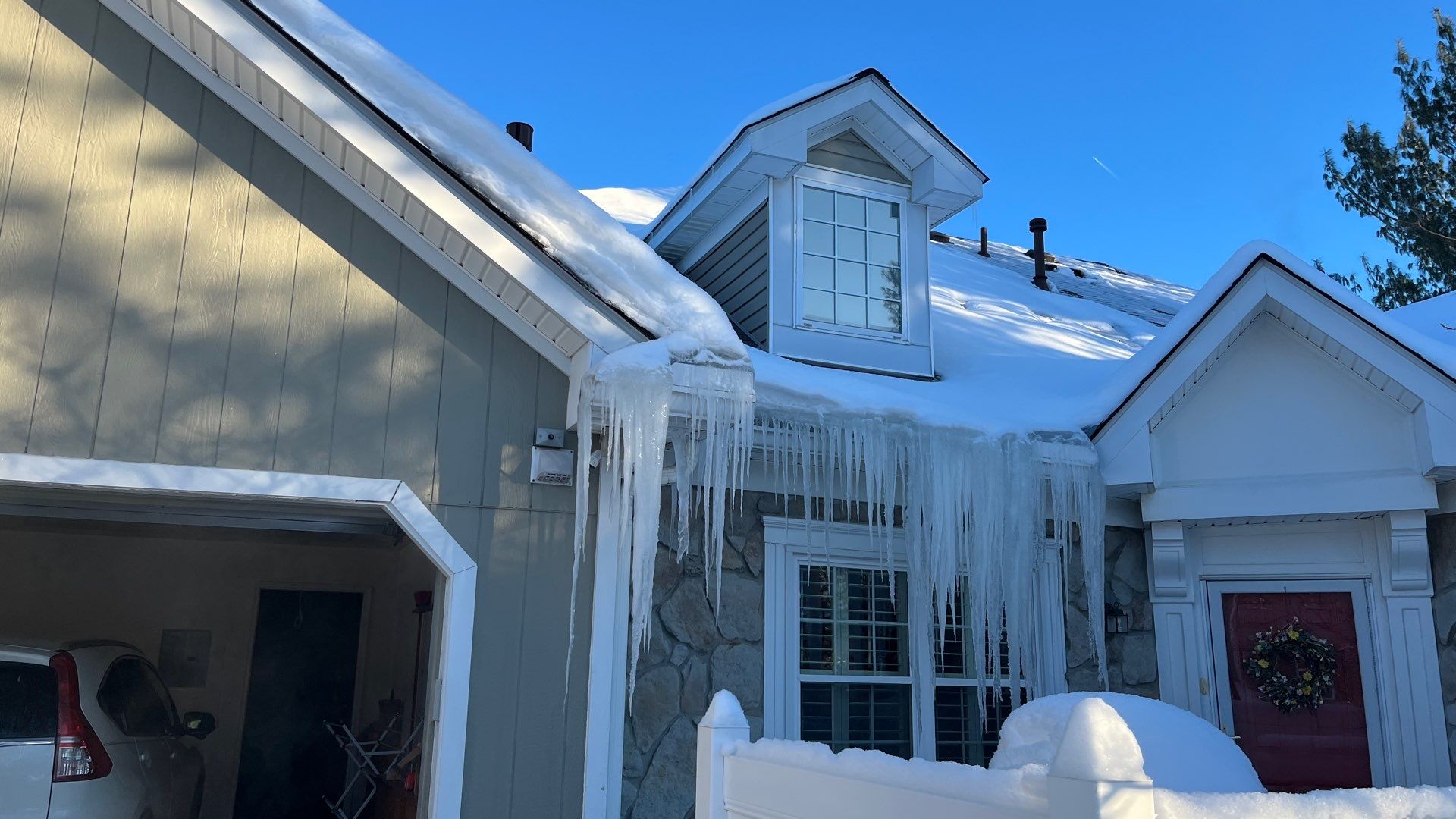
Every drip lands somewhere — usually a fascia board, a foundation strip, or the walkway that ices in January. Small leak, patient damage.
Gutter-grade polymer sealants engineered to flex with aluminum’s thermal movement — hardware-store caulk cracks loose within seasons because it can’t.
Sealant over wet, dirty or oxidized metal fails on schedule — the corner needs stripping, cleaning and drying before new sealant can actually bond.
Skin in hours, full cure typically a day or more depending on product and temperature — we schedule around the forecast so the cure completes dry.
No — sealant needs clean, dry metal to bond. Wet-weather calls get temporary measures and a proper seal when conditions allow.
Corners, end caps and outlet drops are field-sealed joints even on seamless runs — far fewer joints than sectional, but the ones that exist age like any seal.
The exterior works as one assembly — these are the pieces that connect to this one.
Repair makes sense when the trough metal is sound and the…
Learn more →Tiger stripes are vertical dark streaks caused by roof runoff carrying…
Learn more →Twice a year is the general standard, in late spring and…
Learn more →Quality micro-mesh guards work; most failures come from product type rather…
Learn more →Most homes use 5-inch K-style gutters, but roof area, pitch and…
Learn more →A gutter needs roughly a quarter inch of fall per ten…
Learn more →Gutter Sealing is available across our licensed service territory in Ohio, Pennsylvania and New York. Find your city below, or call (330) 918-1018.
Free seam survey — every joint checked, sealed right the first time.
Takes about 20 seconds.
