
29 states · wherever it snows
Ice dam removal
Steam removal by insured crews across 29 states, with the documentation to support a claim if water has already come inside. We run around the clock during storm events — including one in the morning, if that is when your ceiling starts coming down.
From our own records · 2025–26 season
Across 815 payments totalling $1,391,241 between December and March across our winter markets, 76.9% of our winter work landed in February, and 47.5% of the whole season came through in a single 14-day window. On the busiest day we ran 46 jobs. If you are trying to book during that fortnight, so is everyone else in the region.
The practical version: if you have ice at the eave and nothing coming inside yet, call before the window, not during it. It is a scheduled job at a lower rate instead of an emergency at a higher one.
Method: full payment export for the 2025–26 winter, all services, rolling 14-day sums.
What an ice dam actually is

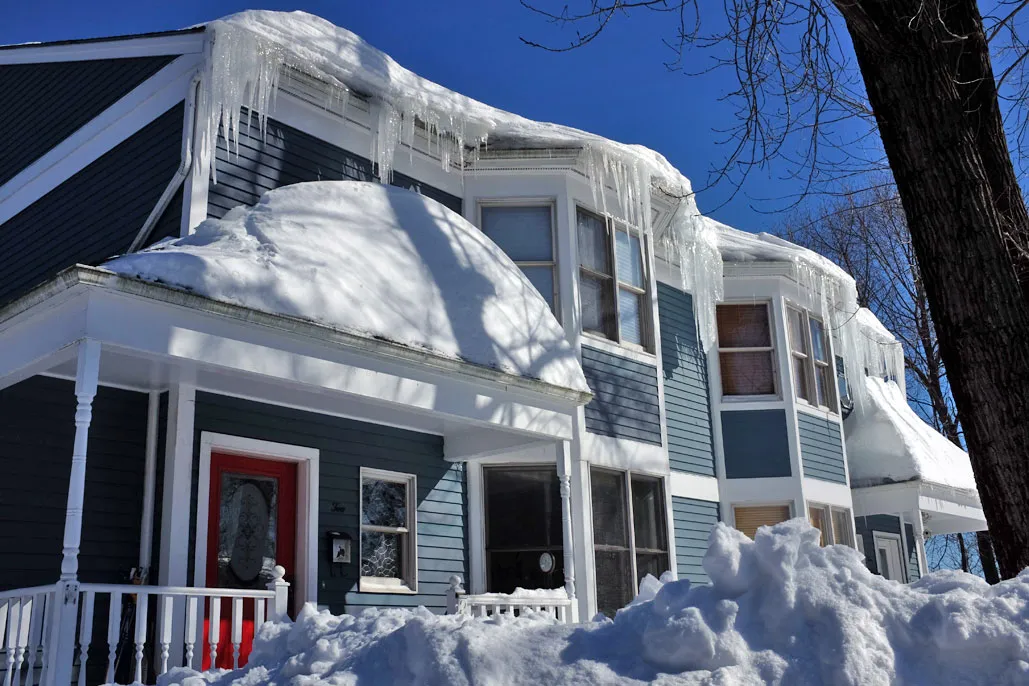
An ice dam is a ridge of ice at the edge of your roof that stops meltwater from draining. It takes three conditions at once: snow on the roof, freezing outdoor temperatures, and heat escaping from your living space into the attic.
That escaping heat warms the underside of the roof deck and melts the snow sitting on it from below. The meltwater runs down the slope until it reaches the eave, which hangs past the heated part of the house and stays cold, and refreezes there. Every melt-freeze cycle makes the ridge taller. Eventually it holds standing water behind it, and standing water on a roof finds its way under the shingle courses, through nail holes, into the soffit, and into the wall and ceiling below.
Two things people get wrong. First, this is a heat loss problem, not a roofing problem — your roof did not cause it. Second, it does not take a blizzard. Dams can start with as little as two inches of accumulation on the right house.
The warning signs
- Large icicles hanging from the eave, or ice building up over the gutter line
- A visible ridge of ice at the roof edge, often with a wet, darker band of roof above it
- Water stains or damp spots on ceilings, especially along exterior walls or near windows
- Damp insulation, frost, or water tracking on the sheathing in the attic
- Snow melted off one slope while another stays fully loaded — usually the sunny side clear, the north side covered
By the time a stain shows on a ceiling, water has already been getting past the roof edge for a while.
What not to do
Do not chip it. Hammers, hatchets, ice picks and chisels break shingles, dent gutters and punch through valley metal. The margin between removing ice and cutting into the roof is millimetres, on a slick surface, usually from a ladder set on ice.
Do not pressure wash it. Force lifts and cracks shingles. Warm water under pressure is still pressure.
Do not use rock salt. Sodium chloride damages roofing materials, gutters and the plantings underneath.
Do not use open flame or a torch. This should be obvious. It is not always.
The two things you can safely do yourself
Rake the snow, from the ground
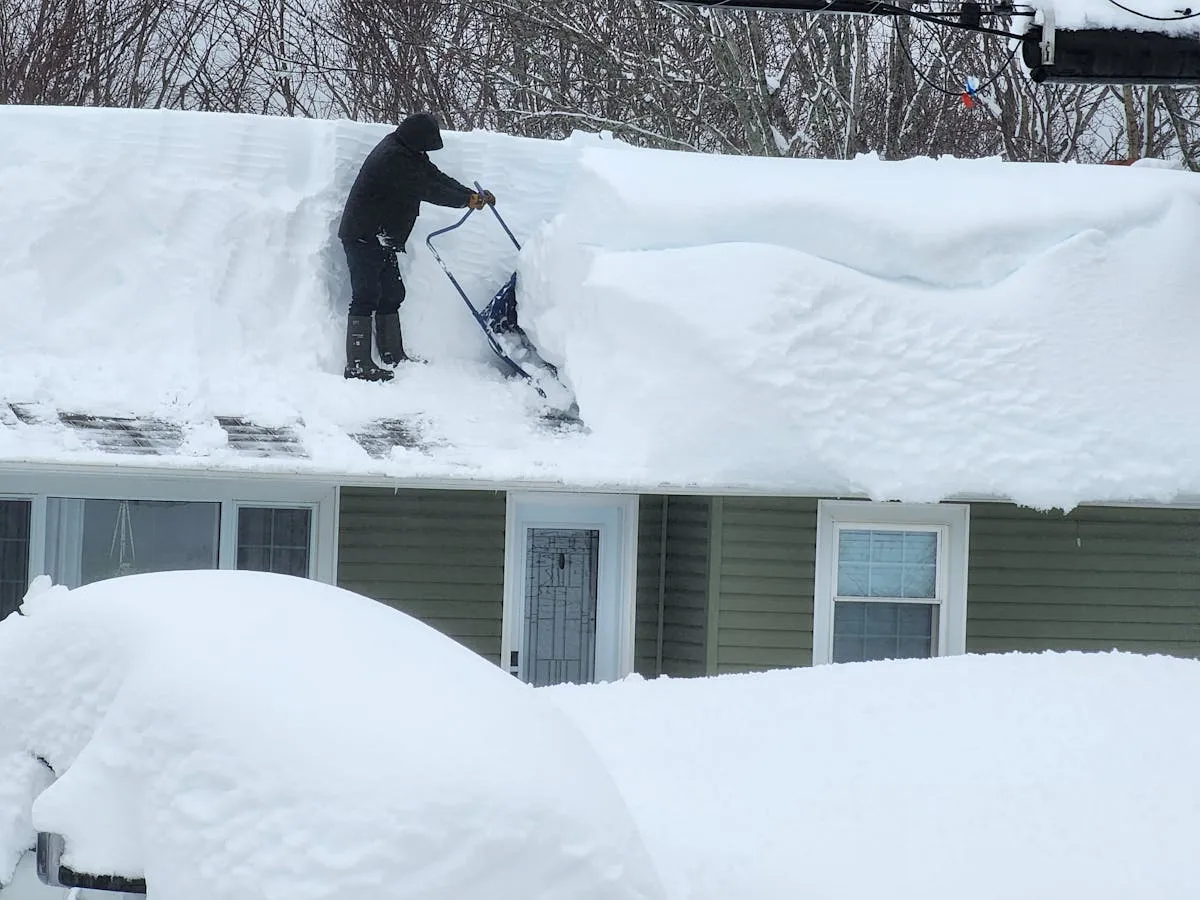
A long-handled roof rake, ideally one with wheels or a bumper that keeps the blade off the shingles, removes the fuel supply — see how much roof snow is too much for when it is worth doing. One caution that does not get said often enough: clearing only the bottom few feet can cause a second dam to form higher up the slope, right where you stopped. Take off as much as you can safely reach from the ground, or none of it.
Cut a drainage channel
Fill a nylon stocking or fabric sleeve with calcium chloride ice melt, not rock salt, and lay it vertically across the dam so one end hangs over the gutter. It melts a channel that lets trapped water drain. It does not remove the dam. It buys time.
If water is actively coming through a ceiling, a box fan in the attic aimed at the wet section of roof deck can refreeze the leak path and slow it down while you get help. That is a stopgap, not a fix.
What is not safe is going up a ladder onto a snow-covered, ice-covered pitched roof. That is where people get seriously hurt every winter.
Why steam, and how to verify you are getting it
Steam is the only method that removes a dam without physical contact with your roofing materials. Low-pressure, high-temperature vapour melts the ice where it is applied. A trained crew cuts channels through the dam and lets the bulk of the ice release under its own weight rather than melting the whole thing, which is both faster and cheaper for you.
How to check what you are actually hiring
Plenty of companies advertise steam and arrive with a hot-water pressure washer, and pressure lifts and cracks shingles no matter how hot the water is. A widely repeated shortcut says a true steamer has no trigger while a pressure washer does — it is a fair opening question, but it is disputed within the trade, so do not rest on it alone.
Ask what machine is coming and what temperature it runs at, ask whether the company is insured specifically for ice dam removal and will send the certificate, and get the hourly rate and minimum in writing before anyone arrives.

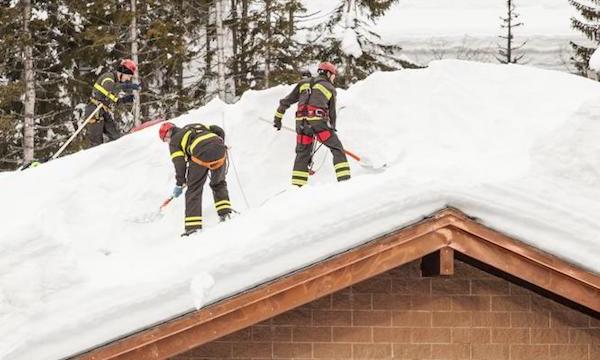
What happens when we arrive
- We walk the exterior and the attic, and photograph conditions before anything is touched
- If there is interior damage, we document it before removal begins — see our page on ice dams and insurance claims for why that order matters
- Snow above the dam comes off first, so the ice is reachable
- Steam cuts channels through the dam; the bulk releases into a controlled fall zone
- Gutters and downspouts are cleared so meltwater has somewhere to go
- We tell you what caused it and what it would take to stop it happening again
Pricing moves with storm conditions, ice volume, roof height and access. We put the hourly rate and the minimum hours for your property in writing before we start — see what ice dam removal really costs for how the industry prices this and why published averages are unreliable.
The permanent fix is heat, not ice
Everything above is triage. Ice dams come back, often within a week or two if the weather repeats and the snow load is not managed, and they come back in the same spot, because the heat leak causing them has not moved.
The durable fix is upstream, and we cover it under ice dam prevention: air sealing the attic bypasses where warm air escapes — around recessed lights, plumbing stacks, wiring penetrations, the attic hatch, and where interior walls meet the attic floor — then insulation to the level your climate zone calls for, then verifying that soffit intake and ridge exhaust venting are genuinely open and not packed with insulation. Air sealing generally matters more than insulation depth. A well-sealed attic at a moderate R-value routinely outperforms a heavily insulated one full of leaks.
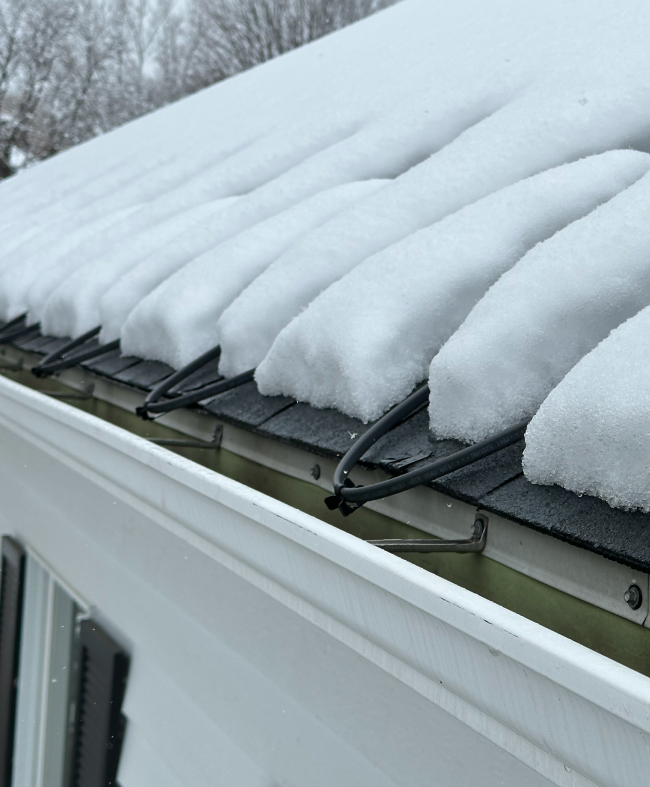
Heated cables at the eave and in the gutters are a management tool, not a cure — trade-offs in are roof heat cables worth it. They keep a drainage path open. They do not stop the melting.
Common questions
How do I know if I have an ice dam or just icicles?
Icicles alone are a warning sign, not proof. An ice dam is a solid ridge of ice sitting on the roof surface at the eave, usually with a wet or darker band of roof above it where water is pooling. If you can see a raised band of ice along the roof edge rather than just hanging spikes, that is a dam.
Should I remove it today or wait for it to melt?
If water is coming inside, remove it today. Every hour of standing water is more interior damage and a weaker claim. If nothing is coming inside, it depends on the forecast, how much snow is still above the dam to feed it, and which slope it sits on. A north-facing slope during a cold stretch can hold ice for weeks. A south-facing slope after a sunny thaw may clear itself. Call and describe it before you spend money.
Is it safe to remove an ice dam myself?
Raking snow from the ground is safe and useful. Laying a calcium chloride sock across the dam to cut a drainage channel is safe. Climbing a ladder onto a snow-covered pitched roof is not, and it is where people get seriously hurt every winter. Chipping with a hammer, hatchet or pick damages shingles and valley metal almost every time.
Why is chipping so bad if I am careful?
The margin between removing ice and cutting into the roof is a matter of millimetres, on a slick surface, usually from a ladder. Valley metal is especially vulnerable, and a single hard strike can deform it into a leak that does not show up until the next heavy rain. Damage caused during removal frequently costs more than the dam would have.
Can I use rock salt?
No. Sodium chloride damages roofing materials, corrodes gutters and kills the plantings underneath. Calcium chloride is the correct product, applied in a fabric sleeve rather than scattered loose.
What is the pantyhose trick and does it work?
Fill a nylon stocking or fabric sleeve with calcium chloride and lay it vertically across the dam so one end hangs over the gutter. It melts a channel that lets trapped water drain. It works as a stopgap. It does not remove the dam, and it does nothing about the heat loss causing it.
Does a box fan in the attic actually help?
It can, temporarily. Aiming a fan at the wet section of roof deck refreezes the leak path and slows water coming through the ceiling. It buys you time to get help. It is not a fix.
Should I rake only the bottom few feet?
That is common advice and it can backfire. Clearing only the lower section can create a second dam higher up the slope, right at the line where you stopped. Take off as much as you can safely reach from the ground, or leave it alone.
How fast will the dam come back after removal?
If the weather pattern repeats and the snow above it is not managed, it can reform in the same location within one to two weeks. Removal buys you the rest of that weather pattern, not the rest of the winter.
Do gutters or gutter guards cause ice dams?
Neither causes them. Heat loss causes them. But gutters give the ice somewhere to anchor and grow, and gutter guards make removal slower because they block a steamer's access to the ice underneath.
Does an ice dam mean I need a new roof?
Not by itself. The dam is caused by heat escaping into your attic, not by the roof covering. But water backing up under shingle courses can degrade the deck and underlayment over time, and if the roof is near the end of its life anyway, the tear-off is the right moment to add ice and water barrier at the eaves.
Do I want a roofer or an ice dam specialist?
Either can remove the ice safely if they use a true steamer and carry insurance covering this specific work. The difference shows up afterward. A specialist removes the ice and leaves. A restoration contractor removes the ice, documents the loss and can carry the claim and the repairs. If there is interior damage, the second saves you a handoff.
What should I do right now if water is coming through the ceiling?
Move what is underneath it, put a container down, photograph everything, take a fan into the attic and aim it at the wet section of deck, and call. Do not go on the roof.
Where we work. Ice dam removal, roof snow removal and heated cables are offered across 29 states — Alaska, Colorado, Connecticut, Idaho, Illinois, Indiana, Iowa, Maine, Maryland, Massachusetts, Michigan, Minnesota, Montana, Nebraska, Nevada, New Hampshire, New Jersey, New York, North Dakota, Ohio, Pennsylvania, Rhode Island, South Dakota, Utah, Vermont, Washington, West Virginia, Wisconsin and Wyoming — with crews mobilising to wherever the storm lands. Roofing, gutters, siding and insurance restoration are offered in Ohio, Pennsylvania and New York, where we are a licensed contractor.
Coverage questions on this page are general information, not insurance advice — read your policy and speak with your carrier or agent.
Water coming in? Call now.
Same-day and next-day scheduling during storm events. If it can safely wait, we will tell you that too.
Call (330) 918-1018