
Insurance Claims & Adjuster Disputes
Matching Siding Statutes: Can Insurance Leave One Wall a Different Color?
Carriers routinely approve siding on one elevation only. Whether they can do that depends on your state’s matching provision and on what a field test shows.
Written by Nathaniel Davis, owner of Roof Gutter Now — a licensed exterior restoration contractor in Ohio, Pennsylvania and New York. Updated August 2026
What this comes down to
Approving one elevation of siding and leaving three untouched is common, and it produces a house with a visibly newer wall. Whether that is acceptable is a question of the policy and the state provision, not of taste.
The provision that governs it
Ohio Administrative Code 3901-1-54 addresses restoring property to a reasonably comparable appearance. That is a lower bar than identical, and it is higher than “water-tight.” The practical test is whether an ordinary observer sees the repair from normal viewing distance.
Pennsylvania and New York do not carry the same administrative language, so the argument there runs through the policy’s own restoration wording instead.
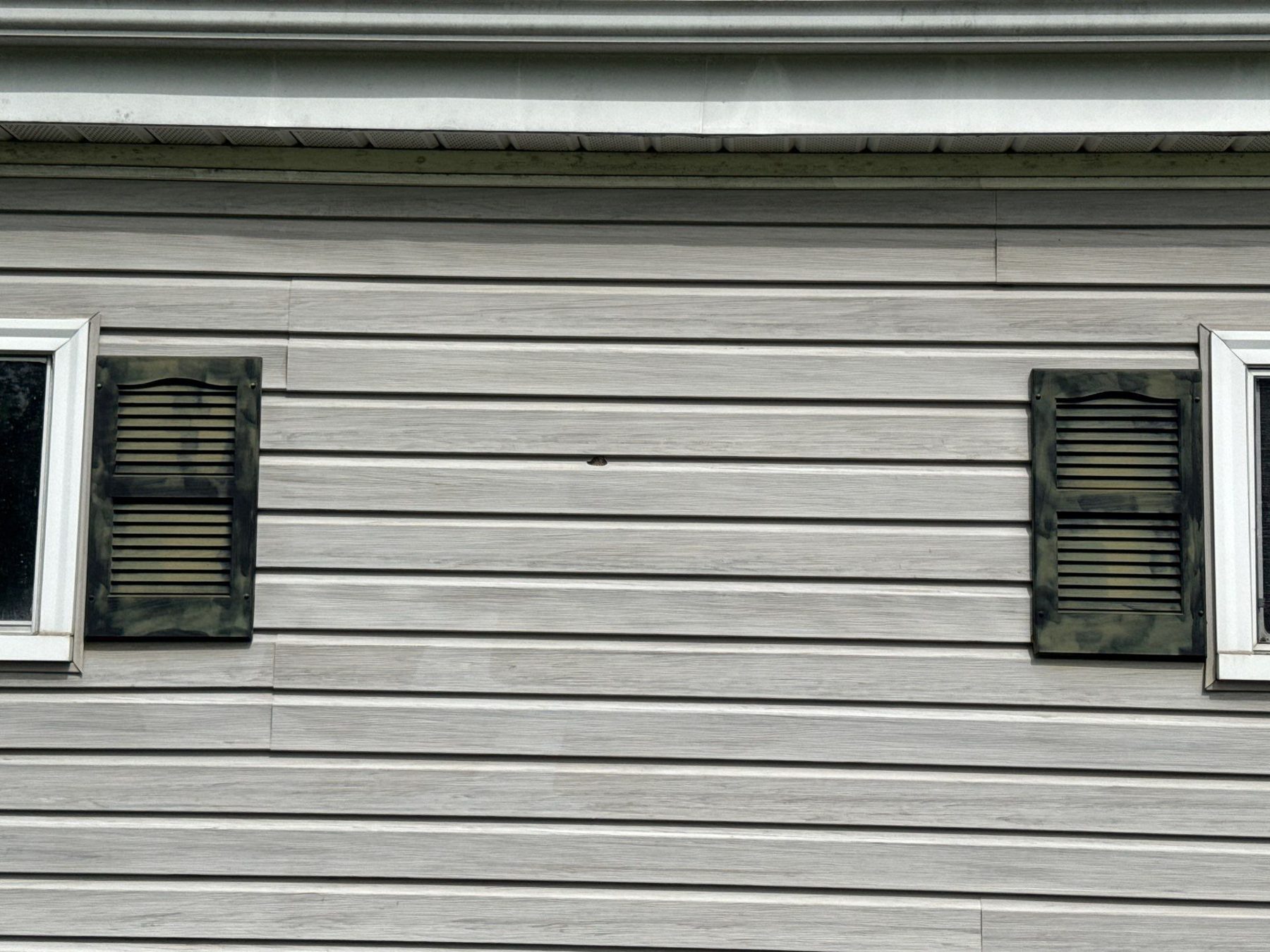
Making the argument concrete
Obtain the proposed replacement panel physically. Hold it against the existing wall in natural daylight. Photograph it close up and from the street. Vinyl fades — a seven-year-old south wall will not match a current-production panel of the same nominal colour, and the photograph shows it.
Where the profile itself is discontinued, run ITEL and submit both findings together. Corner posts matter too: a wall that changes colour at an inside corner is far less noticeable than one that changes mid-elevation.
Common questions
Does the whole house have to match?
+
Generally the question is elevation by elevation, and continuous sight lines. Two walls visible from the same viewpoint are usually treated together.
What if only a few panels are damaged?
+
If the material is still made and still matches, a partial repair is reasonable. The argument only arises when it does not.
Is fading enough on its own?
+
Sometimes. A photographed side-by-side of new against weathered is the evidence that decides it.
More on Insurance Claims & Adjuster Disputes
- Why Adjusters Call Creased Shingles “Mechanical Damage”
- The Repairability Test: Proving a Patch Will Destroy the Roof
- Overhead & Profit: Triggering the Three-Trade Requirement
- Xactimate RFG DRIP vs RFG DRIP+: Why the Code Changes Your Payout
- Ordinance & Law Coverage: Getting Drip Edge and Ice Barrier Paid
- Reading a Summary of Loss: RCV, ACV and the Net Claim Trap
See Insurance Claims services or find your local crew.
Need this looked at?
Free inspection, photographs of every finding, and a written scope before any work starts.
Call (330) 918-1018