Mold testing has a jargon problem — spore counts, species names, chain of custody. Here’s what each test actually measures, which question it answers, and how to read the report.
Mold Testing Data Over Drama done properly comes down to components most quotes never mention: moisture readings, air-sample results and containment. We inspect each before pricing, photograph what we find, and put the scope in writing so you see exactly what you're paying for. Licensed and insured across Ohio, Pennsylvania and New York.
Water damage gets worse every hour — call nowMold Testing: Air, Surface & PRV — priced in writing before we start, no obligation.
Air sampling measures airborne spore concentration and is compared against an outdoor control taken the same day, which is what makes the indoor number meaningful. Surface sampling identifies what is growing on a specific material. Post-remediation verification repeats the testing afterward to confirm the work actually returned the space to normal levels. Related: attic mold inspection and roof leak mold inspection.
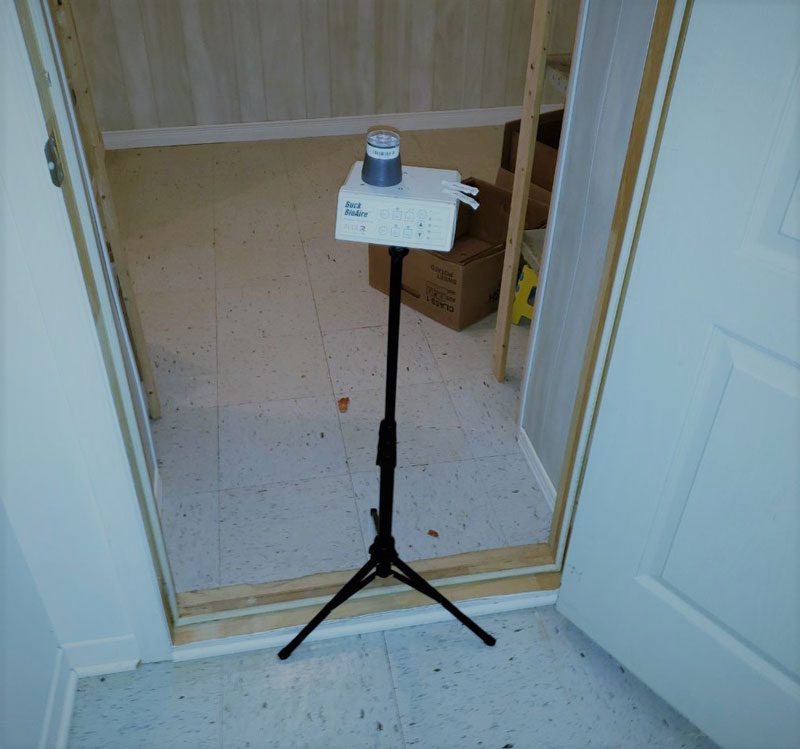
Air sampling draws measured volumes through spore traps — indoor counts compared against an outdoor baseline answer “is the air carrying elevated spores, and of what?” Surface sampling (tape lifts, swabs) answers “is this visible material actually mold, and which?” Post-remediation verification re-tests after cleanup answers “did the remediation actually work?” — the test people skip and shouldn’t, since it’s the only receipt that means anything. All analysis runs through independent accredited labs; the EPA’s guidance frames when sampling genuinely helps.
Lab reports list species and counts, not verdicts — interpretation lives in the comparison: indoor loads against outdoor, water-indicator species (the ones that only thrive where materials stayed wet) flagged, and results read against what the inspection found physically. We translate every report into plain decisions and next steps. One honest limit: sampling describes conditions; it never replaces finding the moisture source — data and diagnosis together or neither is worth much.


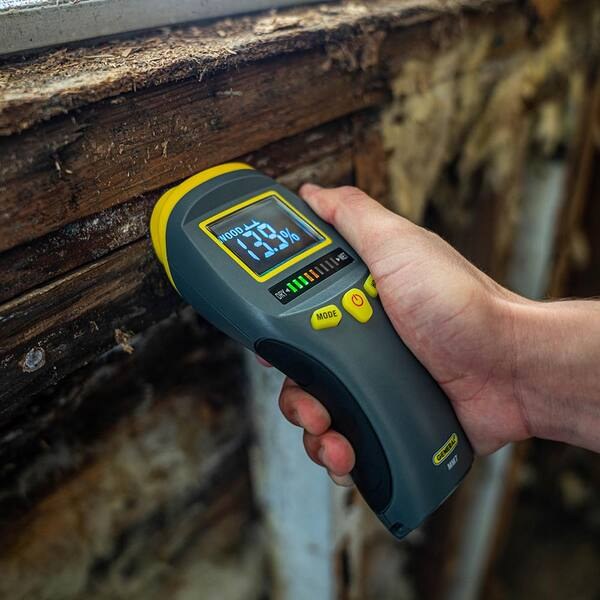

Sometimes surface confirmation and pre-remediation documentation still earn their keep — and sometimes the honest answer is skip testing, fix moisture, clean it up. We say which, per the EPA’s own logic.
There is no universal number — indoor results are judged against your outdoor baseline that day, which is why we always sample both.
Because “it looks clean” is not data — PRV is the independent confirmation the job succeeded, and the document that protects a sale or claim afterward.
Settle-plate kits grow something almost anywhere and answer nothing about your air versus outdoors — measured-volume sampling against an outdoor baseline is what labs can actually interpret.
There isn’t a universal number — indoor results are judged against your outdoor baseline that day, which is why both always get sampled together.
Standard lab turnaround runs a few business days; expedited options exist when a closing or remediation schedule is waiting on the answer.
Documented sample handling from collection to lab — the procedural backbone that makes results defensible in sales and claims.
Whenever attic or wall findings raise the pathway question — indoor air against the outdoor baseline answers whether the problem is reaching the rooms you breathe in.
The exterior works as one assembly — these are the pieces that connect to this one.
Attic mold is almost always a ventilation problem rather than a…
Learn more →Given moisture and organic material, growth can begin within roughly twenty-four…
Learn more →A moisture inspection uses meters and thermal imaging to locate elevated…
Learn more →An inspection is warranted after a roof leak or water intrusion,…
Learn more →Those streaks are Gleocapsa magma, a blue-green algae that feeds on…
Learn more →Three-tab shingles are a single flat layer with cutouts creating a…
Learn more →Mold Testing is available across our licensed service territory in Ohio, Pennsylvania and New York. Find your city below, or call (330) 918-1018.
Sampling with independent lab analysis — translated into plain next steps.
Takes about 20 seconds.
