Trim rots first because trim catches water first — sills, corner bottoms, and surround feet take every drip. Repaired properly, with the drip corrected, before the rot invites itself inward.
The difference between Trim Repair that lasts and Trim Repair that fails early is usually J-channel, window flashing or the house wrap. We check all of them on site rather than estimating blind, document findings with dated photographs, and price the work in writing first. Licensed contractor, fully insured, 400+ five-star reviews.
Water damage gets worse every hour — call nowExterior Trim Repair — priced in writing before we start, no obligation.
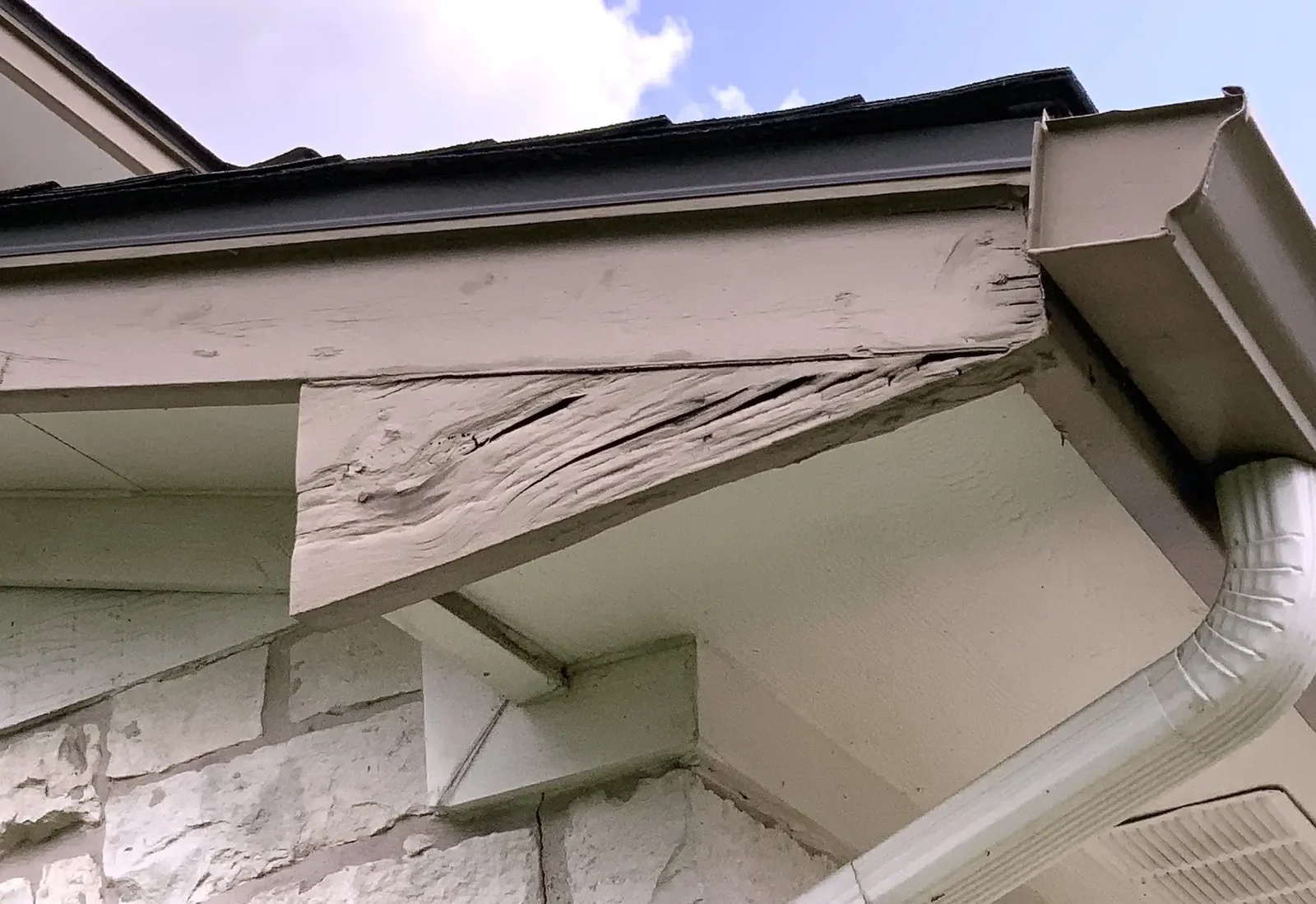
Surface deterioration on otherwise sound material can be filled and refinished. Once rot reaches the core, the piece has lost structural integrity and filler only conceals the problem. The more important step is finding the water source, because replacing trim without correcting the leak returns the same failure in a few seasons. Related: siding repair and exterior trim guide.
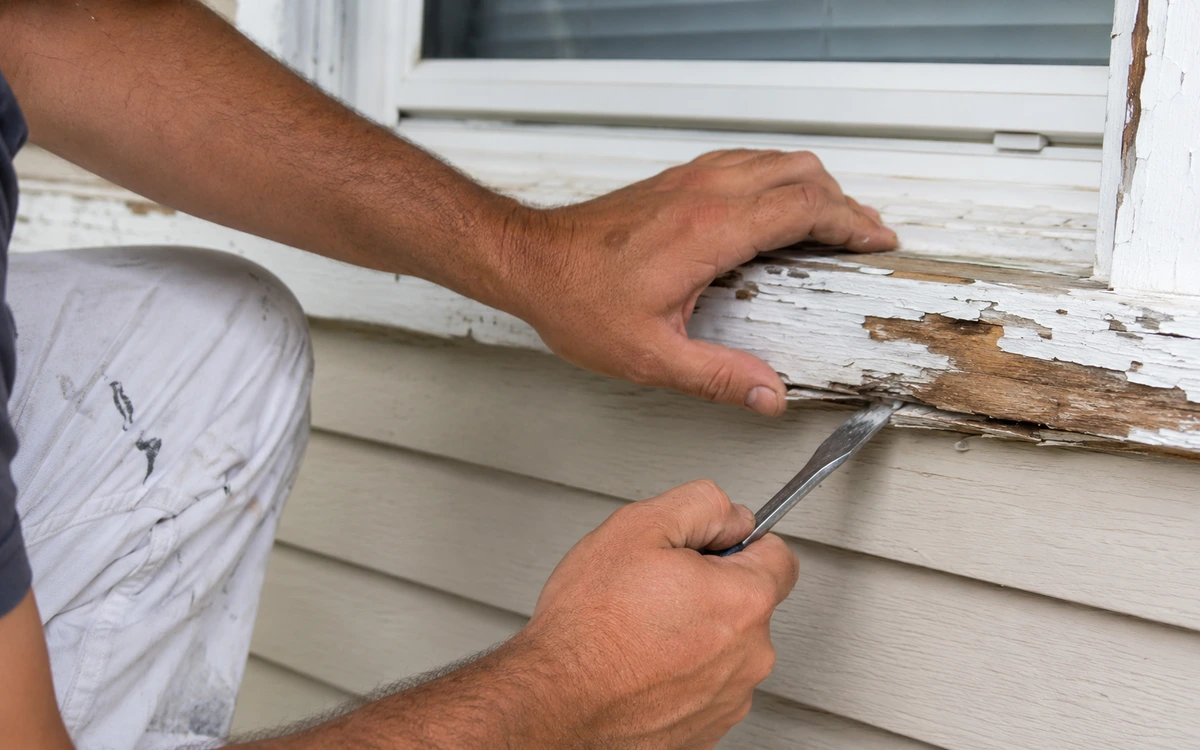
Soft trim gets opened to sound material, not skimmed with filler that fails by spring. Sills rebuild with proper slope, corner bottoms splice or replace in kind — increasingly in PVC that ends the rerun — and everything seals at the joints water exploited. Then the actual fix: the missing drip cap, the overflowing gutter, the sprinkler head baptizing the corner nightly.
Rotten trim frequently announces water problems the wall hasn’t confessed yet — we check the adjacent siding and sheathing edges while the trim is open, because a surround repaired over a wet wall is a receipt, not a repair. Small honest looks now; not moisture investigations later.
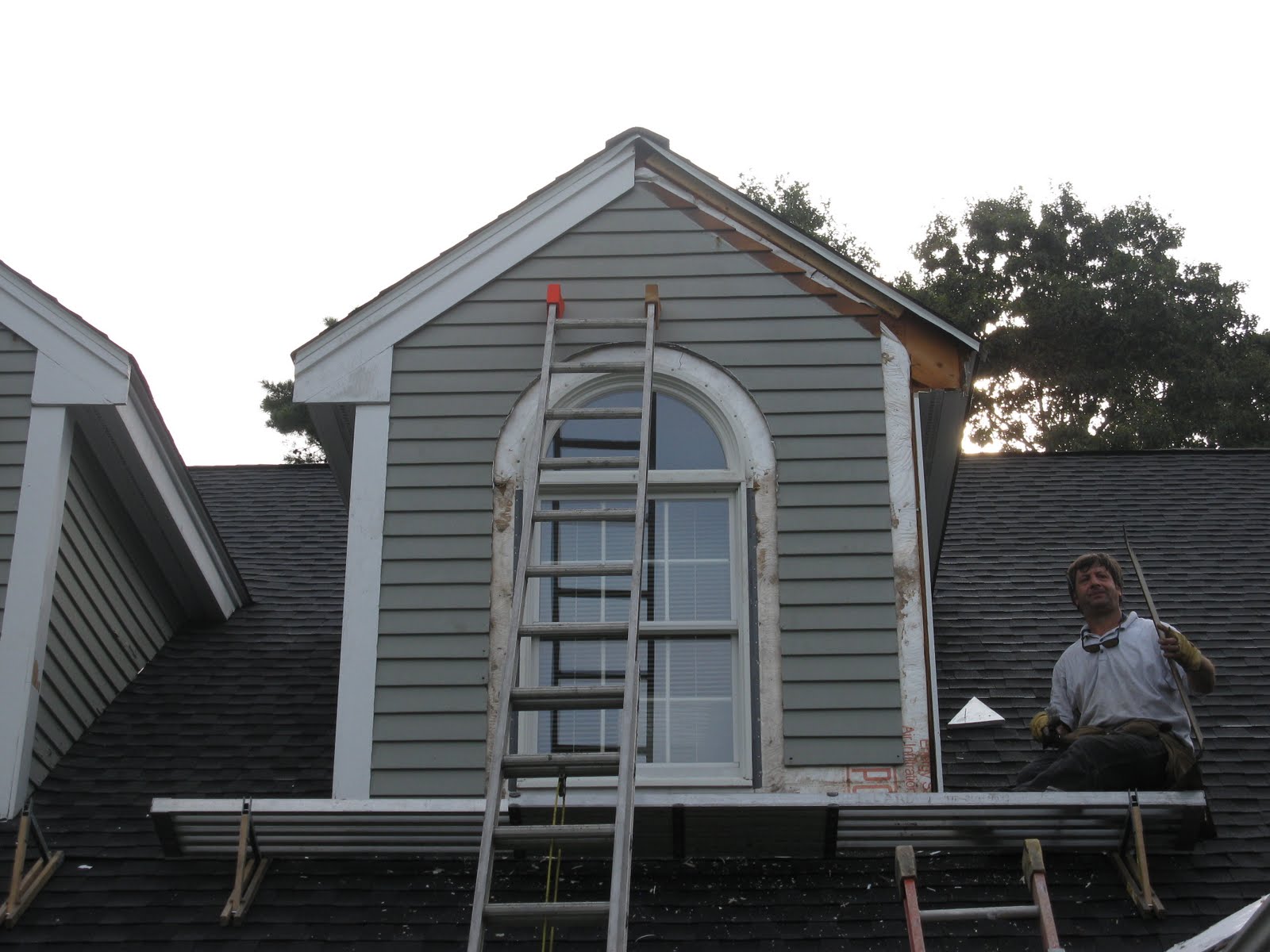

Epoxy has a place on ornate irreplaceable profiles; on standard trim, replacement in rot-proof material costs similar and ends the cycle instead of scheduling it.
Because the water that rots it keeps arriving — the repair that lasts is the one that fixes the drip, which is why ours includes finding it.
Peeling is often moisture pushing from behind — the paint is the messenger. Worth the free look before repainting seals the evidence in.
Epoxy has a place on ornate irreplaceable profiles; on standard trim, replacement in rot-proof material costs similar and ends the cycle rather than scheduling it.
Often moisture pushing from behind — the paint is the messenger, not the problem. Worth a look before a repaint seals the evidence in.
Two-part epoxy systems on profiles worth saving — but on standard trim, replacement in PVC usually costs similar and ends the rot cycle instead of pausing it.
Splash, wicking, and end-grain drinking from the sill — the most abused inches of trim on the house. Rebuilt right with sealed ends and the splash source addressed.
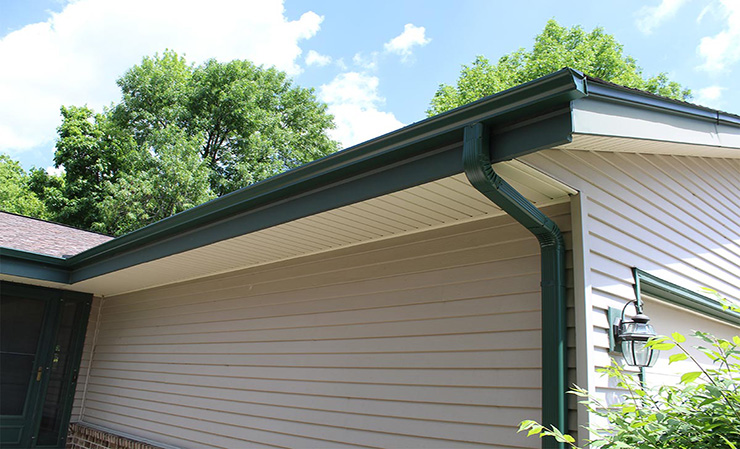
Fix the water first — the drip cap, gutter overflow, or sprinkler — then rebuild in materials that don’t feed. Rot is a symptom wearing a wood costume.
The exterior works as one assembly — these are the pieces that connect to this one.
Individual panels can be swapped when the product is still manufactured…
Learn more →Wood offers the best appearance and takes paint well but requires…
Learn more →Fascia rots from water that overflows a clogged gutter, backs up…
Learn more →Soffit is the intake half of attic ventilation.
Learn more →Exterior trim closes and weatherproofs the transitions where materials meet: around…
Learn more →Board and batten is a vertical pattern of wide boards with…
Learn more →Trim Repair is available across our licensed service territory in Ohio, Pennsylvania and New York. Find your city below, or call (330) 918-1018.
Free probe-and-source visit — the rot and its water, both handled.
Takes about 20 seconds.
