The profile of the moment — farmhouse to modern — available in every material from budget vinyl to fiber cement to standing-seam-adjacent metal. Vertical looks simple; its water details aren’t.
The difference between Board & Batten Siding that lasts and Board & Batten Siding that fails early is usually the starter strip, window flashing or fastener spacing. We check all of them on site rather than estimating blind, document findings with dated photographs, and price the work in writing first. Licensed contractor, fully insured, 400+ five-star reviews.
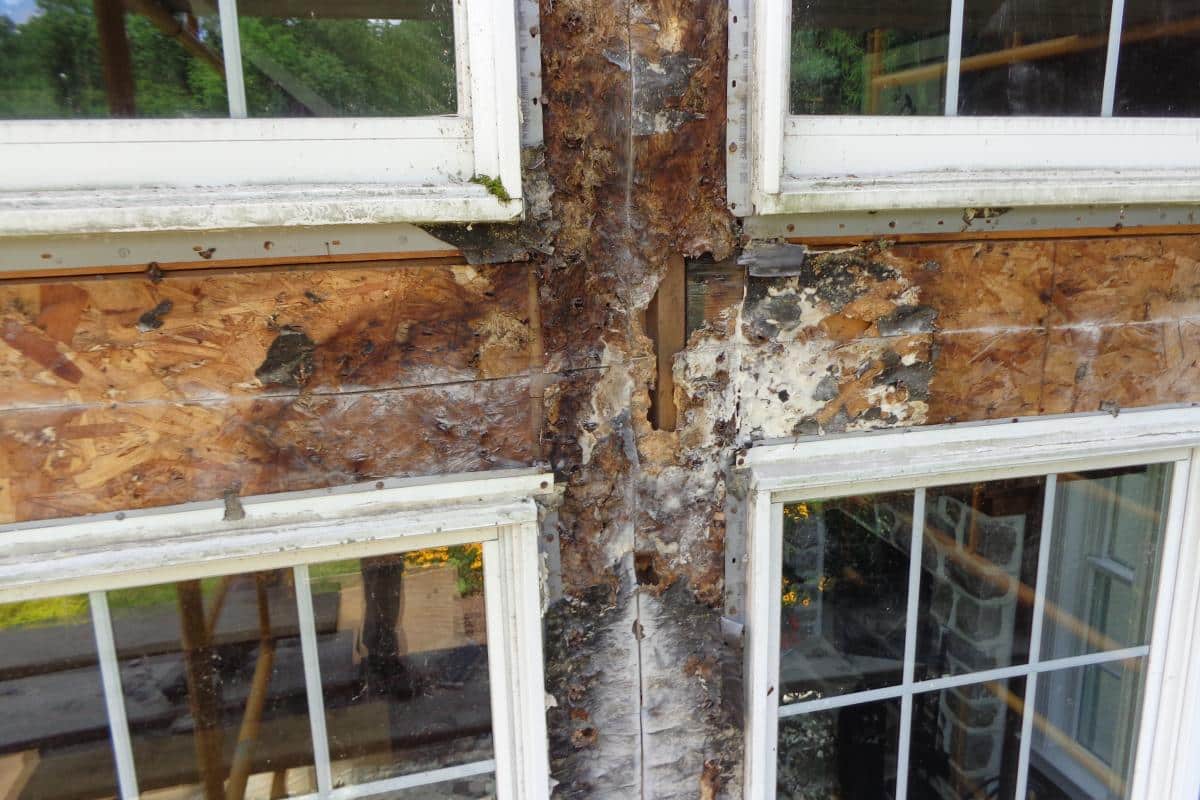
Water damage gets worse every hour — call nowBoard & Batten Siding — priced in writing before we start, no obligation.
Board and batten is a vertical pattern of wide boards with narrow strips covering the joints between them. Because the profile is vertical, water sheds down the face rather than being caught by horizontal laps, which makes flashing at horizontal transitions and the water barrier behind the boards especially important. Related: cedar siding installation & repair and fiber cement siding.
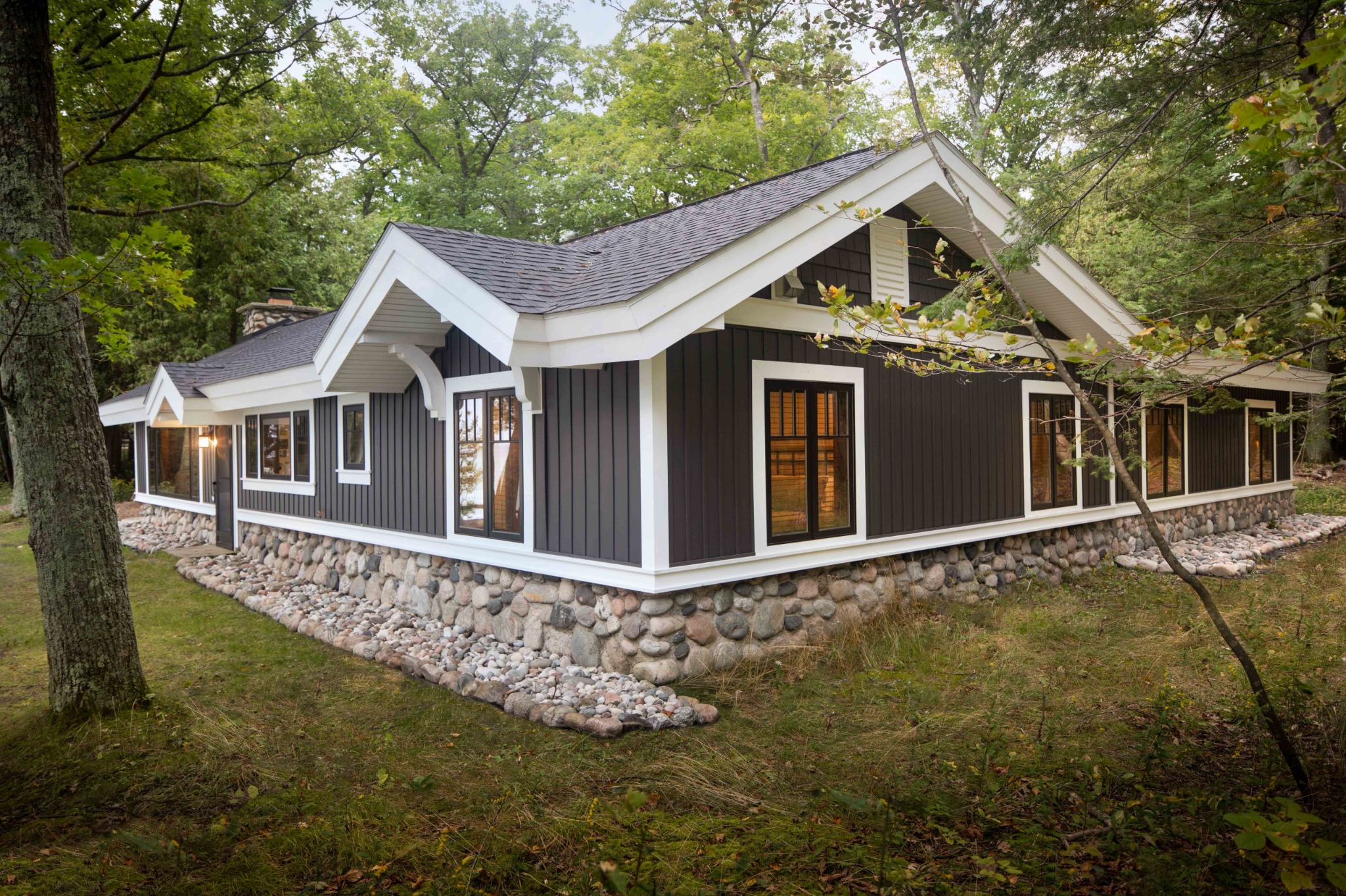
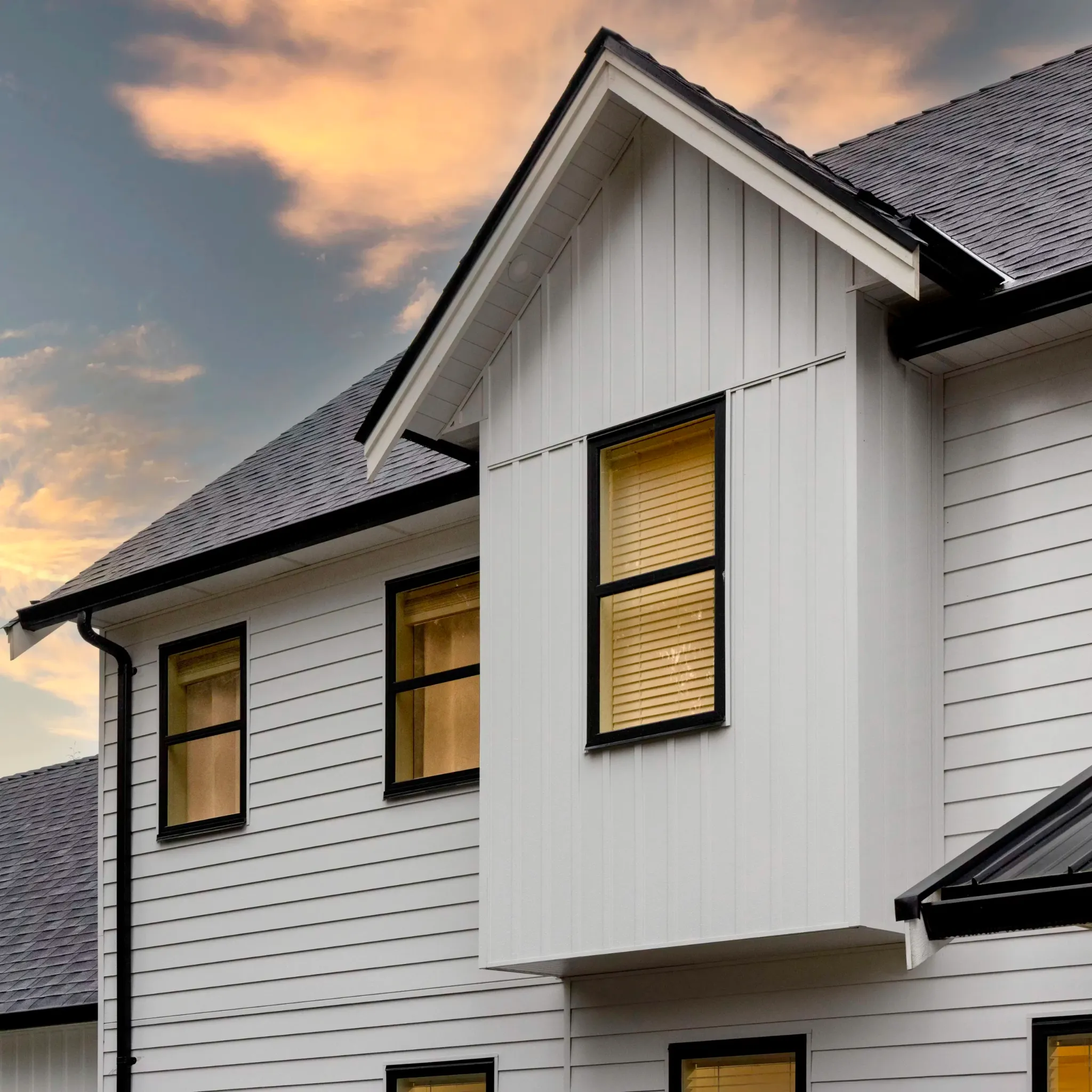
Board & batten’s wide-board-narrow-strip rhythm now comes in every material tier: vinyl versions deliver the look affordably, fiber cement gives it crisp permanence (the photo above), metal-family panels take it modern, and real cedar remains the original. Whole houses wear it, and single gables or entries wear it as an accent over horizontal — often the highest-impact facelift per square foot on the house.
Horizontal siding sheds water at every course; vertical panels channel it — straight down to whatever waits at the bottom. That makes the base flashing, panel-end kickouts, and horizontal transition details the whole ballgame, along with furring where flat backing demands it. It’s the profile where installer experience shows fastest — and where ours is on the wall above.


Modestly, in most materials — more trim pieces and detail labor. Accent applications get the look at a fraction of whole-house cost.
Budget and hold length: vinyl for value, fiber cement for the premium long game, metal for modern lines, cedar for the original with its maintenance dues.
As part of a proper re-side of those sections, yes — done with the transition flashing that keeps mixed profiles dry.
Modestly — more trim pieces and detail labor. Accent gables deliver the look at a fraction of whole-house cost.
The narrow vertical strip covering the seam between wide boards — originally functional, now the signature rhythm of the style.
The style is defined by verticality — horizontal wide-plank looks exist but they’re a different animal with different water details.
In vinyl and fiber cement, no — maintenance follows the material, not the profile. Real wood board and batten inherits wood’s schedule.
Farmhouse and modern-farmhouse naturally, but gable accents flatter almost anything — it’s the highest-impact facelift per square foot going right now.
The exterior works as one assembly — these are the pieces that connect to this one.
Cedar needs periodic refinishing, typically every three to seven years depending…
Learn more →Fiber cement resists impact, insects and fire, holds paint far longer…
Learn more →Behind the visible panel is a weather-resistive barrier, properly integrated flashing…
Learn more →Individual panels can be swapped when the product is still manufactured…
Learn more →Replacement makes sense when damage spans multiple elevations, when panels have…
Learn more →Fascia is the vertical board running along the roof edge that…
Learn more →Board & Batten Siding is available across our licensed service territory in Ohio, Pennsylvania and New York. Find your city below, or call (330) 918-1018.
Free design consult — materials, accents and quotes side by side.
Takes about 20 seconds.
