The hole in the roof is the easy part of a tree claim. The fractured rafters two feet away, the removal coverage, and the whose-tree-is-it question — that’s where claims get shorted.
Tree Damage Claims done properly comes down to components most quotes never mention: line-item pricing, the scope of loss and depreciation. We inspect each before pricing, photograph what we find, and put the scope in writing so you see exactly what you're paying for. Licensed and insured across Ohio, Pennsylvania and New York.
Water damage gets worse every hour — call nowTree Damage Insurance Claims — priced in writing before we start, no obligation.
Generally your own policy covers the damage to your property regardless of where the tree stood, because coverage follows the damaged property. Liability shifts toward the tree owner mainly when the tree was documented as dead or hazardous beforehand and they were notified. Removal of the tree itself is often limited separately. Related: storm damage claims and roof insurance claims.

A limb that punches through shingles transferred its force into rafters, trusses, and decking well beyond the visible damage — cracked framing that looks fine from the attic hatch until someone crawls the run with a light. Adjusters price the hole; we open up and document the structure, because a patched hole over a cracked rafter is a claim that failed you. Removal is usually covered too when the tree hit the structure — the Insurance Information Institute outlines the general rules.
The rule surprises everyone: your policy covers your house, no matter whose yard the trunk stood in. If your neighbor’s oak lands on your roof, your carrier pays your claim (and may chase theirs afterward if the tree was negligently dead — not your problem to litigate). Your job is the same either way: tarp fast, document everything, file complete. We do all three the same day.
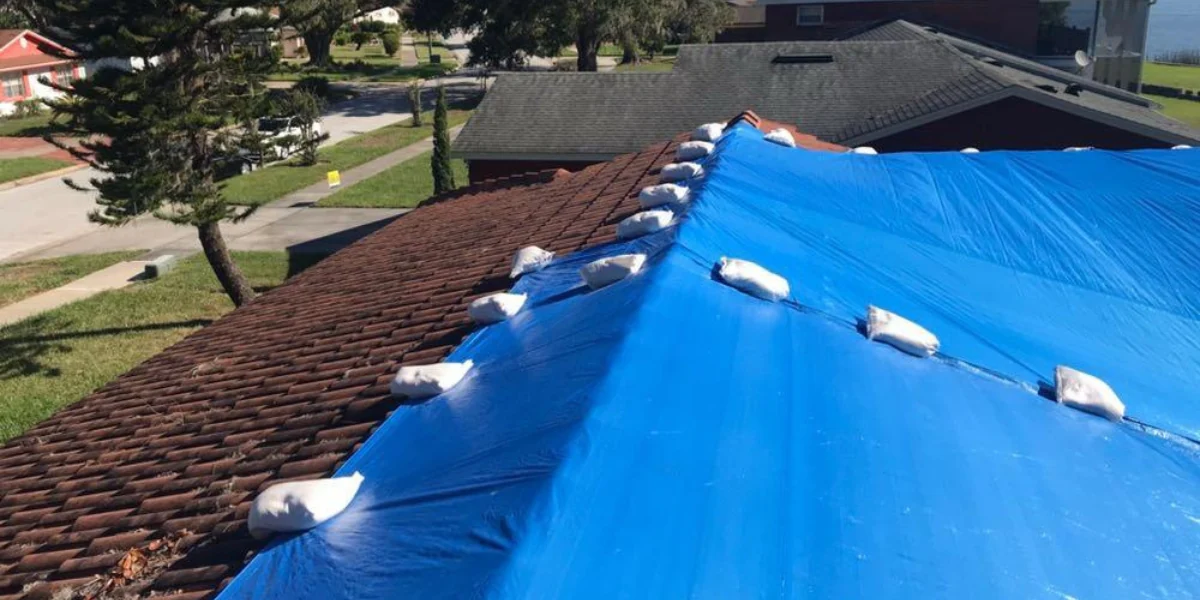


When it damaged the structure, removal off the structure is typically covered up to policy limits. A tree that fell harmlessly in the yard is often not covered — policies vary and we read yours.
A “graze” that bent gutters and creased a shingle course can carry surprising scope, and impact-cracked framing hides. Free inspection before you shrug it off.
Document it now: photos, dated written notice to the neighbor. If it later falls, that record matters. Some carriers and municipalities can compel removal of hazard trees.
Yes — removal, tarping, structural documentation and the claim run as one process, one call.
Yours — your policy covers your house regardless of where the trunk stood. Carriers chase each other afterward; that part isn’t your job.
Usually not — most policies cover removal off a damaged structure, not yard cleanup. Falling harmlessly is the cheap outcome in every sense.
Photograph everything first, mitigate what’s urgent, and keep the wood on site if possible — the tree is evidence of impact energy and direction.
Rarely — coverage typically ends at removal off the structure. Stumps, like landscaping, usually stay a homeowner line item.
The exterior works as one assembly — these are the pieces that connect to this one.
Policies require prompt notice, and many carriers apply a filing window…
Learn more →Most policies cover sudden, accidental damage from a specific event such…
Learn more →Tarping is temporary stabilization that stops active water intrusion until permanent…
Learn more →Gutters damaged by a covered event are generally part of the…
Learn more →Hail damage on asphalt appears as random soft-bruise impacts with granule…
Learn more →Damage from a covered event is generally included, but siding claims…
Learn more →Tree Damage Claims is available across our licensed service territory in Ohio, Pennsylvania and New York. Find your city below, or call (330) 918-1018.
Photos first protect your claim — 24/7 dispatch: (330) 918-1018.
Takes about 20 seconds.
