Ventilation quietly decides how long shingles live, whether ice dams form, whether attic mold grows, and what July costs to cool. Here’s the whole system — and how to fix a broken one.
The difference between Roof Ventilation that lasts and Roof Ventilation that fails early is usually pipe boots, the starter strip or the decking. We check all of them on site rather than estimating blind, document findings with dated photographs, and price the work in writing first. Licensed contractor, fully insured, 400+ five-star reviews.
Water damage gets worse every hour — call nowRoof Ventilation Services — priced in writing before we start, no obligation.
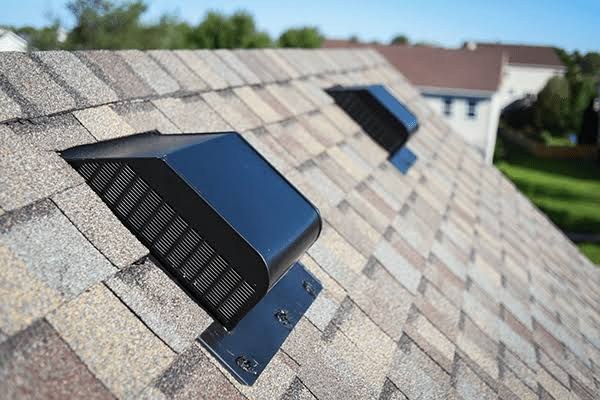
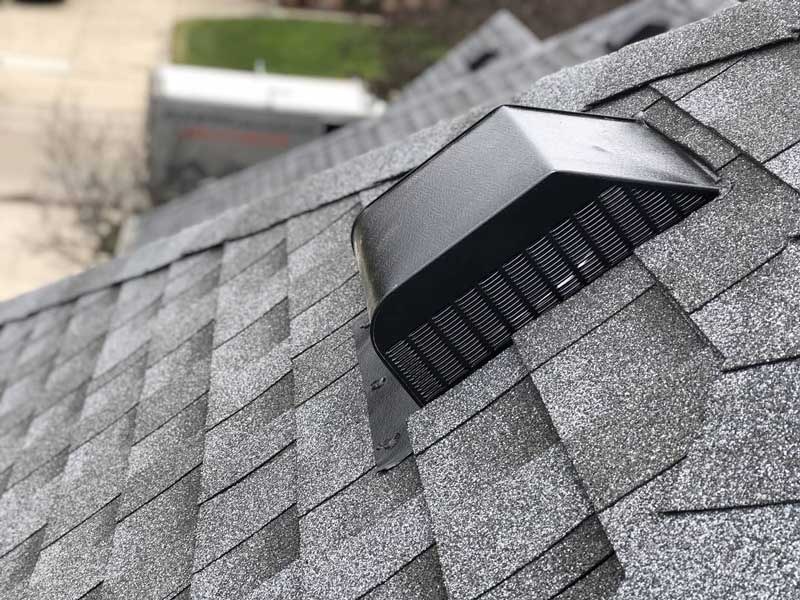
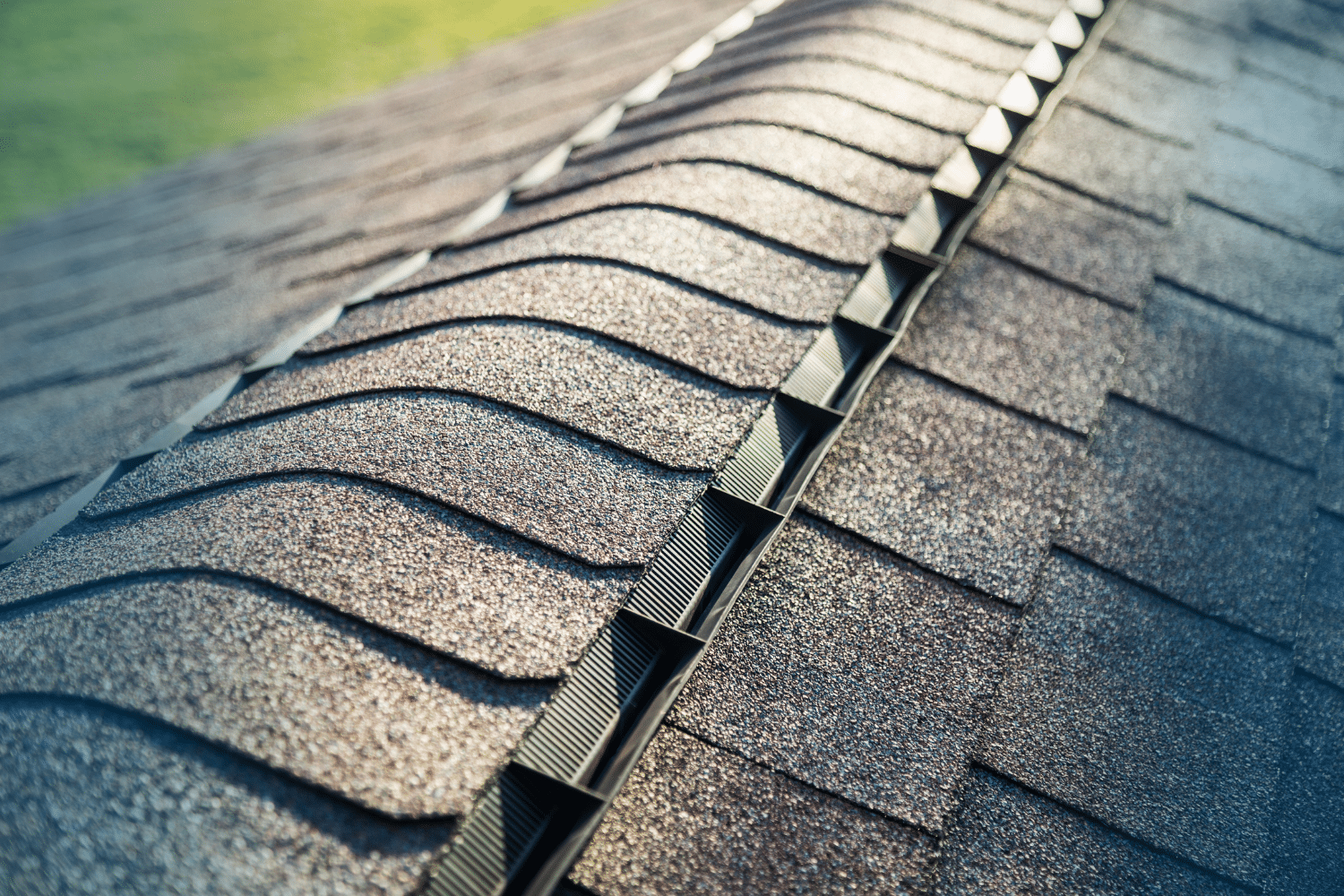
Roof ventilation works as a continuous airflow path: intake at the soffit, exhaust at the ridge, moving air along the underside of the deck. Both halves are required. Ridge vent installed over blocked or insufficient soffit intake cannot draw air, so the system stalls and the attic holds heat and moisture anyway. Related: roof vent installation and ridge vent installation.

Working ventilation is a loop: outside air enters at soffit intake, sweeps the underside of the roof deck, and exits at ridge or high exhaust — continuously, passively, forever. Every failure is a break in that loop: painted-shut or insulation-blocked soffits, exhaust with no intake to feed it, mixed vent types short-circuiting each other, bath fans dumping moisture mid-loop. Energy.gov explains the physics; we find your break and fix it.
Summer: superheated attics cook shingles from beneath, aging them years early and loading your AC. Winter: moist house air condenses on cold sheathing — hello attic mold — while trapped heat melts roof snow into ice dams. One hidden system, four expensive symptoms. The assessment is free and the fixes are usually modest: baffles, cleared intake, correct exhaust.

Symptoms talk: an attic you can feel from the hallway in summer, frost on sheathing in winter, ice dams, mold spotting, or shingles aging fast on an under-20 roof.
No — they solve different problems and need each other. Insulation without airflow just moves the condensation point; the loop still has to breathe.
Usually not the first one — powered fans can depressurize attics and pull conditioned air up through the ceiling. Passive balance nearly always wins; we will tell you the exceptions.
The common code baseline: one square foot of net vent area per 300 square feet of attic, split between intake and exhaust — the starting math we run for your actual attic.
Unbalanced ventilation can — exhaust exceeding intake pulls conditioned air from the house. Balance matters more than totals.
Meaningfully — exhausting superheated attic air reduces the heat load pressing on your ceiling insulation all summer.
A hallway ceiling warm to the touch in summer, frost on winter sheathing, ice dams, mold spotting, and shingles aging fast on a young roof.
Never — that suffocates the whole loop. Baffles exist precisely to hold the airway open where insulation meets the eaves.
The exterior works as one assembly — these are the pieces that connect to this one.
Ridge vent provides the most uniform exhaust because it runs the…
Learn more →A ridge vent works by cutting a slot along the peak…
Learn more →A roof is a replacement candidate when granule loss is widespread,…
Learn more →Ice dams form when heat escaping into the attic melts snow…
Learn more →Attic mold is almost always a ventilation problem rather than a…
Learn more →Roof cables run in a zigzag pattern along the eave, sized…
Learn more →Roof Ventilation is available across our licensed service territory in Ohio, Pennsylvania and New York. Find your city below, or call (330) 918-1018.
Free ventilation assessment — the loop, measured and mapped.
Takes about 20 seconds.
