A ridge vent turns the entire peak into continuous exhaust — more capacity than a row of box vents, nearly invisible under cap shingles, and no motor to ever fail.
Ridge Vent Installation done properly comes down to components most quotes never mention: the decking, the drip edge and step flashing. We inspect each before pricing, photograph what we find, and put the scope in writing so you see exactly what you're paying for. Licensed and insured across Ohio, Pennsylvania and New York.
Water damage gets worse every hour — call nowRidge Vent Installation — priced in writing before we start, no obligation.
A ridge vent works by cutting a slot along the peak of the roof deck and covering it with a baffled vent that lets warm attic air escape while blocking rain and snow. It only functions with matching soffit intake, because air leaving at the ridge has to be replaced by air entering at the eave. Related: roof vent installation and roof ventilation services.
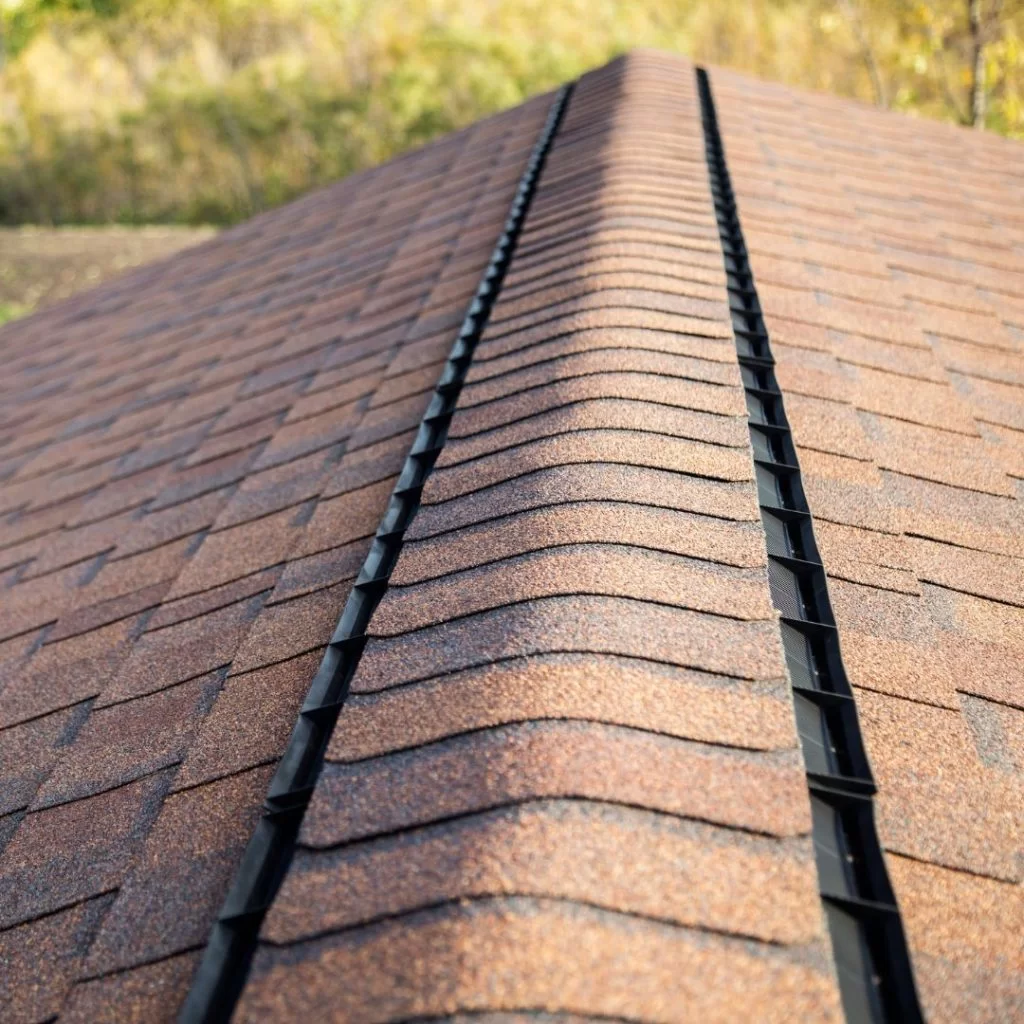
Hot air rises to the peak on its own; a ridge vent simply lets it leave — along the entire ridge length, continuously, with external baffles that use passing wind to pull even harder. Compared to scattered box vents it moves more air more evenly with nothing to see and nothing to break. The cut is made along the ridge, the vent installed, and cap shingles finish over it — from the street you see a clean peak.
A ridge vent without intake just sits there — or worse, pulls air backwards through itself. The system needs clear soffit intake feeding it from below, with baffles keeping insulation from choking the eaves. We verify intake as part of every ridge vent job, and we’ll also tell you when your roof’s ridge is too short or chopped-up for ridge venting to win — box vents have their place.


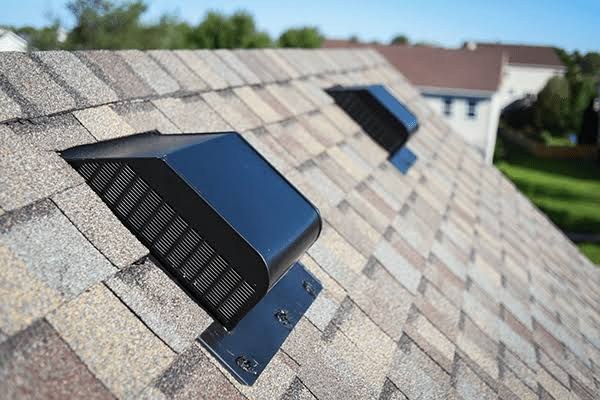
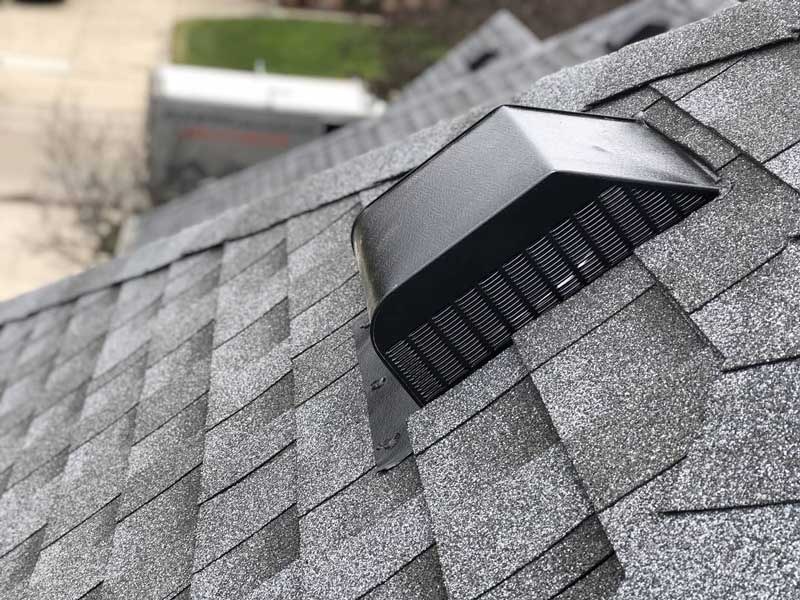
Usually yes — the ridge is cut, vent installed, and new caps finished, all without disturbing the field shingles.
Quality externally-baffled vents installed correctly do not — the failures you hear about are cheap roll vents or missing end plugs, both of which we do not do.
Ridge wins on capacity and looks when the ridge is long and unbroken; complicated rooflines sometimes favor box vents. We recommend from your roof, not a script.
On long, unbroken ridges: usually yes for capacity and looks. Complicated rooflines can favor box vents — the roof decides, not a script.
Poorly — exhaust needs intake to feed it, or it pulls air backwards through itself. We verify soffit intake on every ridge vent job.
Ideally the full usable ridge length, balanced against soffit intake capacity — the attic square footage math sets the target.
External baffles resist debris; paint-overs and shingle-over shortcuts are the real blockers. Quality product installed right stays flowing for decades.
Yes — winter is when they matter most, exhausting the moist air that otherwise condenses on cold sheathing and feeds mold and ice dams.
The exterior works as one assembly — these are the pieces that connect to this one.
Ridge vent provides the most uniform exhaust because it runs the…
Learn more →Roof ventilation works as a continuous airflow path: intake at the…
Learn more →Ice dams form when heat escaping into the attic melts snow…
Learn more →A roof is a replacement candidate when granule loss is widespread,…
Learn more →A complete system is more than shingles: ice and water barrier…
Learn more →No, but poorly flashed ones do.
Learn more →Ridge Vent Installation is available across our licensed service territory in Ohio, Pennsylvania and New York. Find your city below, or call (330) 918-1018.
Free assessment — ridge measured, intake checked, quote in writing.
Takes about 20 seconds.
