Carriers don’t cover “leaks” — they cover sudden damage that caused one. The claim that pays connects your ceiling stain to a storm event with evidence, not adjectives.
The difference between Roof Leak Insurance Claims that lasts and Roof Leak Insurance Claims that fails early is usually depreciation, material match testing or the scope of loss. We check all of them on site rather than estimating blind, document findings with dated photographs, and price the work in writing first. Licensed contractor, fully insured, 400+ five-star reviews.
Water damage gets worse every hour — call nowRoof Leak Insurance Claims — priced in writing before we start, no obligation.
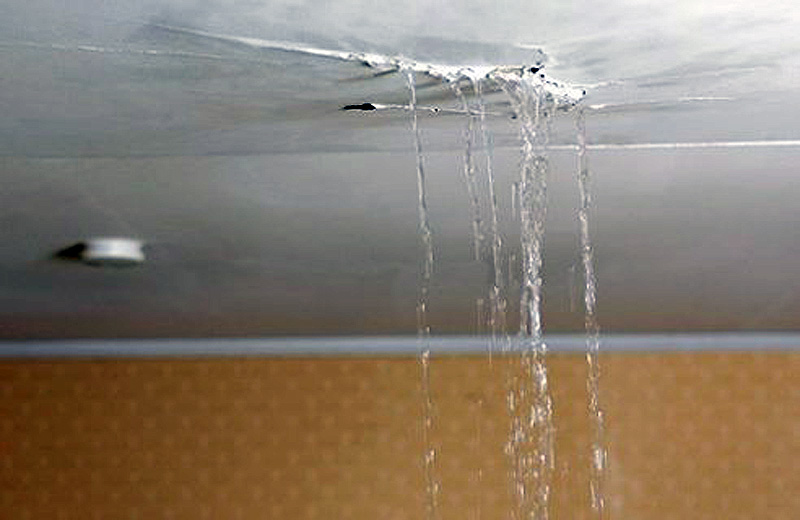
Coverage depends on cause rather than on the leak itself. A leak from storm damage is typically covered, along with the resulting interior damage. A leak from age, wear or deferred maintenance generally is not. Establishing the cause and the date is the determining step in nearly every leak claim. Related: roof insurance claims and denied insurance claim? roof gutter now can help.

Wear-and-tear leaks — the 25-year-old roof finally giving up — aren’t covered, and carriers open every leak claim assuming that’s what yours is. Coverage turns on causation: the wind event that creased shingles above the stain, the hail that cracked the pipe boot, the limb strike at the flashing. We trace the leak to its entry point on the roof, photograph the storm damage that created it, and match it to the weather record — turning “my roof leaks” into “the June 14 wind event damaged my roof, causing interior damage.”
Win causation and the interior scope follows: ceiling drywall, insulation, wall damage, flooring in the water path — plus the roof repair at the entry point. Repairs at the source sometimes escalate too: if your shingle is discontinued, the matching question can turn a leak repair into a slope or full replacement. Either way, mitigate while the claim runs — a tarp today is a policy duty and a covered cost.



Yes, if a covered event caused it. An aging roof and a storm-damaged roof aren’t mutually exclusive; the evidence at the entry point decides.
Get an independent trace. If there’s storm damage at the source, that determination is challengeable with documentation — see our denied claims guide.
Mitigate (tarp) immediately, but preserve the evidence — don’t replace the damaged area before the adjuster documents it. We sequence both correctly.
Mold from a covered sudden event often has limited coverage; mold from long-term seepage usually doesn’t. Another reason fast documentation matters.
That’s the entire claim — coverage turns on causation. Storm damage at the entry point makes it sudden; an aged roof merely failing makes it maintenance.
When a covered event caused the leak, the interior water path — ceiling, insulation, flooring — rides the same claim as the roof repair.
Dated photos of interior damage and the roof entry point, the weather record for the causal event, and mitigation receipts — the causation chain in paper form.
Same standard — storm-damaged flashing that caused it: covered event; aged flashing simply failing: maintenance. The trace at the source decides, not the location.
The exterior works as one assembly — these are the pieces that connect to this one.
Most policies cover sudden, accidental damage from a specific event such…
Learn more →A denial is a position, not a final outcome.
Learn more →Many policies cover water damage resulting from ice dams, including interior…
Learn more →Yes.
Learn more →Water rarely enters directly above the stain.
Learn more →Also called ordinance or law coverage, it pays for bringing repairs…
Learn more →Roof Leak Insurance Claims is available across our licensed service territory in Ohio, Pennsylvania and New York. Find your city below, or call (330) 918-1018.
Free trace to the source — and a straight answer on whether it’s a claim.
Takes about 20 seconds.
