Mold is the late symptom; moisture is the early fact. Meter-and-mapping inspection finds water hiding in assemblies — and traces it to the exterior failure letting it in.
Before we price Moisture Inspection, we look at air-sample results, moisture readings and containment — the details that decide how long the work holds. You get a photographed assessment and a written scope with no obligation, and if the cause traces to a storm we document it for your carrier. Licensed and insured in Ohio, Pennsylvania and New York.
Water damage gets worse every hour — call nowMoisture Inspection — priced in writing before we start, no obligation.
A moisture inspection uses meters and thermal imaging to locate elevated moisture inside assemblies before it becomes visible damage. Thermal imaging shows temperature differences that indicate wet material or missing insulation; meters confirm actual moisture content. Together they map the extent of intrusion rather than only its exit point. Related: attic mold inspection and mold testing: air, surface & prv.
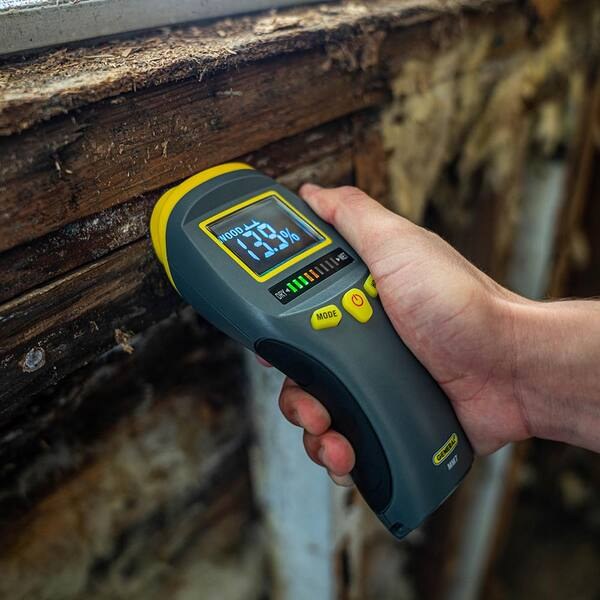
Musty rooms with nothing visible, paint that bubbles and re-bubbles, a stain that returns after every “fix,” a buyer’s gut feeling about a wall — all moisture questions meters answer in minutes. We map readings across suspect surfaces, chart the wet zones, and follow the gradient to the entry: readings climb toward sources, and the source is always the point. Finding dampness without naming its author is half an inspection.
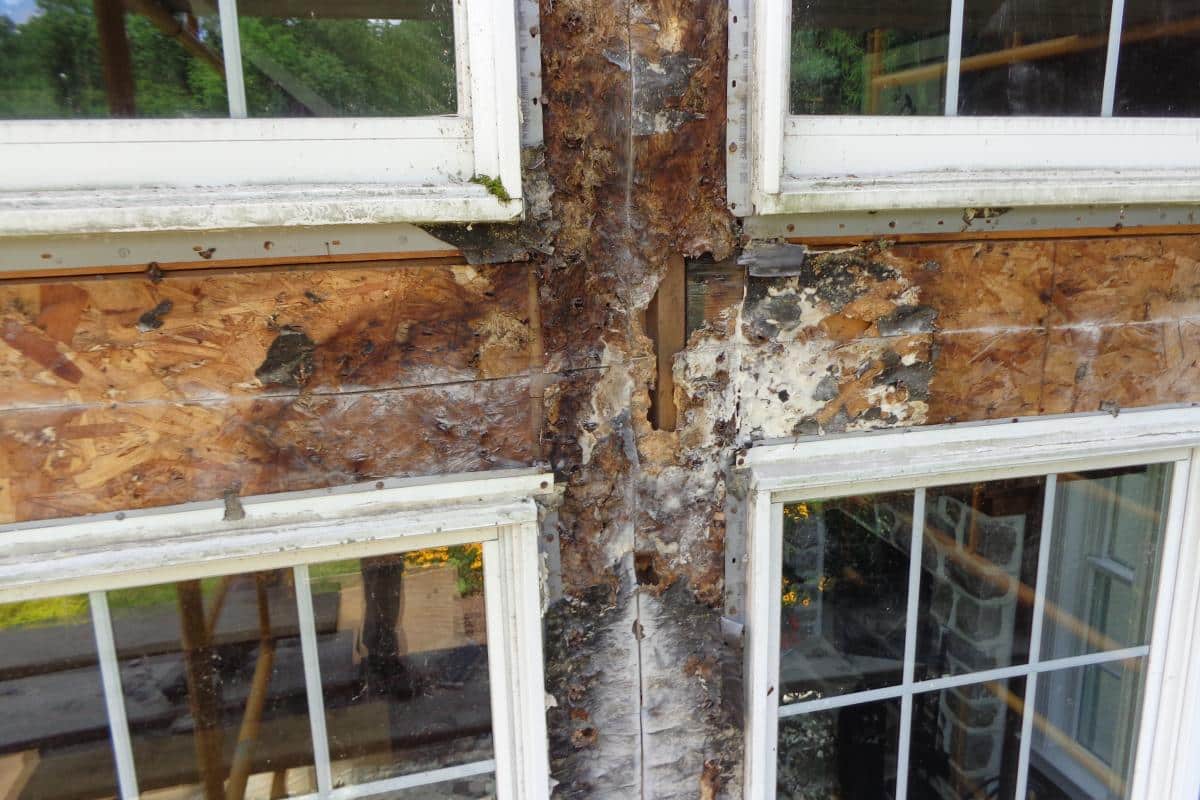
The authors repeat: roof leaks riding framing far from their stains, gutter overflow soaking walls from the top, siding and flashing gaps drinking wind-driven rain, and ventilation condensation wetting from inside. Every one is our trade — which is why our moisture findings arrive with the actual fix quoted, and with sampling added only when the wet history warrants the mold question.



Exactly the case for meters — smell is moisture talking before staining does, and early findings are the affordable kind.
Powerfully — a moisture map of suspect areas turns a gut feeling into data before the papers sign, and it is far cheaper than the surprise.
Best-case timing: fix the source, dry the assembly, skip the remediation chapter entirely. That outcome is the whole point of inspecting at the moisture stage.
Materials have normal baselines — the finding isn’t one number but the gradient: readings climbing toward a source name the entry point.
Smell is moisture talking before staining does — hidden dampness in an assembly meters can find in minutes. Early findings are the affordable kind.
Pin and pinless meters read materials directly; the mapping method — gradients across a surface — is what turns readings into a located source.
For a long time — assemblies hold water invisibly until finishes fail. Buyer gut-feelings and single musty rooms earn metering precisely for that reason.
Chronic condensation is a ventilation and humidity problem wearing weather’s costume — and it feeds the same mold the leaks do.
The exterior works as one assembly — these are the pieces that connect to this one.
Attic mold is almost always a ventilation problem rather than a…
Learn more →Air sampling measures airborne spore concentration and is compared against an…
Learn more →Given moisture and organic material, growth can begin within roughly twenty-four…
Learn more →Water rarely enters directly above the stain.
Learn more →A reinspection is a second field inspection, often with the contractor…
Learn more →An inspection is warranted after a roof leak or water intrusion,…
Learn more →Moisture Inspection is available across our licensed service territory in Ohio, Pennsylvania and New York. Find your city below, or call (330) 918-1018.
Meter-and-map inspection — the water found, the source named, the fix quoted.
Takes about 20 seconds.
