Self-regulating cable laid through the eave zone and valleys keeps melt channels open all winter — water exits instead of stacking into dams. The roof-plane half of the cable equation.
Heated Roof Cables done properly comes down to components most quotes never mention: the eave line, the soffit vents and the roof deck. We inspect each before pricing, photograph what we find, and put the scope in writing so you see exactly what you're paying for. Licensed and insured across Ohio, Pennsylvania and New York.
Water damage gets worse every hour — call nowHeated Roof Cables — priced in writing before we start, no obligation.
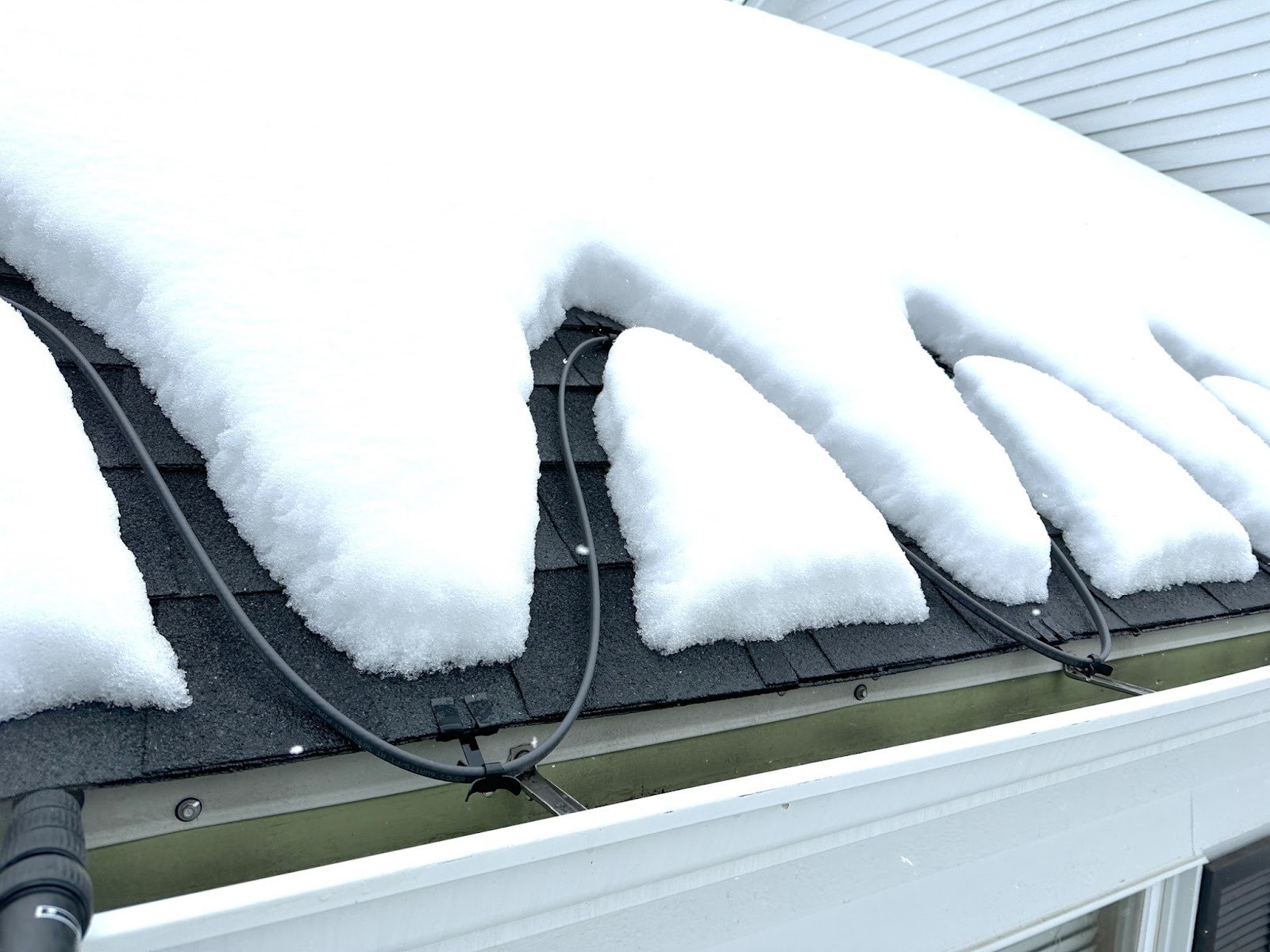
Roof cables run in a zigzag pattern along the eave, sized so the peaks reach past the exterior wall line into the heated portion of the roof. Stopping short of that line is the most common installation error, because it creates a melt channel that ends at a still-frozen section and refreezes there. Related: heated gutter cables and heated roof & gutter cables.
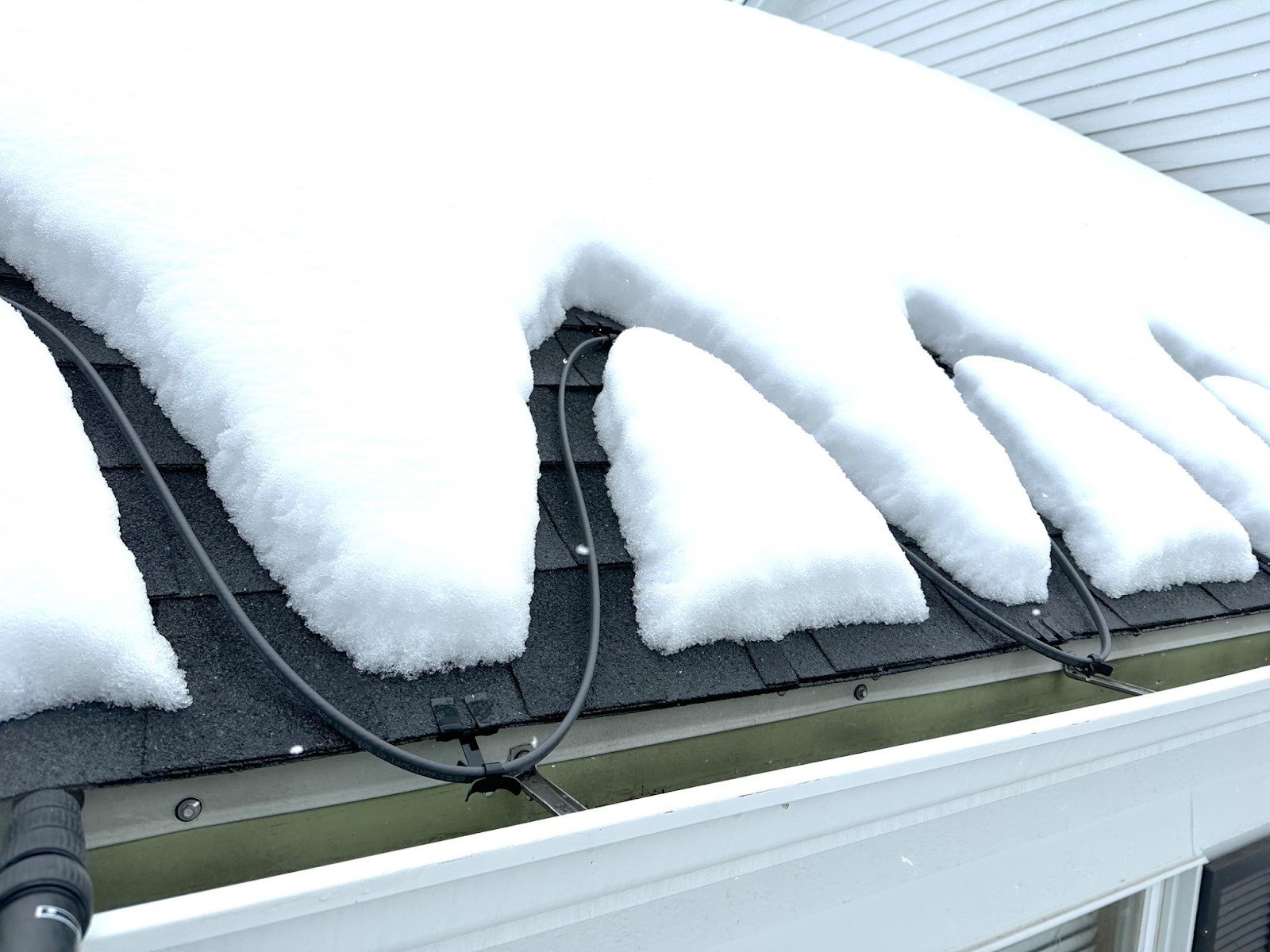
Roof cables run a calculated zigzag through the freeze zone — the overhang where refreezing happens — plus straight runs up trouble valleys and around dormers. Self-regulating cable is the grown-up choice: its conductive core draws more power exactly where it’s coldest and throttles back where it isn’t, safe to overlap and sippy on electricity compared to the constant-wattage hardware-store strings that cook themselves in a season or two.
Cables that stop short of the overhang line just relocate the dam upslope; runs that skip the gutter and downspout leg dump their meltwater into a frozen trough to refreeze. We design the full melt path — roof plane through drainage — and we’ll say honestly when cables are the wrong first move because the attic underneath is doing the damming. The combined system overview lives on our heated roofing & gutter cables page.
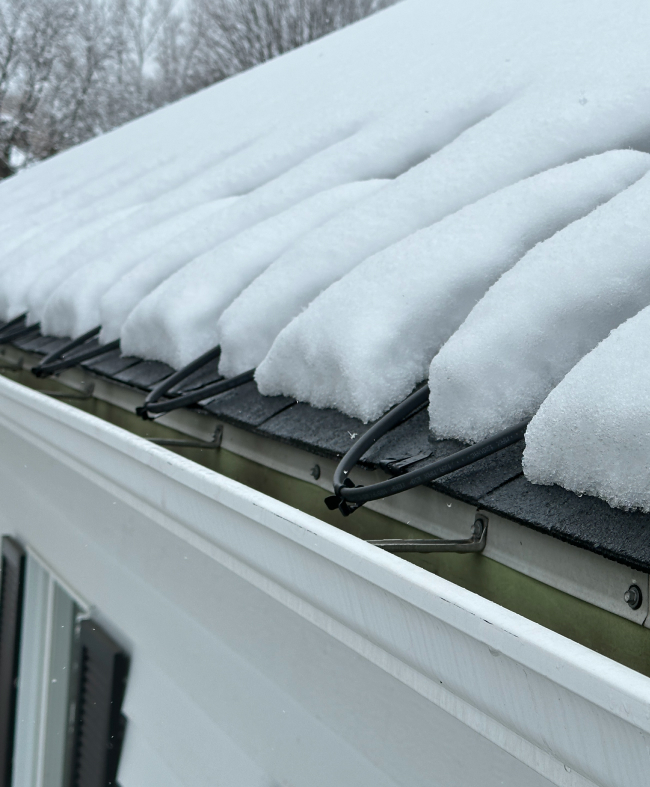

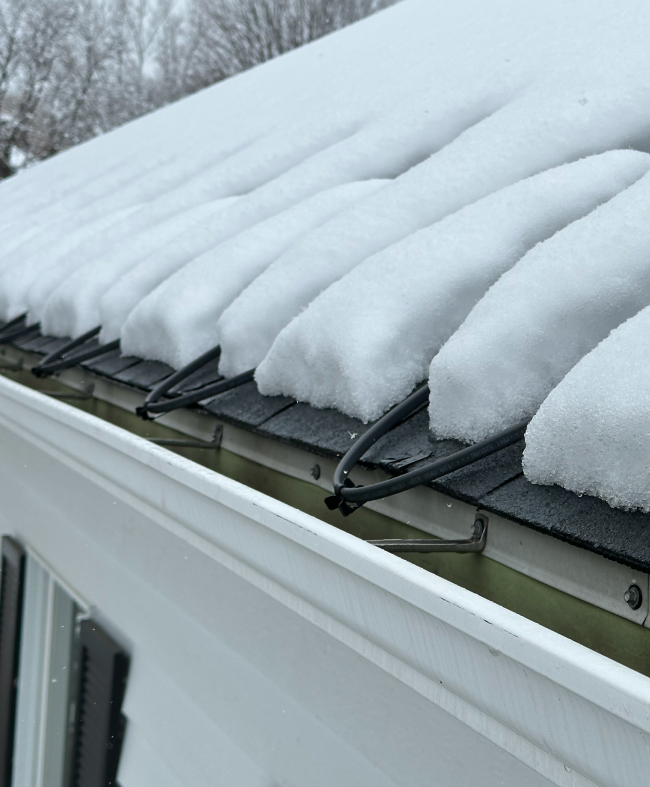
No — they keep drainage channels open through the freeze zone. The snow blanket stays; the water it makes leaves. That is the design.
Self-regulating systems can run through the season economically, switched or sensor-controlled — before storms, not after dams form. We set the strategy at install.
Properly clipped systems attach without penetrating shingle field — installed to manufacturer method, they coexist with roofing warranties.
A typical eave run draws about 5 watts per foot and only needs to run during freeze-thaw stretches — most homes see a modest bump, far less than one interior water repair.
Before the storm, not after the dam — ahead of snow events and through freeze-thaw stretches. Sensor and switch strategies get set at install.
With metal-specific attachment, yes — clips differ from shingle systems, and pairing with snow retention keeps sliding sheets from shearing the cable.
Quality self-regulating cable installed to spec carries excellent safety records — the horror stories trace to constant-wattage strings, bad splices and extension-cord power.
Self-regulating systems commonly serve many seasons — versus hardware-store constant-wattage strings that cook themselves in a couple of winters.
The exterior works as one assembly — these are the pieces that connect to this one.
Yes.
Learn more →Heat cables do not melt an existing ice dam.
Learn more →Ice dams form when heat escaping into the attic melts snow…
Learn more →Roof ventilation works as a continuous airflow path: intake at the…
Learn more →Low-pressure steam is the only method that removes ice on contact…
Learn more →Roof snow removal reduces two separate risks: structural load and ice…
Learn more →Heated Roof Cables is dispatched wherever winter storms hit. Pick your state for local response details, or call (330) 918-1018 day or night.
Free layout design — freeze zone measured, melt path drawn, quote written.
Roof Gutter Now is based in Akron, Ohio. We are a licensed full-service exterior contractor in Ohio, Pennsylvania and New York, and crews travel for winter storm work — ice dam removal, roof snow removal and heated cables — across the northern states below. Open a state to see every city we dispatch to.
Do not see your town? Every city page lists the surrounding communities that dispatch covers — or see all service areas. Roofing, gutters and siding are offered in Ohio, Pennsylvania and New York only; other states are winter services.
Takes about 20 seconds.
