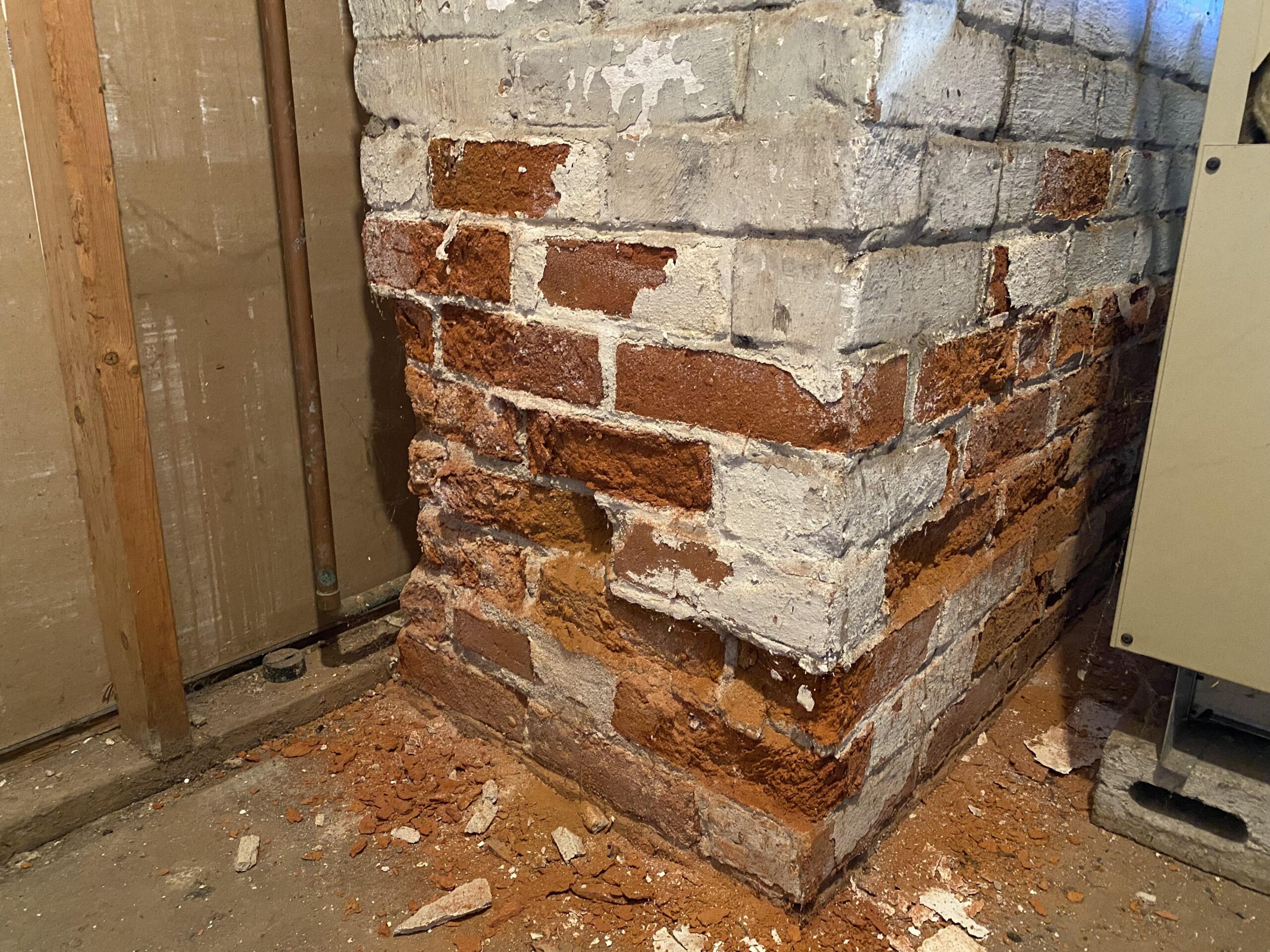
Brick is a sponge with a job — every rain soaks in, every freeze expands, every cycle spalls a little more face. Breathable repellent treatment ends the drinking without sealing the moisture in.
Chimney Waterproofing done properly comes down to components most quotes never mention: the saddle, the crown and the counterflashing. We inspect each before pricing, photograph what we find, and put the scope in writing so you see exactly what you're paying for. Licensed and insured across Ohio, Pennsylvania and New York.
Water damage gets worse every hour — call nowChimney Waterproofing — priced in writing before we start, no obligation.
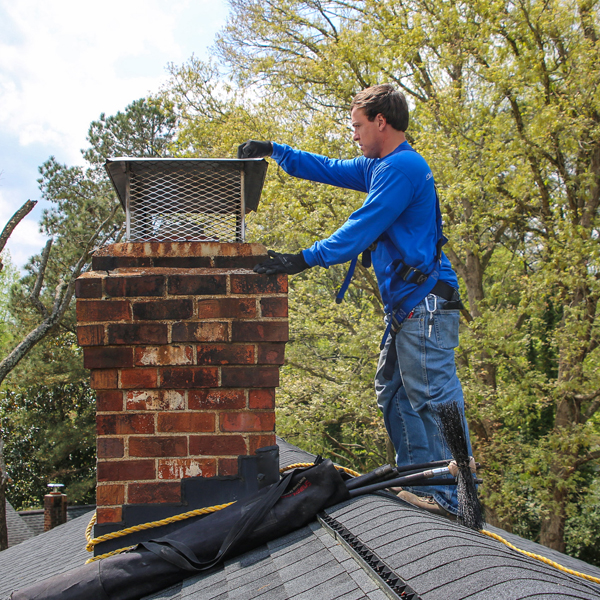
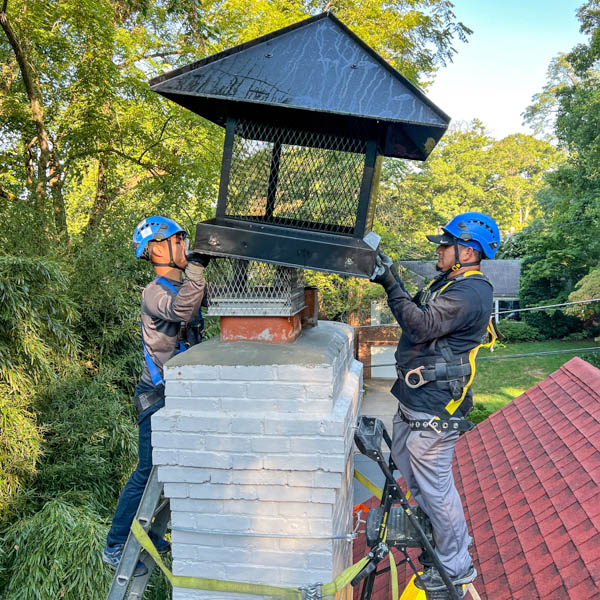
Chimneys benefit from a breathable masonry water repellent that blocks liquid water while letting trapped vapor escape. Standard film-forming sealers trap moisture inside the brick, and in freezing weather that trapped water expands and spalls the face off. The repellent type matters more than the application. Related: chimney caps installed right and chimney leak repair.

The right products are penetrating siloxane/silane repellents: they soak into the masonry and line the pores so liquid water beads off, while remaining vapor-open so moisture already inside — and combustion vapor from the flue — still escapes. The wrong products are film-formers and paint-on sealers that trap that moisture behind a membrane, redirecting the freeze-thaw damage deeper. The difference is invisible on day one and dramatic by year five.
Repellent over open joints and spalled faces just decorates the damage — the sequence is masonry made sound first, crown and cap handled above, then treatment locks the restored condition in. Applied to saturation on sound brick, quality repellents protect for many years per application — the cheapest insurance the stack will ever buy.

Quality penetrating repellents dry invisible — no gloss, no darkening. The only visible change is rain beading instead of soaking.
No — it prevents the next spalling. Damaged faces and joints need masonry repair first; treatment then protects the investment.
Quality applications commonly protect for the better part of a decade, exposure-dependent — a simple spray test tells when the beading has retired.
With breathable penetrating repellents, yes — with film-forming sealers, never. Trapping moisture inside masonry redirects freeze-thaw damage deeper.
Quality siloxane applications commonly protect for the better part of a decade — a simple spray test shows when the beading has retired.
Efflorescence — dissolved minerals left behind as absorbed water evaporates. It’s the visible proof your masonry is drinking, and the case for repellent treatment.
Film-forming products on the shelf often trap moisture and worsen spalling — chemistry choice matters more than application skill here.
It prevents absorption going forward — active leaks need their source fixed first. Armor protects repairs; it doesn’t perform them.
The symptom usually tells you. We inspect before quoting and will say plainly when a smaller fix solves it — sending you a cheaper scope costs us the bigger job, and we'd rather be right than oversell.
If water is getting in, or the damage is spreading to something more expensive, now. If it's cosmetic and stable, it can be planned. We'll tell you which it is in writing after the inspection.
The exterior works as one assembly — these are the pieces that connect to this one.
A chimney cap covers the flue opening to keep rain, snow,…
Learn more →The usual sources are failed flashing at the roof line, a…
Learn more →The crown is the sloped concrete or mortar surface capping the…
Learn more →Chimney flashing is a two-part assembly: step flashing woven into the…
Learn more →An inspection covers the cap and crown, the flue and liner…
Learn more →Tuckpointing removes deteriorated mortar from the joints to a consistent depth…
Learn more →Chimney Waterproofing is available across our licensed service territory in Ohio, Pennsylvania and New York. Find your city below, or call (330) 918-1018.
Free absorption check — the sequence to sealed, quoted in order.
Takes about 20 seconds.
