Dark staining across attic sheathing is the finding that stalls home sales and starts arguments. Lab sampling answers what it is and how active — and the inspection finds why it grew.
The difference between Attic Mold Inspection that lasts and Attic Mold Inspection that fails early is usually the vapor barrier, containment or air-sample results. We check all of them on site rather than estimating blind, document findings with dated photographs, and price the work in writing first. Licensed contractor, fully insured, 400+ five-star reviews.
Water damage gets worse every hour — call nowAttic Mold Inspection — priced in writing before we start, no obligation.
Attic mold is almost always a ventilation problem rather than a roof leak. Warm humid air from the living space rises into a poorly ventilated attic, condenses on the cold underside of the roof deck, and feeds growth on the sheathing. Remediation without correcting the airflow reliably brings the growth back. Related: moisture inspection and roof leak mold inspection.

Attic mold is never spontaneous — it’s authored by moisture with a source: blocked ventilation condensing house air on cold sheathing, a slow roof leak wetting one bay, or a bath fan exhaling showers into the insulation. Our inspection reads the pattern (uniform north-slope film says ventilation; a localized bloom says leak), samples for the lab, and names the author — because treatment without the cause fix is redecorating.
Not every dark patch is active mold — dust films, old extinct staining, and wood discoloration all impersonate it, and eyeballs (including inspectors’) get it wrong both directions. Lab analysis settles species and activity; our report translates it into decisions: what it is, whether it’s active, what caused it, and what fixing both costs. Home-sale standoffs are half our attic calls — the lab report is what ends them. The EPA’s mold resources back the principle: identify and fix moisture first.


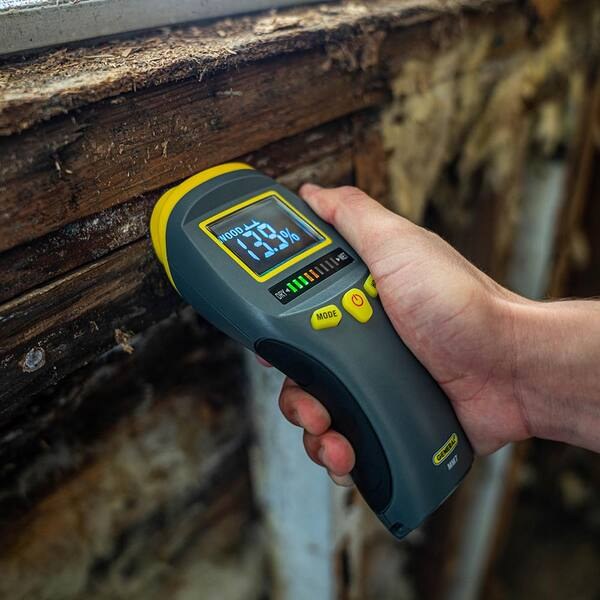

Now the question gets answered instead of negotiated — sampling and lab analysis turn “possible mold” into a defined, priced, solvable item.
Attics exchange air with the house more than people assume — activity level and pathways are exactly what the inspection assesses rather than speculates.
The usual authors — ventilation, roof leaks, fan ducting — are literally our trades, which is why the diagnosis comes with a real repair path, not a referral maze.
It shouldn’t be — it’s a defined, priced, solvable item once lab sampling names what it is and the inspection names why it grew. Unknowns kill deals; answers close them.
Remediation is the cleanup half — the cure is the moisture author: the blocked ventilation, roof leak, or bath fan feeding it. Treat without the cause fix and it redecorates.
Color identifies almost nothing — species and activity come from the lab, and ’white vs black’ folklore misclassifies both directions.
If the moisture author survives, reliably — which is why our inspections name the ventilation, leak or fan cause alongside the mold finding.
Paint hides evidence and traps the problem — remediation standards require cleaning, not coating, and any future inspection will find the shortcut.
The exterior works as one assembly — these are the pieces that connect to this one.
A moisture inspection uses meters and thermal imaging to locate elevated…
Learn more →Given moisture and organic material, growth can begin within roughly twenty-four…
Learn more →Air sampling measures airborne spore concentration and is compared against an…
Learn more →Roof ventilation works as a continuous airflow path: intake at the…
Learn more →Soffit is the intake half of attic ventilation.
Learn more →Ice dams form when heat escaping into the attic melts snow…
Learn more →Attic Mold Inspection is available across our licensed service territory in Ohio, Pennsylvania and New York. Find your city below, or call (330) 918-1018.
Inspection with lab sampling — what it is, why it grew, what fixes both.
Takes about 20 seconds.
