

Quick answer
Roof area, pitch and downspout count decide gutter size — not house size. When 6-inch is worth it and when it is not. Free measure: (330) 918-1018.
Most homes have 5-inch K-style gutters because that is what was standard when they were built. Whether that is right for your roof depends on how much water arrives, how fast it arrives, and how many outlets it has to leave through. Related: gutter installation.
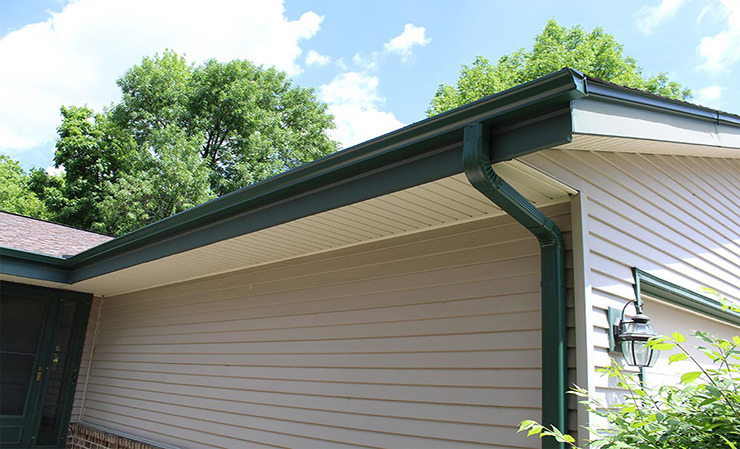
What Actually Decides Capacity
Three factors: the roof area draining into the run, the pitch of that roof, and the number and placement of downspouts. Pitch matters more than people expect — a steep roof delivers the same volume of water to the gutter in less time, so the peak flow is higher even though the total is identical. Adding capacity to the trough without adding outlets simply moves where it overflows.
The common mistake: upgrading to 6-inch gutter while keeping the same two downspouts. The trough holds more and still overflows at the far end, because the bottleneck was never the trough.
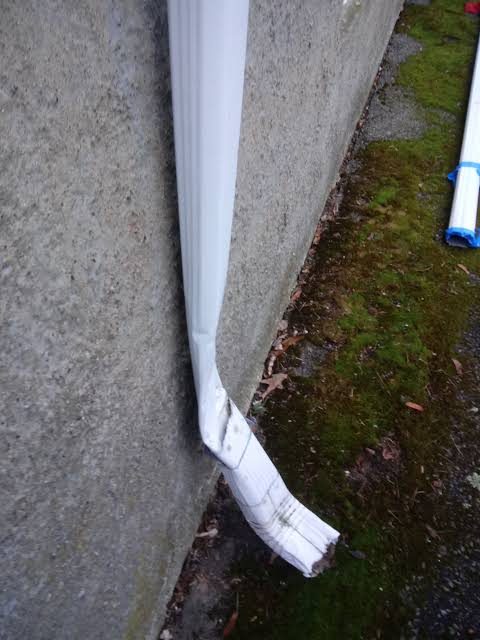
When 6-Inch Is the Right Call
Large roof areas draining to one run, steep pitches, long runs with few practical downspout locations, and homes under heavy tree cover where partial blockage is a permanent fact of life. Six-inch also pairs with 3x4 downspouts, which carry substantially more than the 2x3 standard and clog far less readily.
| Condition | Recommended |
|---|---|
| Average roof, moderate pitch | 5-inch, adequate downspouts |
| Large roof area to one run | 6-inch with 3x4 downspouts |
| Steep pitch, fast delivery | 6-inch |
| Heavy tree cover | 6-inch plus guards |
| Long run, few downspout options | 6-inch |
Downspout Count Is the Real Lever
A common guideline is one downspout per thirty to forty feet of run, adjusted for roof area. If your gutters overflow mid-storm but are clean, the usual cause is outlet capacity rather than trough size. Adding an outlet is frequently cheaper and more effective than replacing the whole run. See downspout installation.
Seamless and Why It Matters
Sectional gutter joins every ten feet, and every joint is a future leak. Seamless runs are roll-formed on site to the exact length of your roofline, so the only joints are at corners and outlets. We run 6-inch seamless aluminium as our standard because the capacity margin costs little at installation and removes the most common failure mode.
The Cost Difference in Context
Six-inch typically costs modestly more per linear foot than 5-inch, and the material difference is small relative to labour and access. Where the number moves is downspout count and any interior drainage work. It is rarely worth downgrading to 5-inch to save on a run that genuinely needs the capacity — the overflow ends up at the foundation.