

Quick answer
The warning signs that mean a roof is near the end, from granule loss to soft decking, and which ones can still be repaired. Free inspection: (330) 918-1018.
Roofs rarely fail suddenly. They give warning for a year or two first, and most of the signs are visible from the ground or the attic. Knowing which ones are urgent and which can be planned keeps you from being rushed into a decision. Related: free roof inspections.
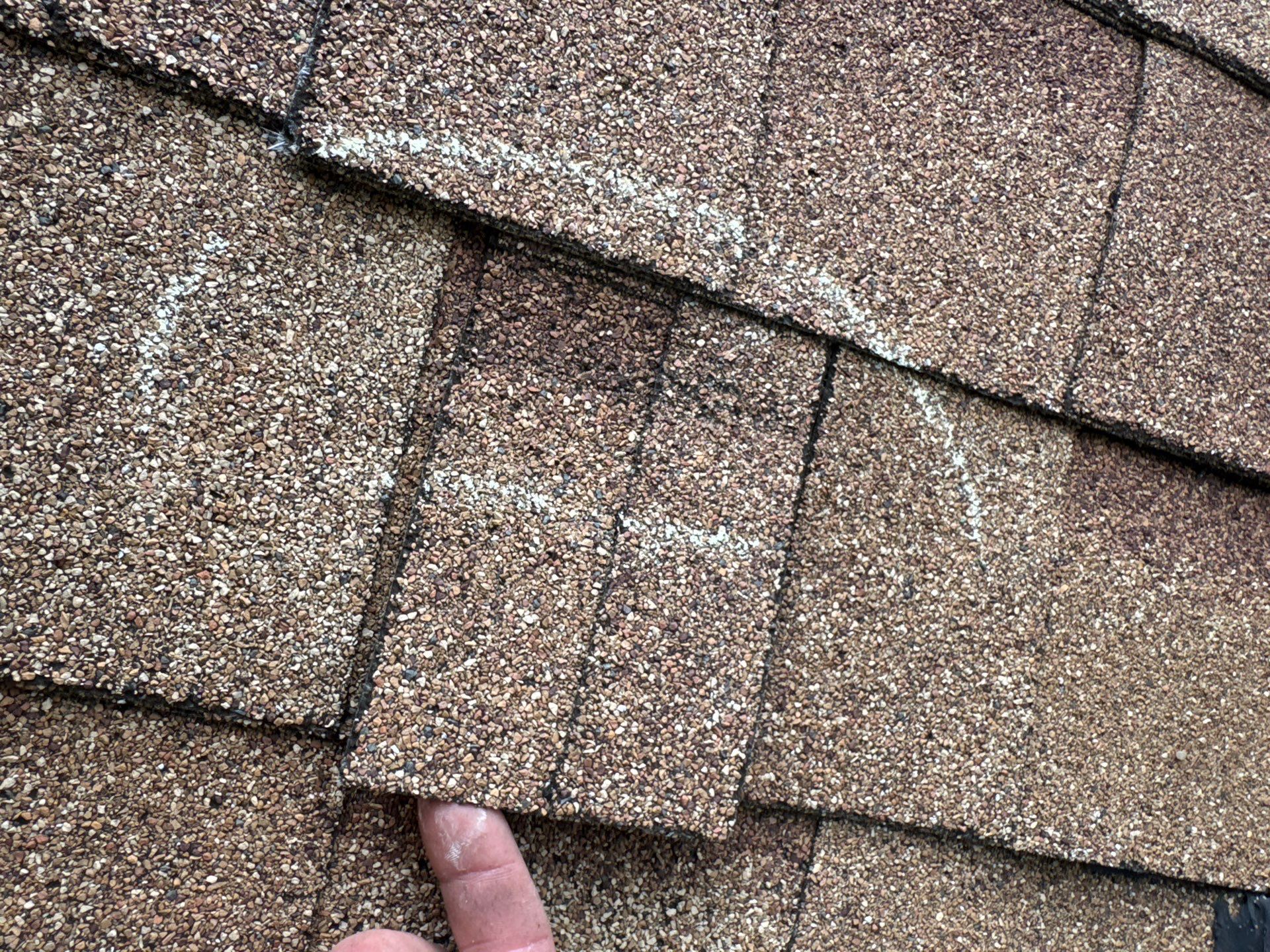
1. Granules in the Gutters
Asphalt shingles shed their mineral surface as they age. A few granules after a new roof settles is normal; a steady accumulation of coarse black grit in the gutters and at downspout outlets means the surface is wearing through. Once the mat beneath is exposed, UV degrades it quickly.
2. Curling, Cupping or Clawing Edges
Shingle edges that lift or curl indicate the mat has dried and is losing dimensional stability. It is frequently a ventilation problem as much as an age problem — an attic that runs hot cooks the shingles from underneath. Widespread curling is a replacement signal.
3. Creased or Missing Shingles After Wind
Wind lifts a shingle, breaks the seal strip, and the shingle lays back down looking normal with a horizontal crease across it. That crease is a failure point that leaks later. This one is often a covered claim rather than wear — see wind damage claims.
Worth knowing: creased shingles are the damage most commonly missed on a driveway inspection, because from the ground the roof looks intact.
4. Daylight or Damp in the Attic
Go up with a torch on a dry day. Daylight through the deck, damp or stained sheathing, matted insulation, or frost on the underside in winter all mean water or air is getting through. Attic evidence usually appears well before a ceiling stain does.
5. Soft or Springy Decking
If the roof feels soft underfoot, the sheathing has been wet long enough to lose strength. This is past a shingle problem. It is also the point at which an overlay becomes actively dangerous, because it hides the condition rather than correcting it.
6. Repeated Repairs in Different Places
One repair is maintenance. A third repair in a third location within a couple of years means the system, not the detail, is failing. Track where the leaks have been — the pattern is more informative than any single leak.
| Sign | Urgency |
|---|---|
| Active interior leak | Now |
| Soft decking | Now |
| Creased or missing shingles | Soon — document for a claim |
| Widespread granule loss | Plan this year |
| Curling edges | Plan this year |
| Moss or algae growth | Can often be treated |
7. Moss and Trapped Moisture
Moss holds water against the shingle and lifts the edges as it grows under them. On a newer roof this is treatable with moss removal and improved drainage. On an older roof it usually accelerates a decline already underway.